
Don’t walk into Stephen Chow’s Kung Fu Soccer expecting the same emotion you felt watching Shaolin Soccer for the first time – the film will only make you think about what made the 2001 original a masterpiece.
Written and directed by Chow as a spiritual successor to his beloved classic, the new 106-minute sports comedy follows a fictional Chinese women’s football team, “Emei”, as they represent China in the Asian Women’s Champions League.
The idea of making a film about kung fu and football that centres on women is worth applauding. Chow constructs distinct personalities for the women’s team members, from the aggressive and overbearing captain Shuangshuang (played by Zhang Xiaofei) to her blunt, newly divorced teammate Yu Long (Dilraba Dilmurat).
In doing so, the film gives a voice to female athletes, particularly those ageing out of the sport, while capturing the sacrifices these women made in pursuit of their passions. What’s new this time is that Chow focuses more on the players’ mentalities, examining qualities like leadership and how a relentless desire to win can tear a team apart.
The spin-off’s biggest misstep is its overreliance on past success. By reusing musical scores from Kung Fu Hustle (2004) and Shaolin Soccer, along with recycled moves on the pitch, the film ends up with only half the soul and creativity of Chow’s earlier works.
What made Shaolin Soccer brilliant was its pioneering blend of martial arts with football. Its soul lay in Chow’s raw portrayal of an ordinary man clinging to his passion, famously asking: “If a man has no dreams, how is he any different from a salted fish?”
The original followed a group of underdogs, drained by the harsh reality of making a living, who come together to achieve greatness. The film pulled no punches in showing the everyday distress of trying to make ends meet. That struggle was precisely why we rooted for them. In contrast, this layered sentiment is missing from Kung Fu Soccer.
Right off the bat, the Emei team, supposedly a squad at a disadvantage, display superhuman abilities. And combined with heavy CGI, it no longer feels like kung fu. The tournament sequences also lack momentum and come across as repetitive.
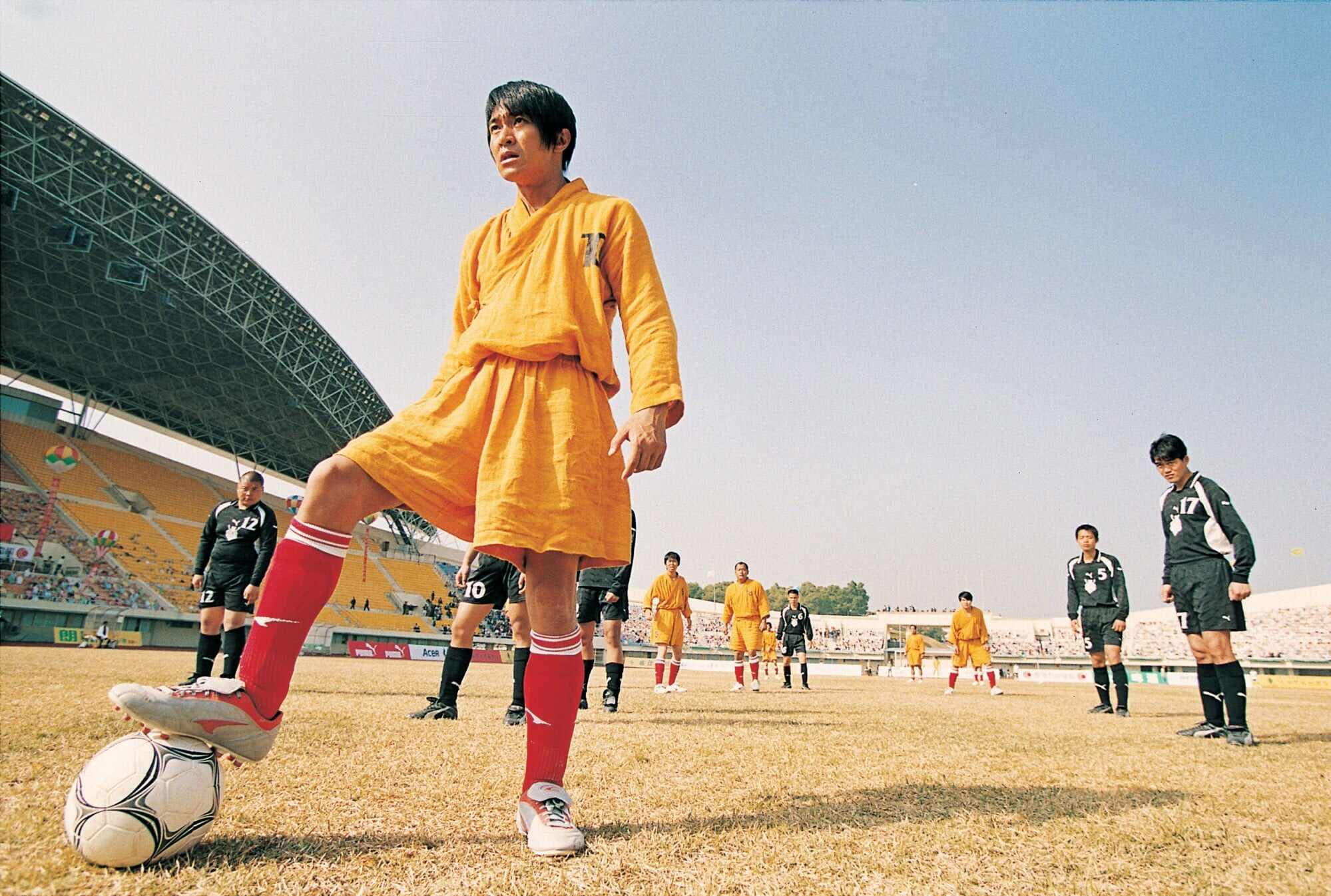
The over-the-top computer graphics stop viewers from feeling a sense of authenticity and raw grit when players compete. Perhaps limited resources can sometimes breed greater creativity; the 1995 classic A Chinese Odyssey, another crowd favourite of Chow’s, was a relatively low-budget project with an emotional impact that endured for decades.
While Kung Fu Soccer attempts to reframe Chow’s signature comedy in new contexts, the reused formula is blatant.
Still, it was a welcome touch to see familiar faces make appearances, such as the mechanic from Shaolin Soccer or the “four-eyed clerk” from Kung Fu Hustle, who plays a scumbag boyfriend. Several scenes also serve as fun homages to other Chow classics, such as King of Comedy (1999).
Ultimately, a line spoken by Xueye – the quiet, overlooked bench player played by the actress with the same name – best encapsulates Chow’s mentality as a filmmaker: “playing soccer simply for the pure love of the game”.
Kung Fu Soccer is screening now in Hong Kong theatres.