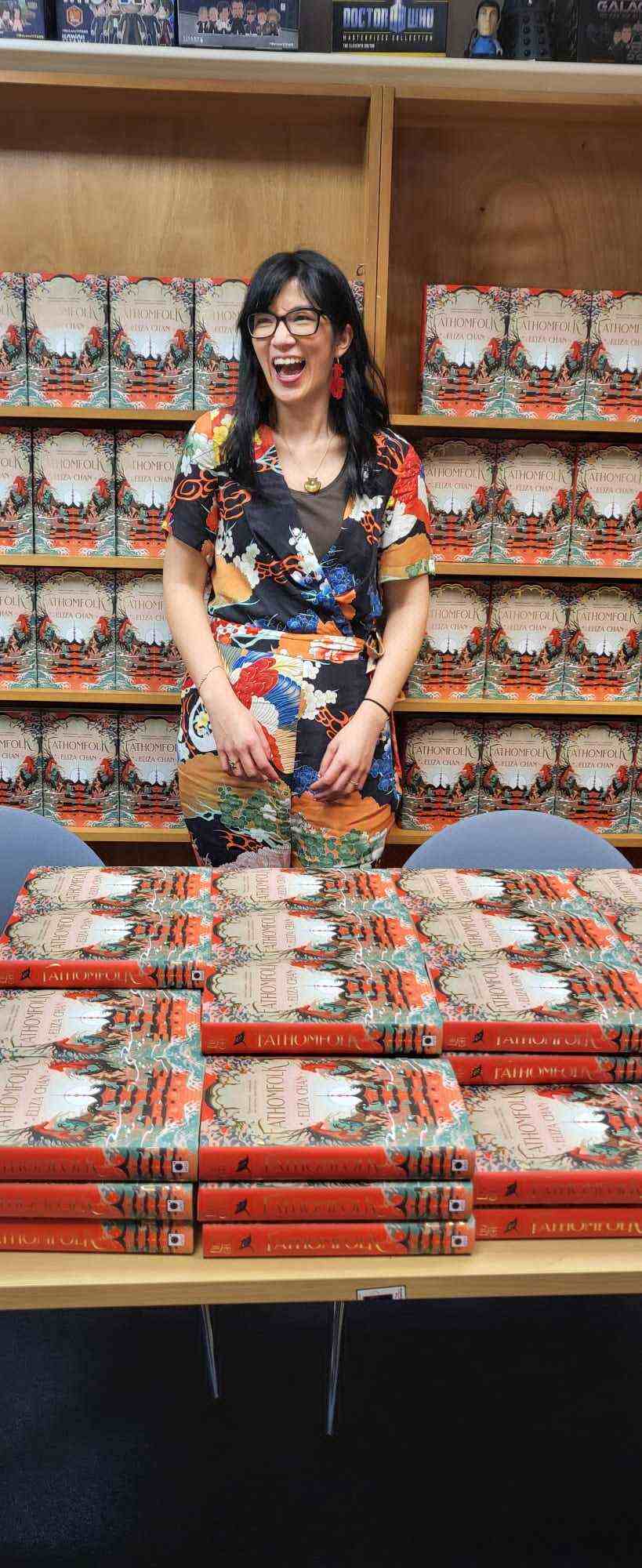
Growing up in the suburbs of Glasgow, Scotland, as one of two Chinese children in her primary school, Eliza Chan rarely questioned her identity. With her thick Scottish accent, she said it felt “normal” to be stopped on the street and asked where she was really from.
“It was one of those childhoods where I don’t think I realised what I wasn’t until other people told me,” the 41-year-old recalled.
For a while, Chan went through a phase of completely rejecting her Chinese heritage. She just wanted to fit in with her Scottish friends, bristling at the “weird” Chinese language and turning her nose up at the food.
However, when she attended the University of Edinburgh and met students from Hong Kong and Malaysia, her perspective shifted.
She was struck by regret, wishing she could speak more Cantonese or read enough characters to join karaoke sessions.
Today, merging her dual identity is what fuels her successful career as an author.
Enchantment within two cultures
Chan’s 2024 debut novel, Fathomfolk, is the first in an epic fantasy duology. The story is set in a semi-submerged city where humans live in shining towers above, while mythical water creatures – including sirens, sea witches and kelpies – are forced to survive in the polluted waters below.
Drawing on East Asian, Southeast Asian and Scottish folklore, the book became a Sunday Times bestseller.
For Chan, writing the book was about filling a gap she experienced as a teenager.
“Asian fiction authors in the Western space were very hard to find for me when I was growing up,” she said.
Seeing modern authors like Ken Liu, Fonda Lee and Rebecca Kuang rise to fame finally gave her the courage to try writing fantasy herself.
Ghosts, myths and mischief
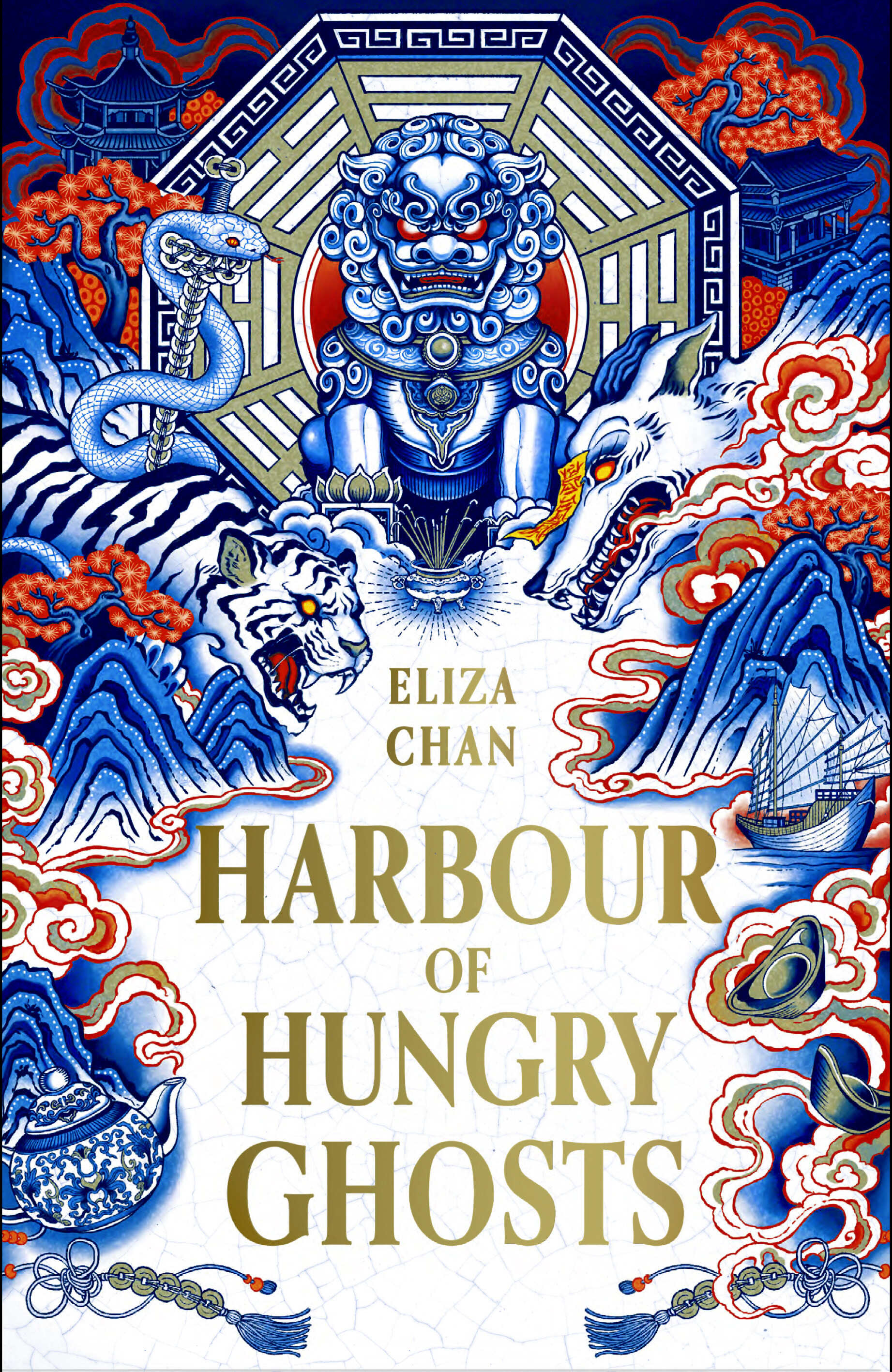
Following her 2025 sequel, Tideborn, Chan is now returning with a brand-new series deeply rooted in Hong Kong history. Harbour of Hungry Ghosts is set during the uneasy decades between the two opium wars. It follows the Au family – a line of hereditary demon hunters – who must step up when British colonists disrupt a Hungry Ghost festival ritual.
Chan described the new book as a mix of British fables and Chinese myths. It heavily features the jiangshi – the hopping vampires made famous by 1980s Hong Kong cinema – and explores Cantonese folk traditions.
She spent months researching the opium wars, hoping to give readers a glimpse into a crucial part of history.
From medicine to literature
Chan’s journey to becoming a full-time author was not straightforward. Facing pressure from her parents, she initially followed what she called the “Chinese stereotype” and enrolled in a medical degree.
But she quickly realised her true passion was English literature – so she deliberately sabotaged her final exams to switch paths. She went on to study English and history, taught in Japan and trained as a speech therapist, writing short stories in the evenings.
Now a mother herself, Chan is thrilled that her five-year-old son has access to Asian representation in books that she never had growing up.
As for her new novel, she has a special hope for her Hong Kong audience: “I hope readers feel the nostalgia of the old hopping vampire films, or recognise a building or street name and laugh at the Cantonese idioms in an English book.”