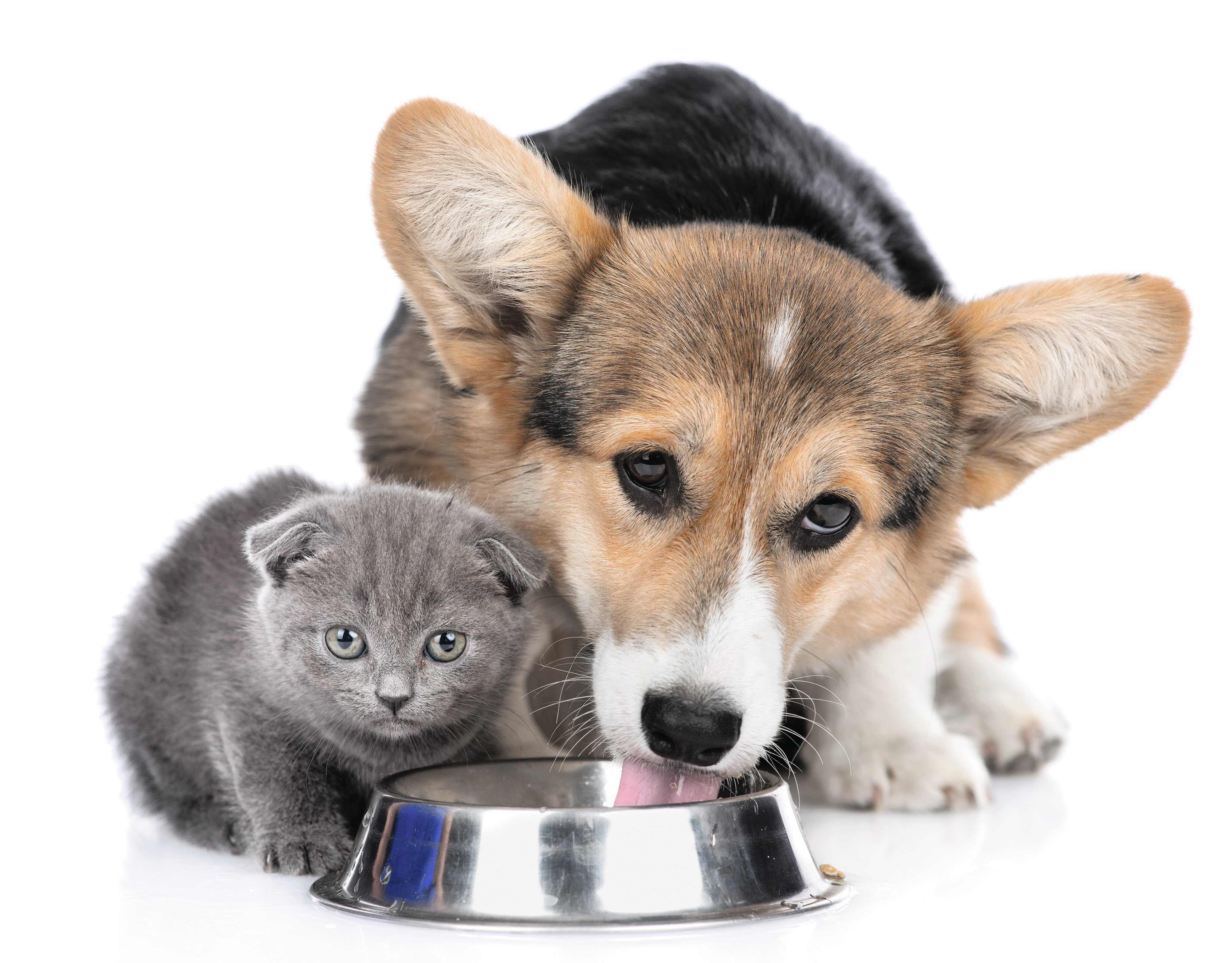
When people compare dogs and cats, they usually think about the differences between keeping these two animals as pets.
But have you ever wondered about their different drinking styles?
The secret lies in their tongues – a specialised tool that changes how they drink water and how it feels when they lick you. Let’s sniff out some of the key things to know about the tongues of dogs and cats.
How cats and dogs drink
Humans can either bring a cup up to their lips with their hands or, when using straws, form an airtight seal with their mouths and suck to create negative pressure that forces liquid upwards.
But cats and dogs have mouths that open wide because they are adapted for hunting, so they cannot form a tight seal to generate the suction needed to sip.
As a result, they have evolved a different technique. To bring liquid into their mouths, these animals use a rapid lapping motion.
But why do dogs create big splashes when they lap water, while cats neatly and gracefully drink?
This is because cats drink with precision and dogs drink with power.
When a cat drinks, it curls the tip of its tongue backwards and touches only the surface of the water. As the tongue quickly retracts, it relies on surface tension to pull the water into the mouth.
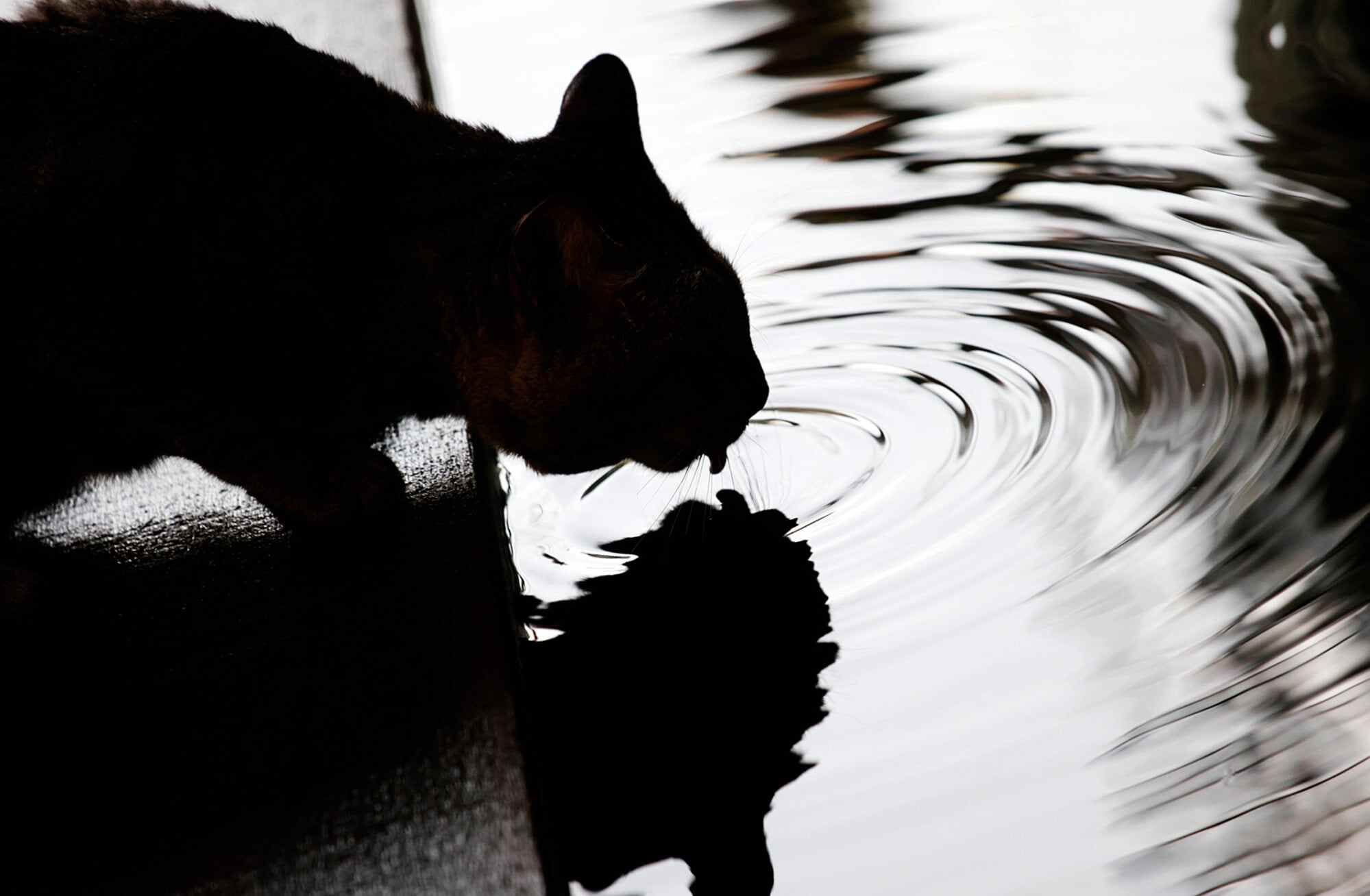
Surface tension is like an invisible, stretchy skin on the surface of a liquid. This happens because the tiny molecules that make up a liquid always pull on each other.
Surface tension allows the water to cling to the cat’s tongue, and the liquid is pulled upwards in a delicate column. The cat then snaps its jaws shut to catch the water before gravity breaks the column apart. This method is incredibly efficient and keeps their whiskers dry.
Dogs also rely on surface tension, but they plunge their tongues deep into a bowl of water. A dog curls its tongue backwards into a large, ladle-like shape that punches forcefully into the water to force up a much larger column than what cats typically form.
While this powerful motion allows for bigger gulps, it also creates a messy splash as water spills from the sides of the tongue before the dog can close its mouth.
Despite the differences, their methods of drinking water are highly effective – even if one requires a bit more clean-up than the other.

Smooth or scratchy?
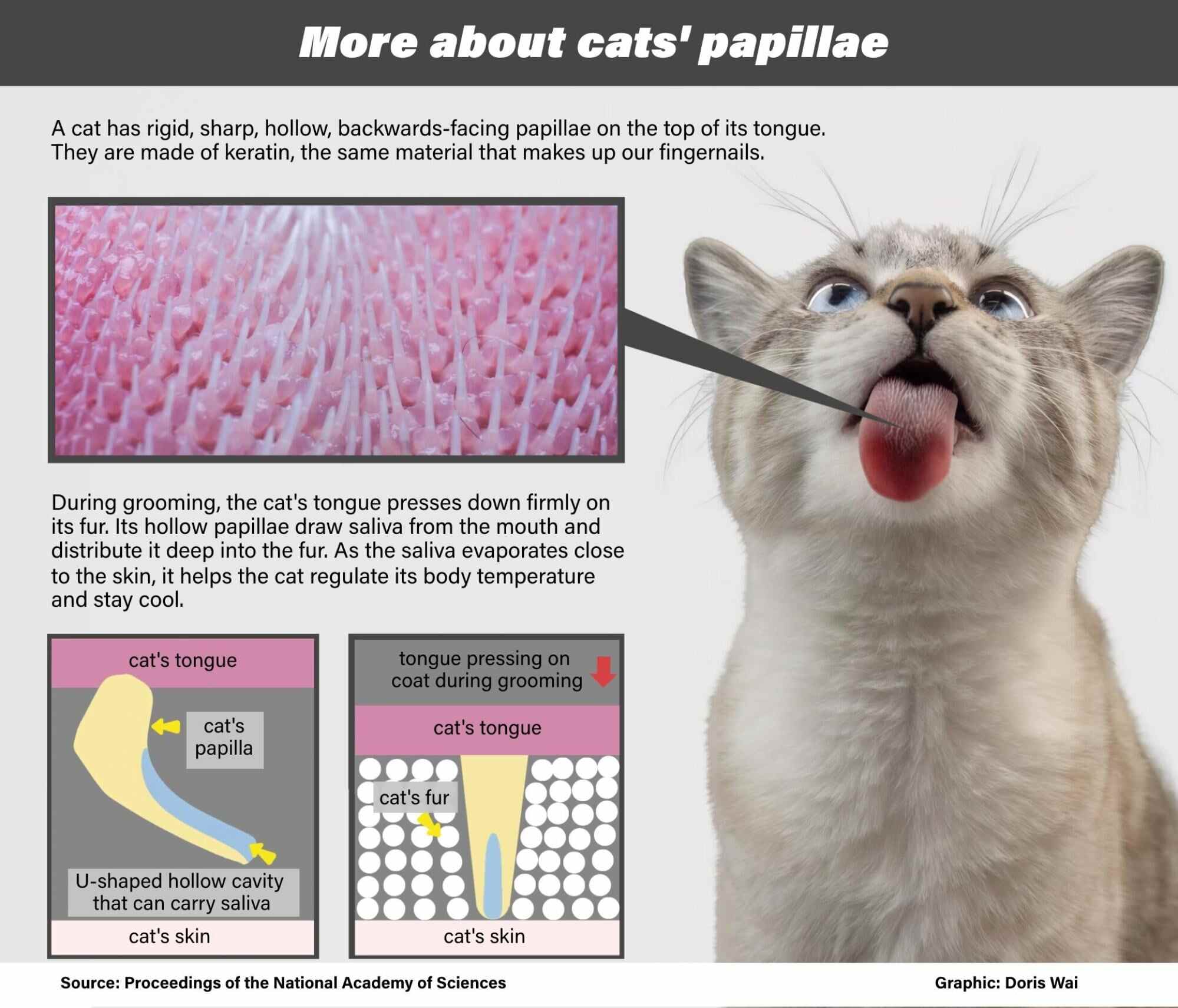
Beyond their drinking styles, you may have noticed another striking difference between the tongues of dogs and cats. A cat’s lick feels like sandpaper, while a dog’s feels soft and wet. This comes from the structure of the tiny projections, called papillae, that cover their tongues.
Cats have rigid and sharp papillae that face backwards. These projections are hollow and are made of keratin. They act like a comb to tidy fur and remove knots.
The papillae also help cats to stay cool as the saliva evaporates on their skin (see graphic).
Dogs also have these projections, but theirs are much softer, giving their tongues a smooth feel. That is why they do not lick their fur as much as cats do.
Young Post has partnered with Hong Kong Science Museum and Hong Kong Space Museum to encourage your pursuit of science. Every month, the museums answer questions about the world around us, the cosmos and beyond.