A new study has found that part of Greenland's thick "ice sheet" is melting and getting thinner than we thought. This could cause a higher rise in sea levels.
The ice sheet is a giant sheet of ice which is 2km high! It covers Greenland, which is at the North Pole. There is another enormous ice sheet covering Antarctica at the South Pole.
Rising sea levels are already a danger for millions of people around the world who live on coasts. They could find themselves underwater in the next century.
Scientists previously looked only at the edges of the ice sheet, on the coast of Greenland, to see if it was melting. But the scientists of the new study looked further inland, over 100km from the coast.
What they found is frightening. The thinning of the ice sheet is not just at Greenland's coast. It stretches back 200 to 300 kilometres.
"What we see happening at the edges also reaches far back into the heart of the ice sheet," says scientist Shfaqat Khan.
"The new study really sees what's going on inland, while the old ones do not," he says.
The scientists installed GPS stations on the ice sheet to gather precise information. They also used satellite photos taken from space.
The study was done at the Northeast Greenland Ice Stream, which covers about a tenth of Greenland.
It found that the melting ice could add about 14mm to sea levels by the year 2100.
One reason for the extra ice melting is the effect of warm ocean currents. Ten years ago, these warmer waters caused part of the northeast ice sheet to collapse.
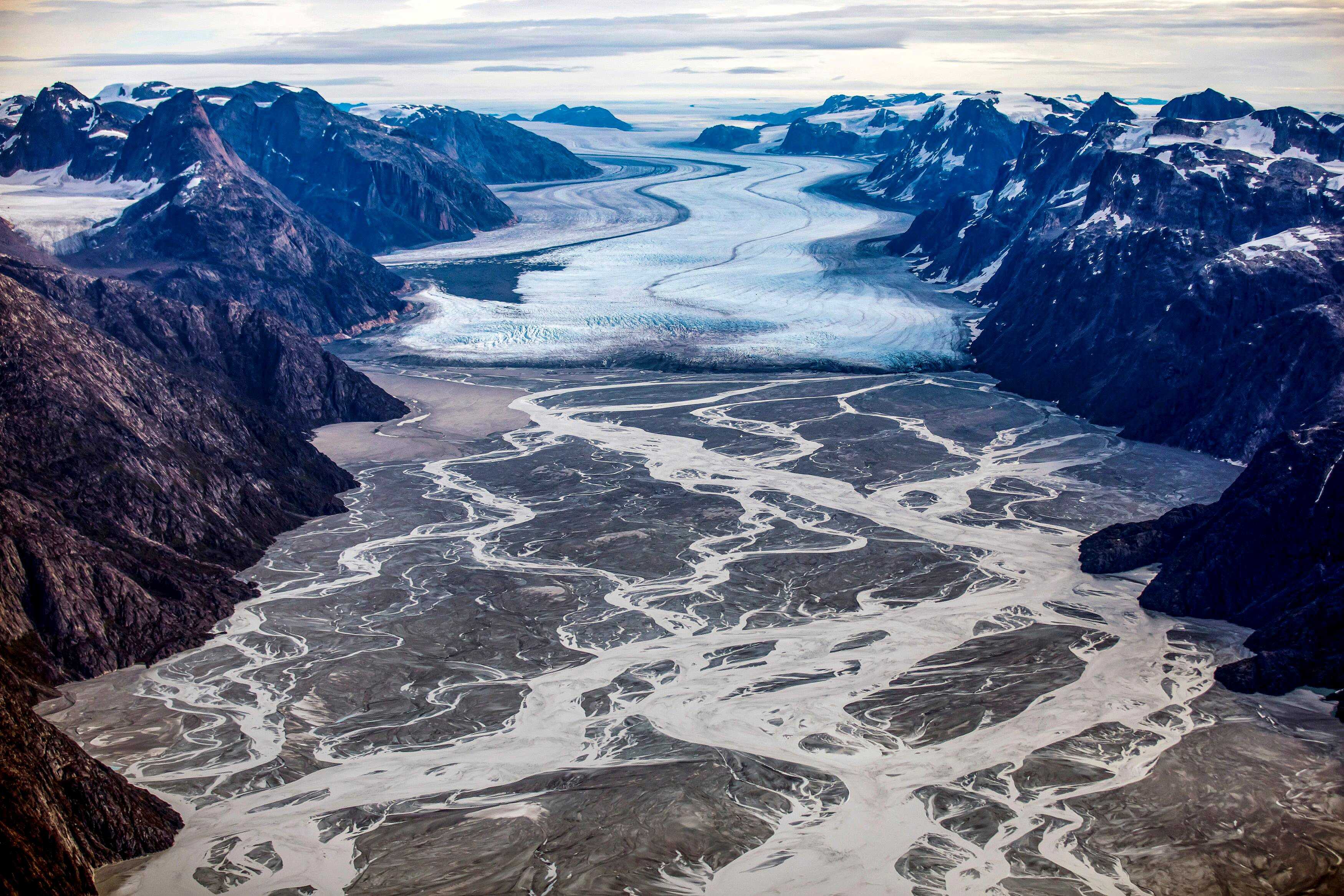
That collapse has speeded up the melting. In the photo, you can see a glacier between mountains on Greenland which is melting into rivers.
The North Pole is heating up faster than the rest of the planet. The massive ice sheet holds enough frozen water to lift sea levels by over seven metres.
Five things to know about
1. Greenland is a large island at the North Pole. In fact, Greenland is the world's largest island that is not a continent. But only 50,000 people live there, because it is so cold.
2. Most of the people live in the southern part of the island, on the coast, where it is warmer.
3. Greenland has been ruled by Norway and then Denmark since the time of the Vikings. The languages spoken are Greenlandic and Danish. Words like "igloo" and "kayak" come from Greenland.
4. Greenland may really be three separate islands, but we don't know for sure because it is all covered by a gigantic ice sheet.
5. There are no forests in Greenland, and no roads between the 16 towns!
.jpeg?image_process=image/resize,w_3840/quality,Q_75)