Difficulty: Summiteer (Level 3)
Humans have long been puzzled by the existence of different languages. In the past, people made up stories to explain this.
You might know the tale of the Tower of Babel. In this Christian story, humans originally spoke a single language. But God got angry when people tried to build a tower to heaven. As punishment, he made humans speak different languages and scattered them across the Earth.
A story from the Indigenous Absaroka people in the United States says that an old coyote created humans. At first, these humans spoke one language. But then, a younger coyote convinced him to make humans speak different languages because it would make them fight each other.
Meanwhile, a group of Australian Indigenous people, the Jawoyn, have a story about a crocodile named Nabilil. They say he planted language into the landscape and named land features as he travelled.
The tower: three magic ingredients
Linguists know that humans have been on the move for thousands of years.
Creating different languages requires time and distance. When speakers of one language separate and travel to different places, the single language can become two or more over time.
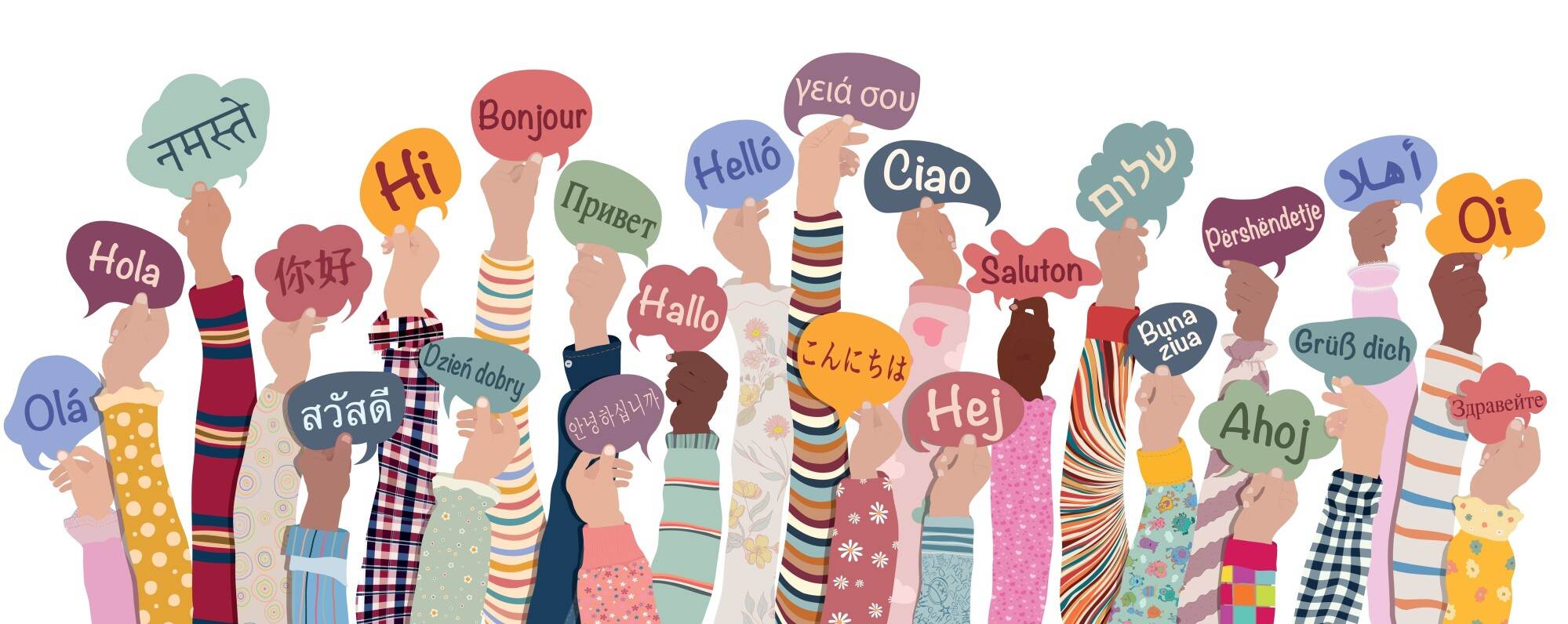
For example, when Latin speakers moved around Europe, it led to the creation of French, Spanish, and Italian.
English was born in the same way. In the fifth century, Germanic tribes left their homeland and invaded Britain. The dialects of Germanic they spoke led to Old English. As other groups invaded Britain, English kept changing.
The coyote: creating identity
The Absaroka coyote story demonstrates that people with different languages might misunderstand or disagree with one another.
It also shows how language is often connected to our identity.
Identity can also lead to language changes. For instance, in one area of Papua New Guinea, a country just north of Australia, everyone speaks a language called Selepet. But people in one village changed their word for “no” to make their village special; this village says bunge to mean “no”, but others would say bia.
The crocodile: new places and words
The story of Nabilil the crocodile shows how language changes. For example, when people from Britain arrived in Australia, they did not have the words to describe the country. So they borrowed words from Indigenous Australian languages, like kangaroo, and developed new meanings for old words to fir the situation.
Language is always evolving and changing; it’s why we have so many of them.
Howard Manns is a lecturer in linguistics at Monash University, and Kate Burridge is a professor of linguistics at Monash University. This article was first published by The Conversation.
Suggested answers
Stop and think: In the story, God scattered humans across the earth and gave them different languages. This is linked to the idea of travel and distance, one reason new languages are formed.
Consider: When people spread out, languages change but have the same root. For example, French and Spanish stem from Latin.
Read and answer: The younger coyote told the older one that creating many languages would cause misunderstandings between different people and make them fight each other.