Difficulty: Challenger (Level 2)
When you visit a zoo, have you ever wondered how the animals got their names?
The reason for the sloth’s name seems obvious since it matches the animal’s nature. However, the origin of names like hippopotamus and kangaroo have a story in their background.
Hippopotamus
You may usually see hippopotamuses sunbathing lazily while eating fresh, green grass. Their name comes from a Greek phrase that means “river horses”.
They spend most of their time in rivers, but it is hard to imagine how they are similar to horses. Hippos are more closely related to pigs, whales and dolphins.
Python
An animal name with an interesting story behind it is the python.
Many types of pythons exist, but they are basically giant, non-venomous snakes. The name is inspired by a giant snake in Greek folk tales. It was killed by Apollo, the god of the sun. The longest snake in the world is the reticulated python, which can grow over 6.25 metres long.

Giant panda
The English name for this much loved mammal was borrowed from the French, who discovered giant pandas. They mistakenly thought giant pandas were related to red pandas. The word “panda” is believed to be related to a Nepali word, ponya. Ponya refers to an animal that eats bamboo. The Chinese word for the giant panda is da xiong mao. It means “big bear cat”. It is also based on the word for red panda, xiao xiong mao, meaning “little bear cat”.
Kangaroo
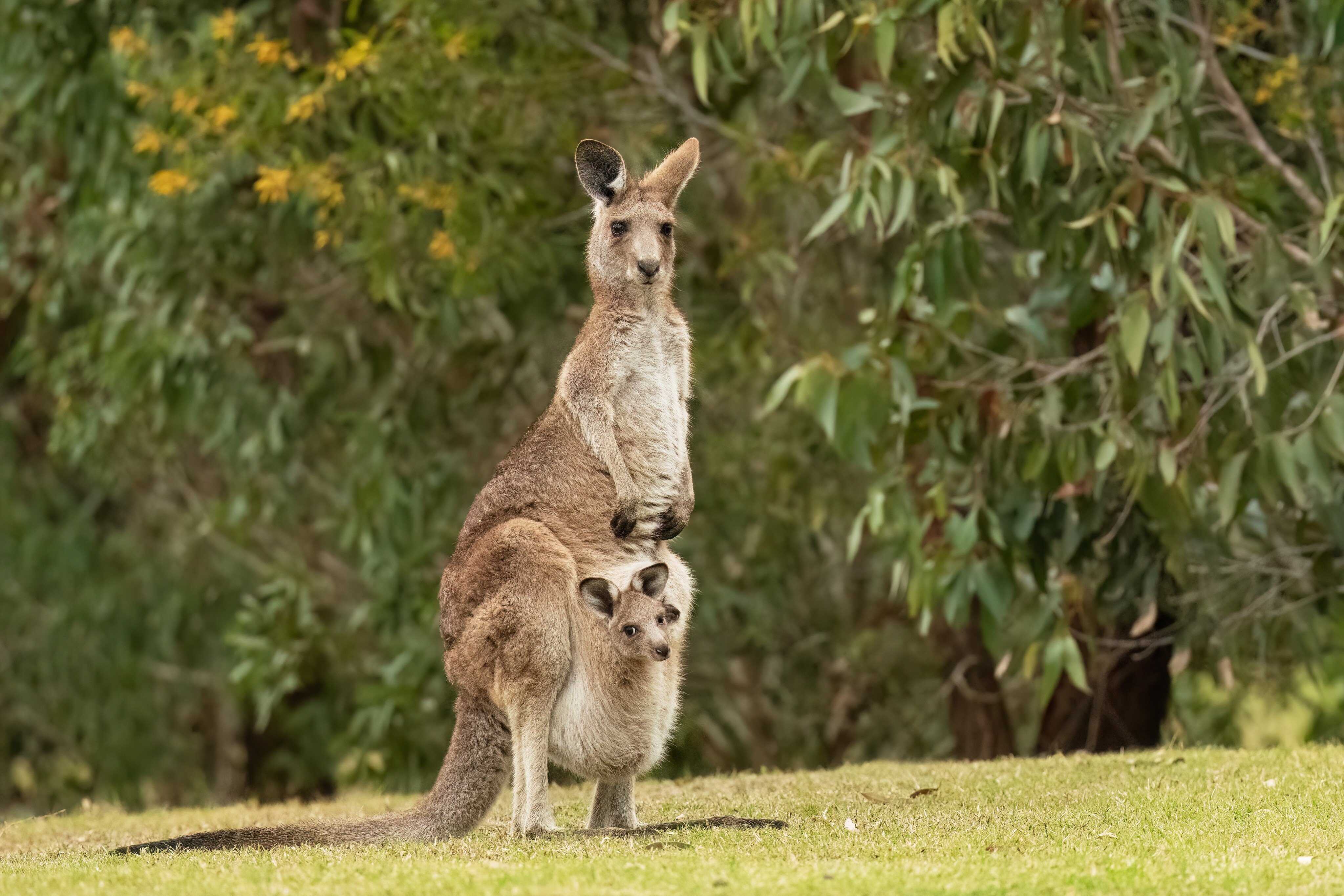
The indigenous people of Australia and New Guinea had names for each species of kangaroos, the mammal known for its powerful jumps.
There were also more than 250 native languages before Europeans arrived in the region. The English word for kangaroo likely comes from gangurru, the language of the Guugu Yimidhirr people who lived in northern Australia.
Gangurru refers to the eastern grey species, but now, kangaroo is used for all the animals in this group.
Use the puzzle below to test your knowledge of the vocabulary words in the story.
Suggested answers
Before you read: Answers may vary. (i.e. names hold meaning, they help us to identify things, that have connotations or underlying nuances, etc)
Stop and think: Greece. In Greek, hippopotamus means “river horse”. In Greek mythology, a giant serpent is killed by the sun god Apollo, which gave us the name python.
Consider: Kangaroos are native to Australia. The word probably came from an indigenous Australian people called the Guugu Yimidhirr people, who called the animals gangurru.