Difficulty: Summiteer (Level 3)
A company in Hong Kong is turning oyster shells into materials for constructing buildings.
Limestone is an important ingredient in cement. Oyster shells are 91 per cent limestone, so they are perfect for making cement.
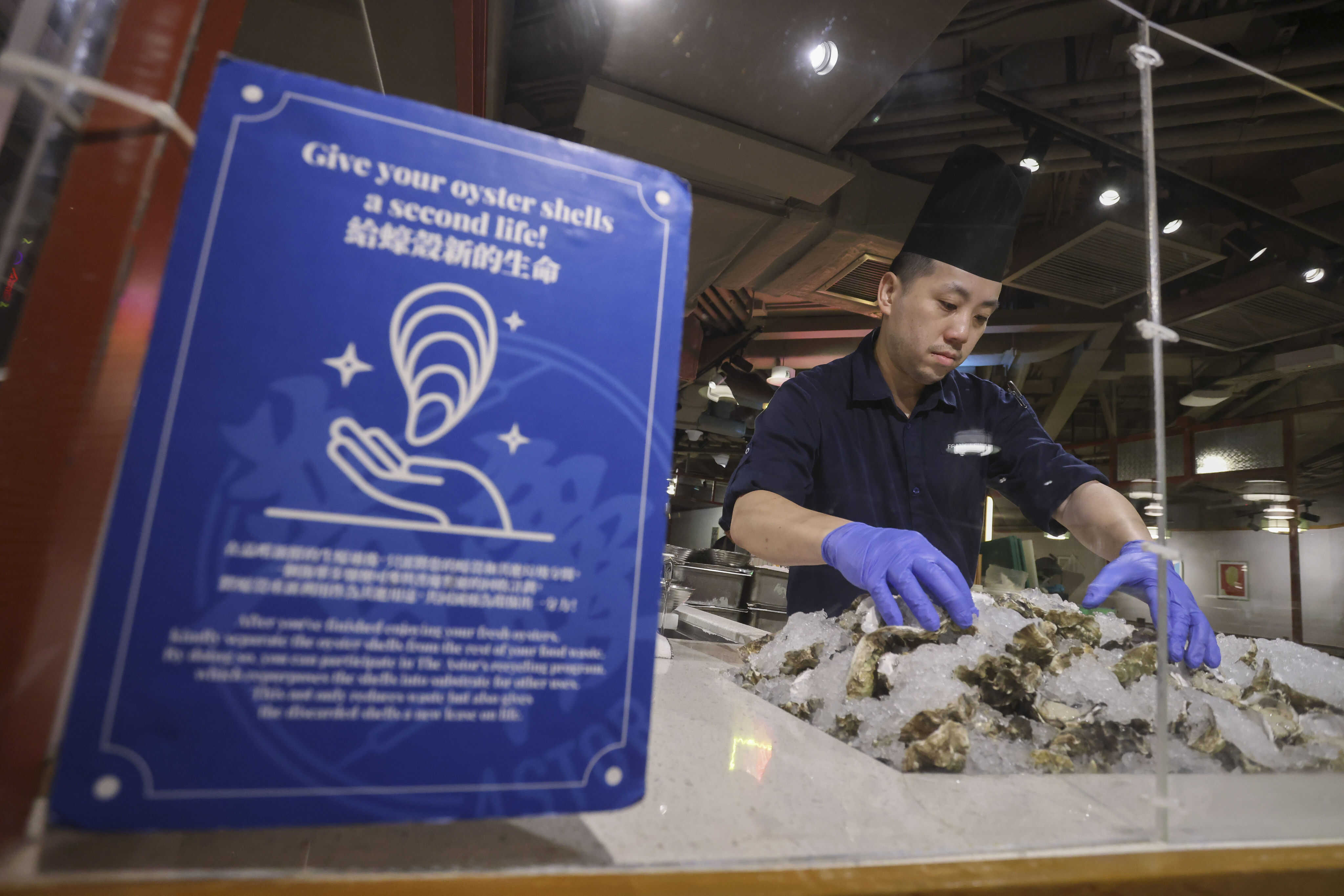
Green Island Cement in Hong Kong is working on an upcycling project to turn restaurants’ oyster shells into building materials. They want to reduce the waste in landfills while also meeting the huge demand for cement.
Teamwork is key
Two hotels, Eaton HK and The Langham, are partners in this programme. They have saved eight tonnes of oyster shells for upcycling in the first 17 months of the project.
Harvey Thompson, the general manager of Eaton HK, said that his employees supported the idea.
Thompson felt the oyster programme was a chance to raise awareness about sustainability for everyone involved.
“If our own teams understand it, they go out and send that message home as well,” he explained.
Besides educating employees, Thompson also makes sure that restaurant customers and hotel guests learn about these sustainability efforts.
“We wanted ... to make sure that all of our guests saw the oyster shells. They were participating in something [that] maybe they didn’t realise at the time,” he said.

Thompson said learning about this project could encourage people to be more sustainable in everyday life.
According to Green Island Cement’s division manager of operations and environmental business, Raymond Cheung Wai-man, other hotels were more hesitant about joining this initiative because it was more work for hotel staff to clean and store the oysters.
“We also tried to contact other hotels during the past year but [did not get] many positive responses,” Cheung said.
But Thompson is confident that other hotels have the means to join this project and noted that making a difference required working together.
Youth are the future
Both Thompson and Cheung believe the key to making this programme a success for years to come is to normalise oyster upcycling and involve youngsters.
“Young people have got creative minds, and what was not possible 10 years ago is possible next year or the year after,” Thompson said. “I think that’s where they have huge opportunity by just opening up their creativity and thinking about things differently in the future.”
Cheung encouraged youngsters to push beyond adversity when looking to solve a problem in society.
“It doesn’t stop when you face a challenge,” he said. “Those are the little steps that we need to overcome to make the whole thing work. Just don’t stop when you face your first barrier.”
Use the puzzle below to test your knowledge of the vocabulary words in the story.
Suggested answers
-
Stop and think: What is the benefit of upcycling oyster shells? Upcycling oyster shells helps with a large demand of cement. It promotes sustainability, since it is using a common natural resource to make cement. It also reduces waste, since oyster shells often go to landfills.
-
Read and answer: Why are oyster shells good for creating cement? Cement is mostly made up of limestone, and oyster shells are comprised of 91 per cent limestone. This means that the shells can be easily turned into cement.
-
Think back: Why did other hotels decide not to get involved in this project? The other hotels that Cheung contacted were not keen to join because it would be a burden on restaurant staff. Instead of just throwing away the shells, staff would have to clean the shells really well and store them for Green Island Cement.