Difficulty: Summiteer (Level 3)
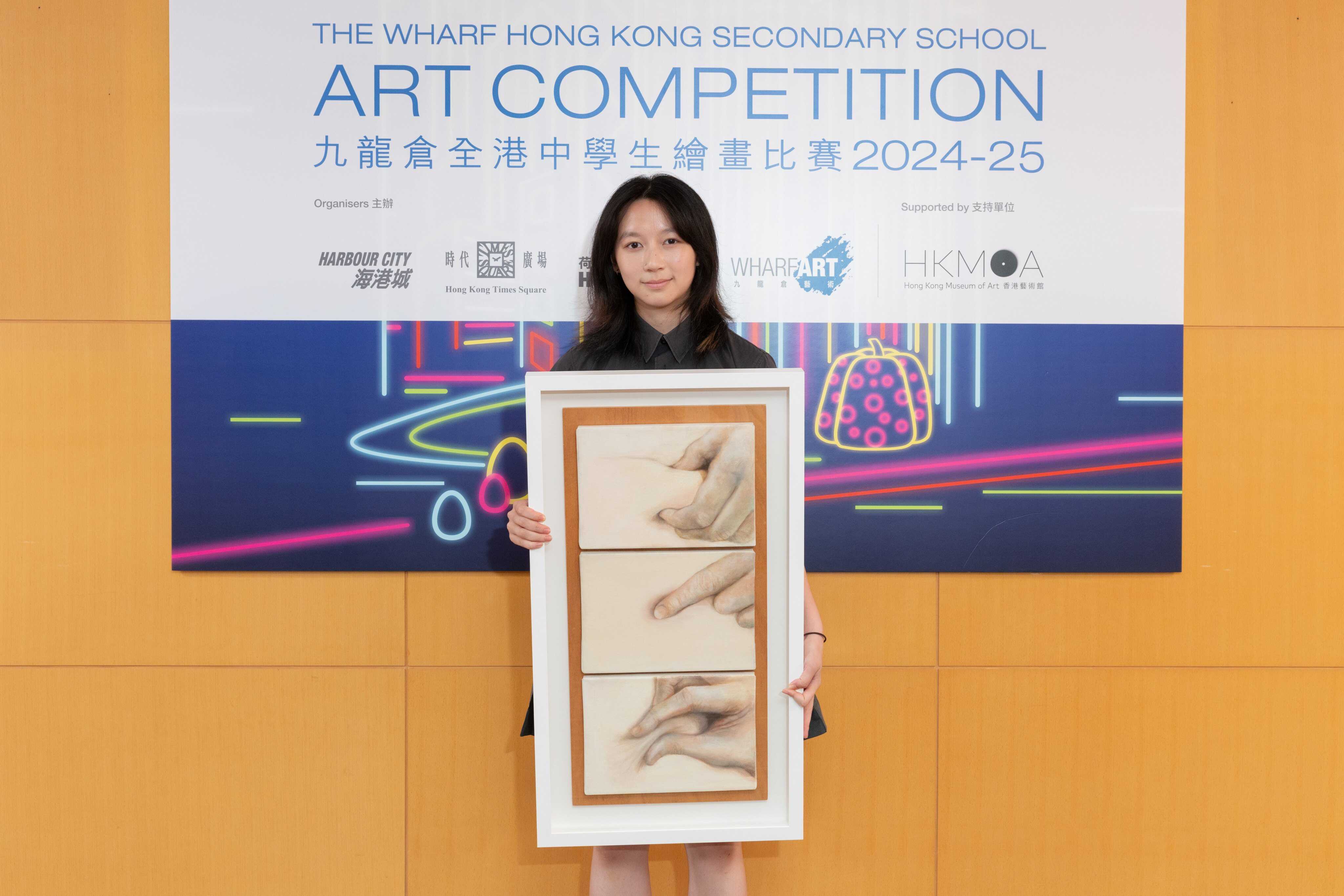
A pair of fingers presses into the skin, leaving a lingering pain that does not go away. This image is at the heart of Unseen Scars, a painting about body shaming by 19-year-old Faith Wong Tin-laam.
Her work won the painting category in this year’s Wharf Hong Kong Secondary School Art Competition, an annual programme supported by the Hong Kong Museum of Art.
This year, entries came from more than 280 secondary schools. A team of professional artists and designers selected 25 excellent works, including paintings and digital artwork.
Hidden emotional struggles
Wong’s piece was inspired by the remarks she has heard about her body: “You should do more exercise,” or “You should eat less”.
Even though the comments might seem unimportant, they can be very hurtful. The artist compared the feeling to a pinch: “It’s a really small motion, but it hurts so much,” said Wong, who plans to study fine arts at Baptist University after taking a gap year.
This art piece has three parts. Two parts are based on Wong’s body, and the third on her friend’s, conveying the intense scrutiny many people face.
The art shows the pressure many people feel from others. For example, the skin under the fingers becomes darker, and shadows show the pain.
Wong hopes these images will resonate with those who have experienced shame and spark awareness of how casual comments can cause harm.
“Sometimes we don’t have the courage to say ‘I feel uncomfortable because you said this about me’,” she expressed. “So I wanted to use art to ... express the discomfort people feel.”
Life’s journey through time
In her piece, which translates to “life train – key frames”, digital graphics champion Kelly Mao Yansu depicts childhood, middle age and old age within subway carriages. They represent how cultural expectations can make our lives feel like a fixed path – like a train on its tracks.
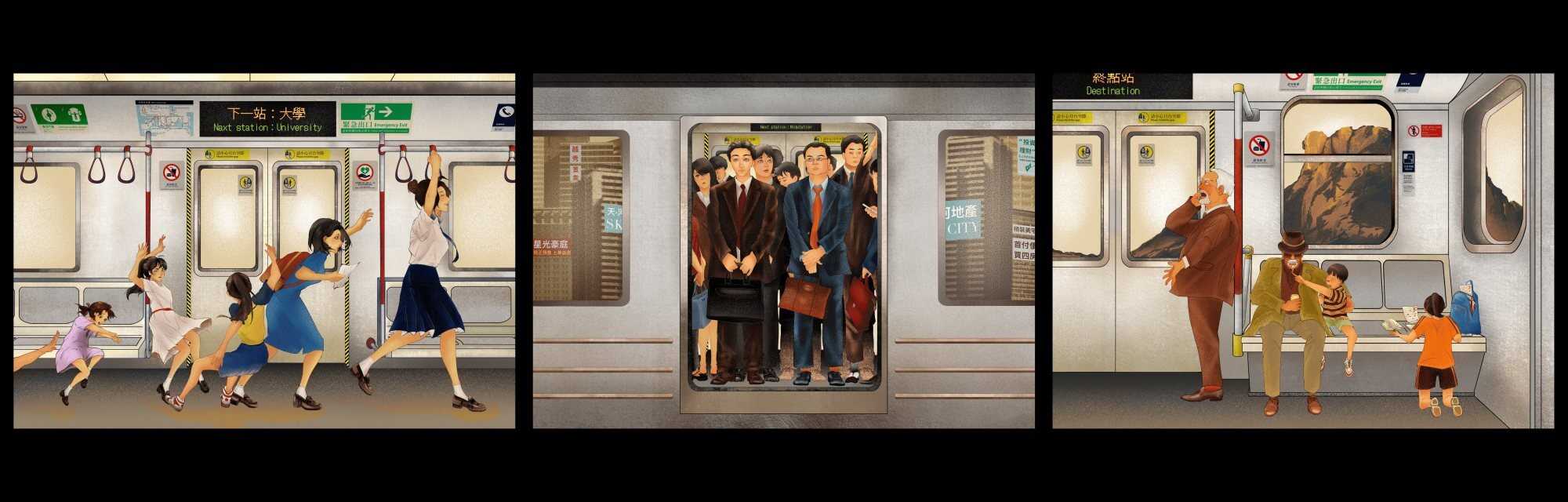
“People place their happiness on a future point in time, avoiding their current feelings and comforting themselves that hardship now is what’s better for the future,” said the 19-year-old, who aims to study fine arts at the Chinese University of Hong Kong.
To portray life stages she hasn’t yet reached, Mao interviewed adults and elders, learning that midlife often brings pressures to buy property and secure a job, while in later years, hopes shift to children’s accomplishments.
The process shifted her perspective: once believing that missing a key moment could ruin her future, she now thinks that “the margin for error in life is greater than we often perceive”.