Difficulty: Summiteer (Level 3)
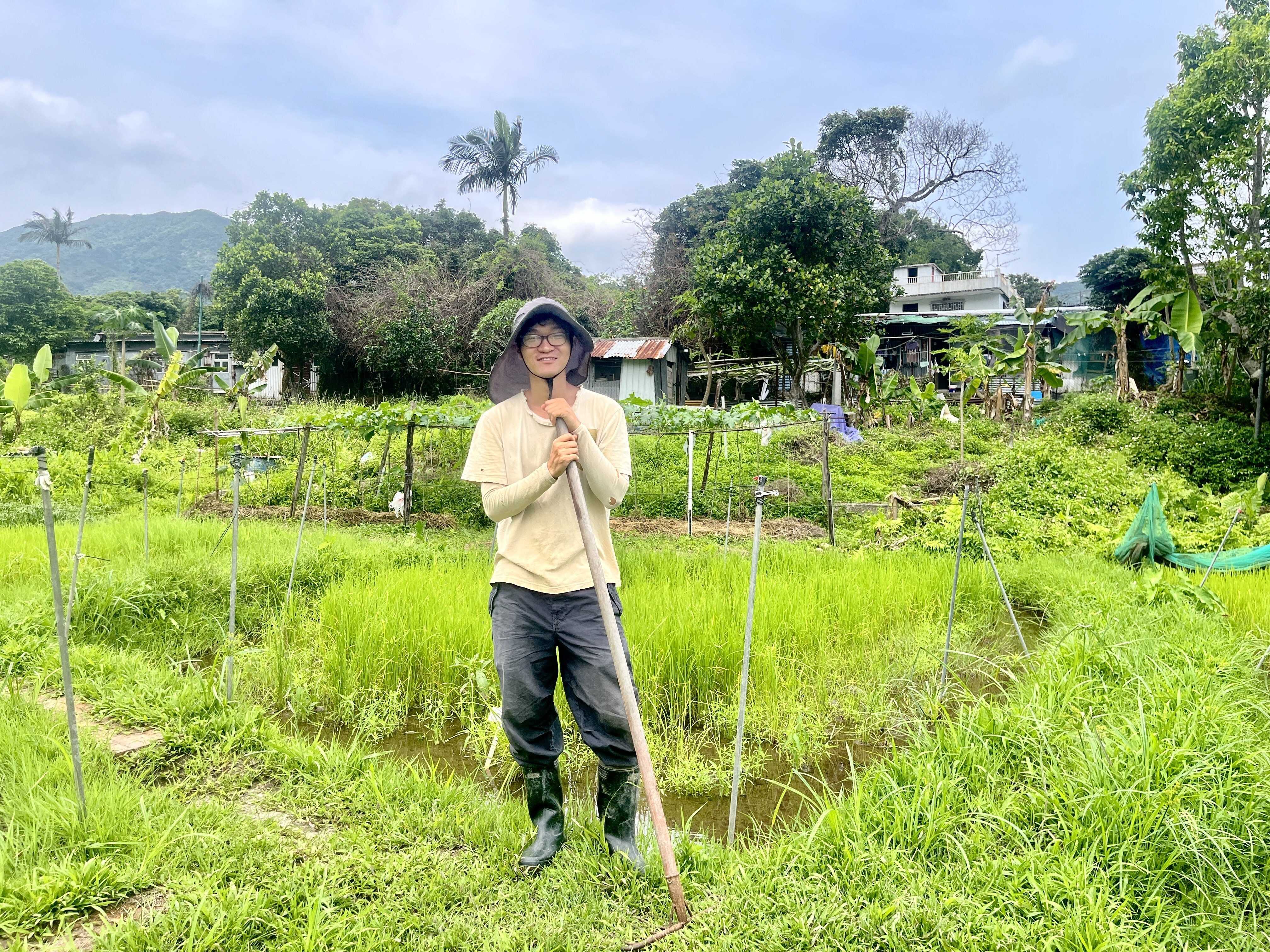
Under the hot Hong Kong sun, 26-year-old rice farmer Kwok Yau-wah is often knee-deep in water and mud, doing back-breaking work in the valleys of Lung Ah Pai in the Tai Po district.
“The hardest part of the year is ploughing the fields for the late crop in July,” Kwok said. “Doing the most gruelling manual labour under 30 to 40 degrees Celsius ... in high humidity is incredibly tough.”
But the scorching heat is only half the battle.
“Last August, we had consecutive black rainstorms and typhoons right during our seedling cultivation period. It washed away a lot of the topsoil, the nutrients and the seedlings themselves,” Kwok explained, adding that flooding was a perpetual threat.
Gifts from the land
For the last four years, Kwok has been working with other farmers to help bring back and record the city’s native rice, as part of a project led by Gift from Land, a Hong Kong-based social project.
Karen Kwok Ka-yan, the initiative’s senior officer, noted that places like Yuen Long and Tai Po used to be full of rice paddies.
“What surprised us most was that Hong Kong actually had almost no records of its own rice,” she said.
Now, on its farms in Tai Po, the project has brought back 35 kinds of local rice. It has introduced new types as well.
“Unlike Japanese or Thai rice, which can be quite sticky, many of our heritage Hong Kong varieties are very loose and fluffy with distinct grains. Some even have a slightly rubbery texture when you chew them,” the senior officer Kwok explained.
Life spent in the fields
For the young farmer Kwok, his work at Lung Ah Pai is dictated by the seasons. He has two harvests each year. The first crop is planted in March and harvested by July. The second crop is planted in August and harvested in November.
After getting the seeds ready and ploughing the ground, they need to manage the water levels. When the rice grows to a certain height, the team floods the fields. As the rice plants flower and the grains develop, the farmers use bird nets to protect them. After the harvest, they process the grains into the rice we know.
As this project nears its end, Kwok and his colleagues plan to take their seeds to a new paddy to continue growing Hong Kong’s heritage rice.
Kwok’s connection to the land began during a school programme about local rural culture.
What brought him to farming was a wish for autonomy.
“City jobs feel very rigid and lack flexibility; you’re always doing the same pile of tasks,” the farmer said. “In the fields, everything is subject to change – if you want to alter the shape of your field or plant different varieties, you can implement new ideas immediately.”