Difficulty: Challenger (Level 2)
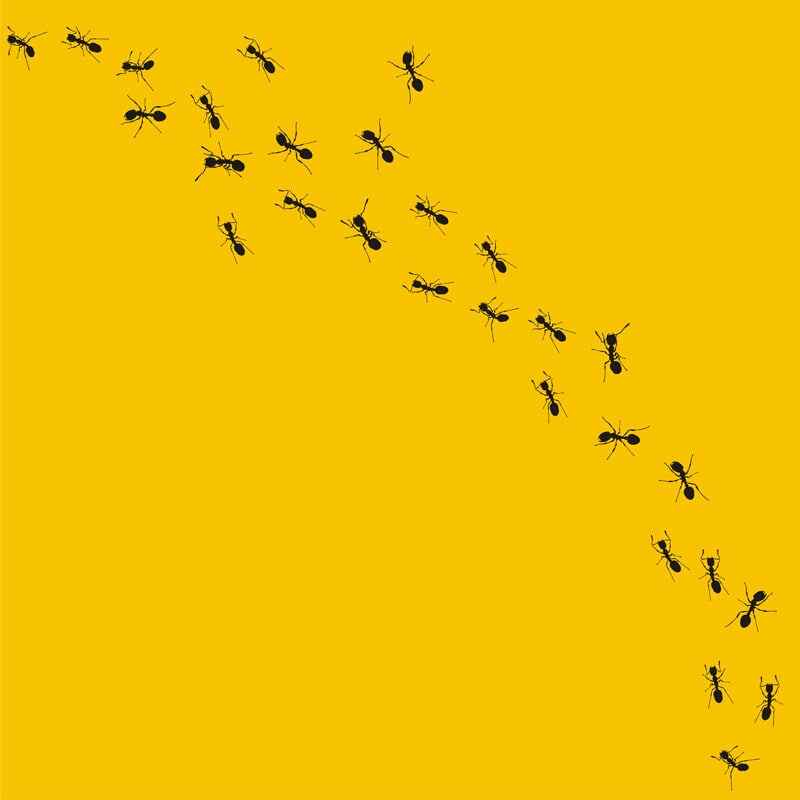
How do ants make climbing walls, ceilings and other surfaces look so easy? Worker ants are all female. They have an impressive toolbox of claws, spines, hairs and sticky pads on their feet. These help them scale almost any surface.
Human hands vs ant feet
To understand ant feet, it helps to compare them with human hands. Humans have two hands and ants have six feet. Ant feet are similar to your hands but are more complex. They have an additional set of weird-looking parts that enhance them.
Ant feet have five jointed segments. The end segment has a pair of claws. The claws are shaped like a cat’s and can grip irregularities on walls.
Each foot segment has thick and thin spines. They also have hairs that provide extra traction. The hairs stick into microscopic pits on textured surfaces like bark.
Claws and spines also keep ant feet safe from hot pavement and sharp objects. This is like how your feet are protected by shoes. But the feature that truly separates human hands from ant feet is inflatable sticky pads. They are called arolia.
Sticky feet
Arolia are located between the claws at the tip of every ant foot. These balloonlike pads allow ants to defy gravity. They help them crawl on ceilings or ultrahard surfaces like glass.
When an ant walks up a wall or across a ceiling, gravity causes its claws to swing wide and pull back. At the same time, its leg muscles pump fluids into the pads at the end of its feet. This makes them inflate.
The fluid is called haemolymph. It is a sticky fluid similar to your blood that circulates throughout an ant’s body.
After the haemolymph pumps up the pad, some of it leaks. This is how ants can stick to walls or ceilings. But when an ant picks up its foot, its leg muscles squeeze. This movement sucks most of the fluid back into the pad. Then it goes back up the leg.
An ant’s blood is reused over and over. It is pumped from the leg into the pad, then sucked back up the leg. None of it is left behind.
Ants are feather-light. Six sticky pads are enough to hold them against any surface.
At home in their underground chambers, ants use their sticky pads to sleep on the ceiling. This helps them avoid the rush-hour traffic of other ants on the chamber floors.
This article was first published in The Conversation. It was written by Deby Cassill, an associate professor of integrative biology at the University of South Florida.