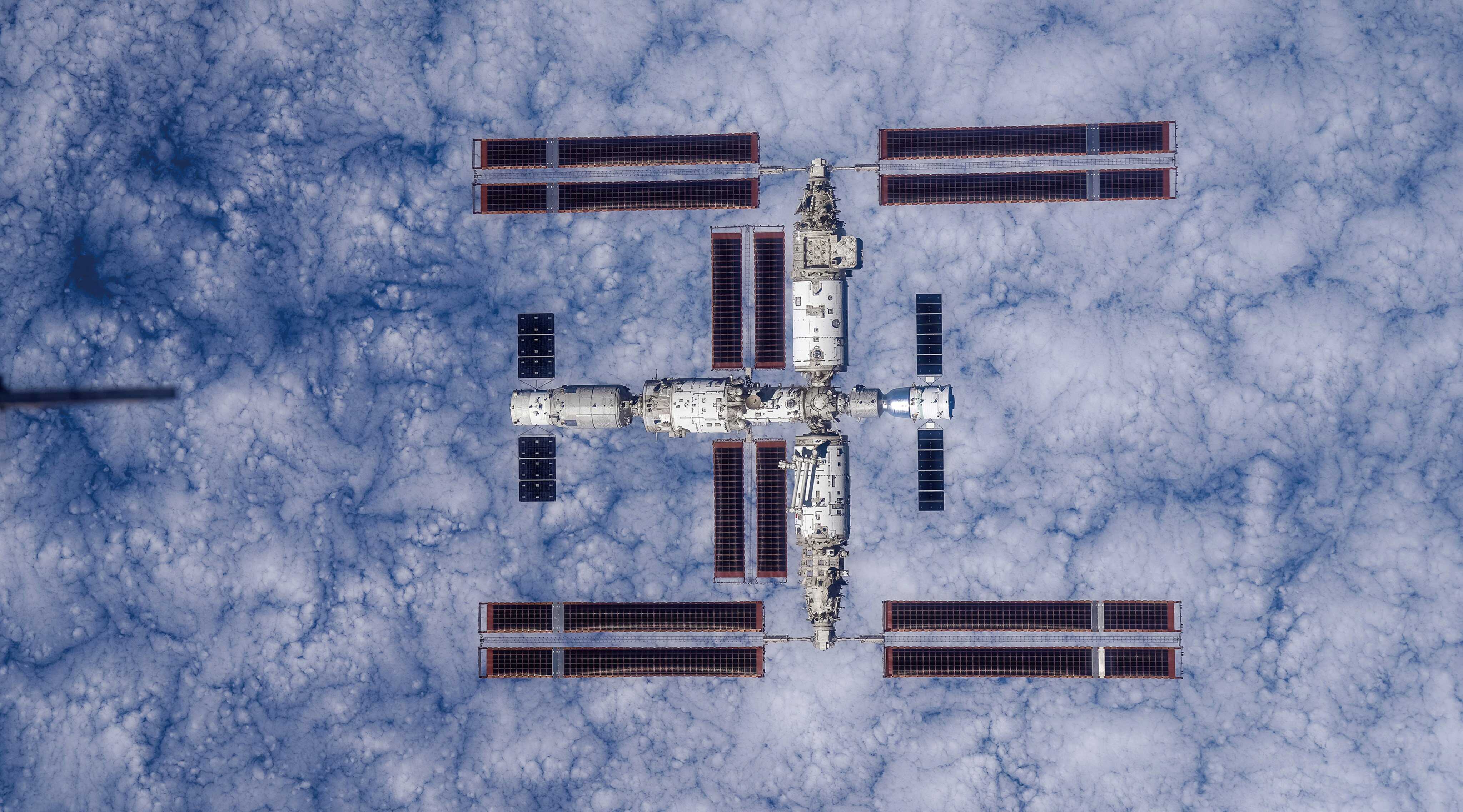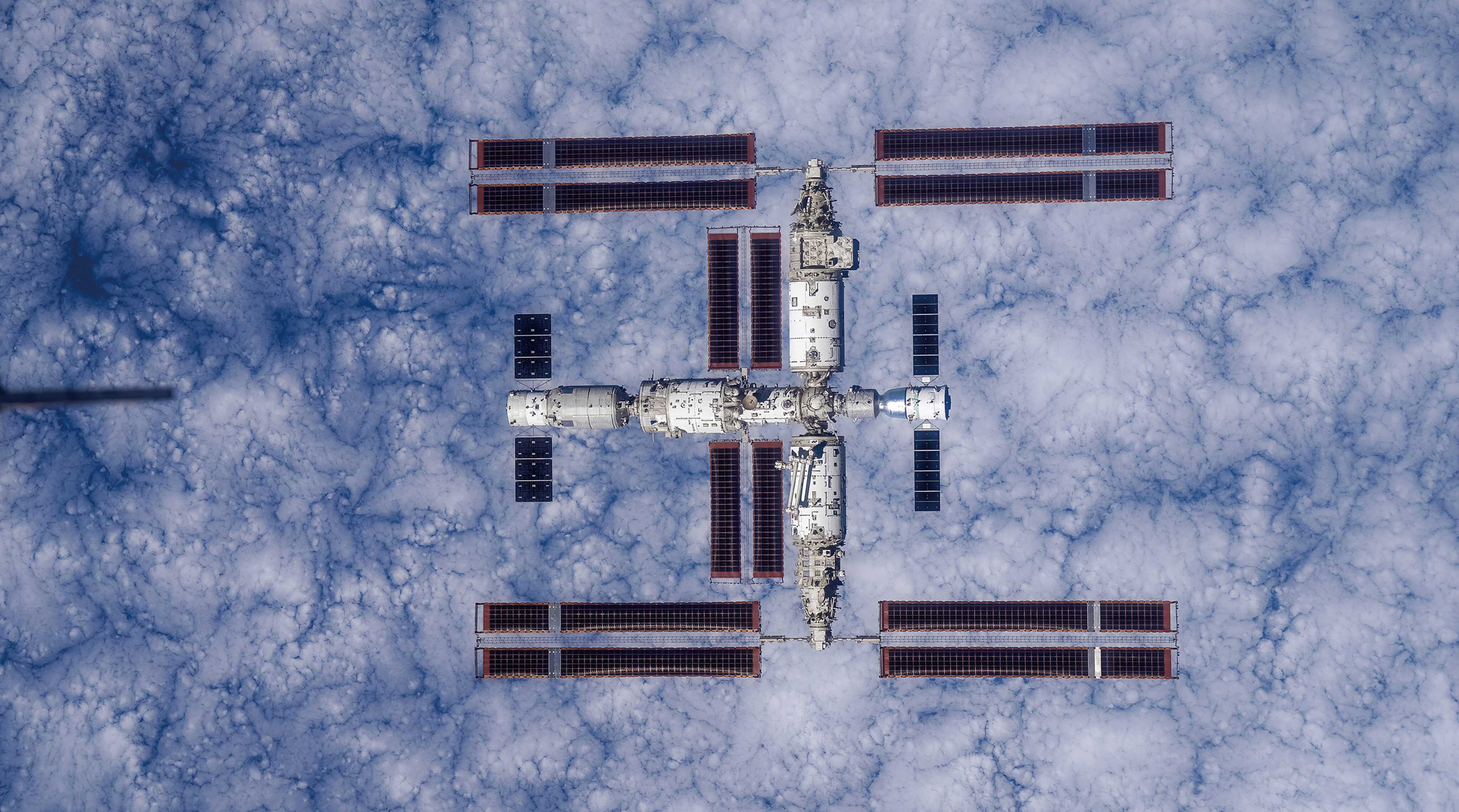
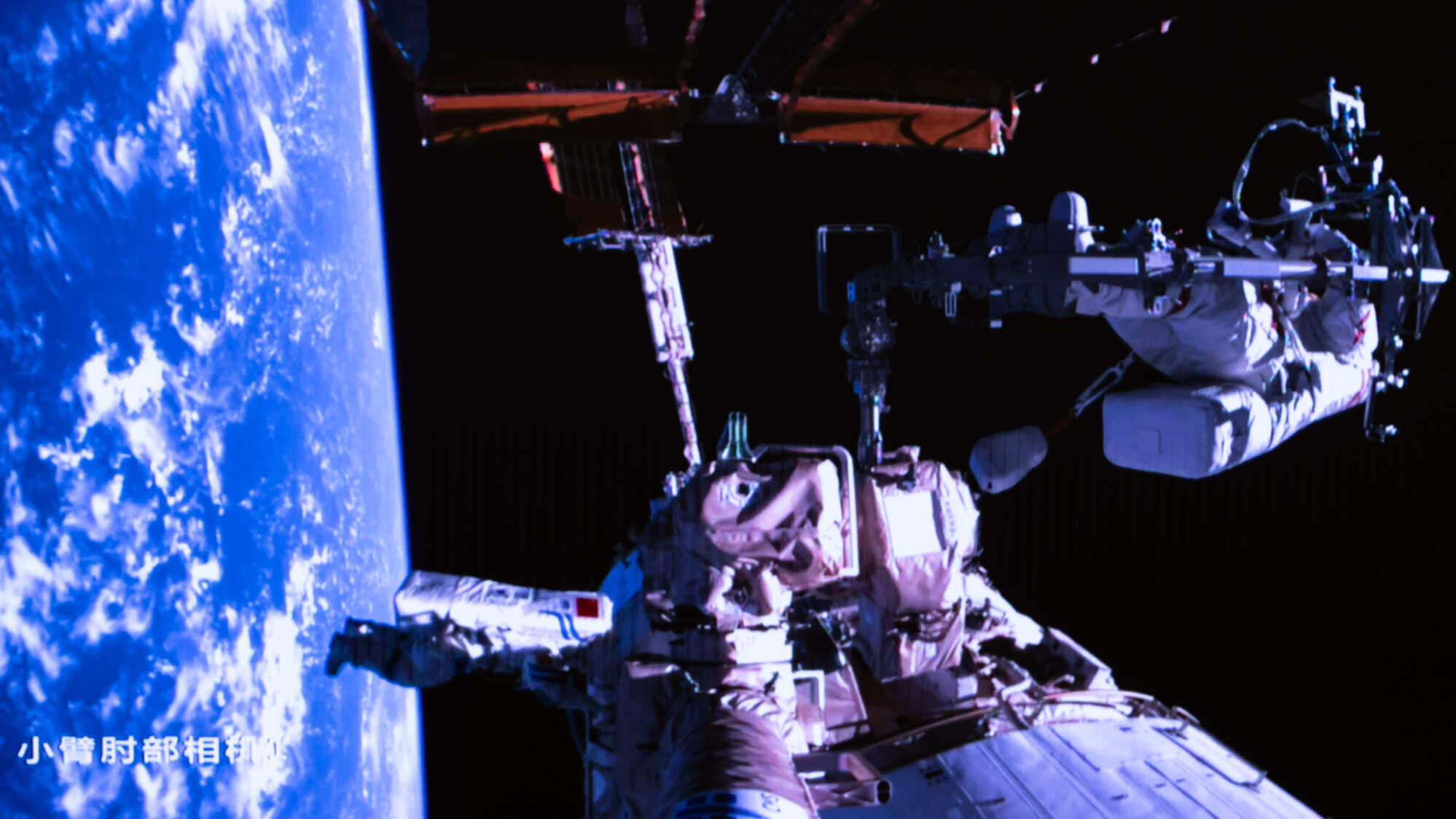
On space stations, astronauts live and do research in Earth’s orbit. There are two that are working today: the International Space Station (ISS), which is a collaboration between five space agencies, and China’s Tiangong space station.
On a space station, scientists do experiments that cannot be done on Earth. Their work teaches us about our universe, supports missions to the moon and shows how living in space affects humans.
The stations have different sections called modules. There are laboratories for research and rooms for astronauts to live and stay healthy. For example, the ISS has two bathrooms, a gym and a big bay window.
Space stations are key to exploring beyond Earth!
Draw your own space station
Materials
-
space station outline
-
coloured pencils
Instructions
-
Start by brainstorming what someone needs for living in space. Then, decide the rooms your space station will have.
-
Add details to each module, such as food, experiment equipment and more.
-
Add other elements like stars, planets or astronauts floating nearby to create the background scene.
Moon crater experiment
Materials
-
cardboard (sides should be at least 20cm long)
-
white toothpaste
-
spoon
-
small, light ball (a ping pong ball)
-
small rocks or pebbles
Instructions
-
Spread a thick layer of toothpaste into a circle on the cardboard. Its diameter should be about 15cm. Use the bottom of a spoon to make the toothpaste surface smooth, but make sure the toothpaste layer is a few millimetres thick.
-
Drop the small ball from three different heights onto the toothpaste to create craters. Do the same with small rocks or pebbles; drop them from three different heights to create more craters.
-
The moon’s craters are made when comets smash into its surface. In our experiment, the toothpaste is like the moon’s surface, and the rock and ball are comets. Do the craters look different based on the size of the “comet” and height of the drop? How does your “moon” look compared to the real version?