





Difficulty: Summiteer (Level 3)
Scientists have found a rare, well-preserved fossil of a reptile stomach in China. The sea reptile from 245 million years ago is preserved so well that it reveals the animal’s stomach, liver and intestines.
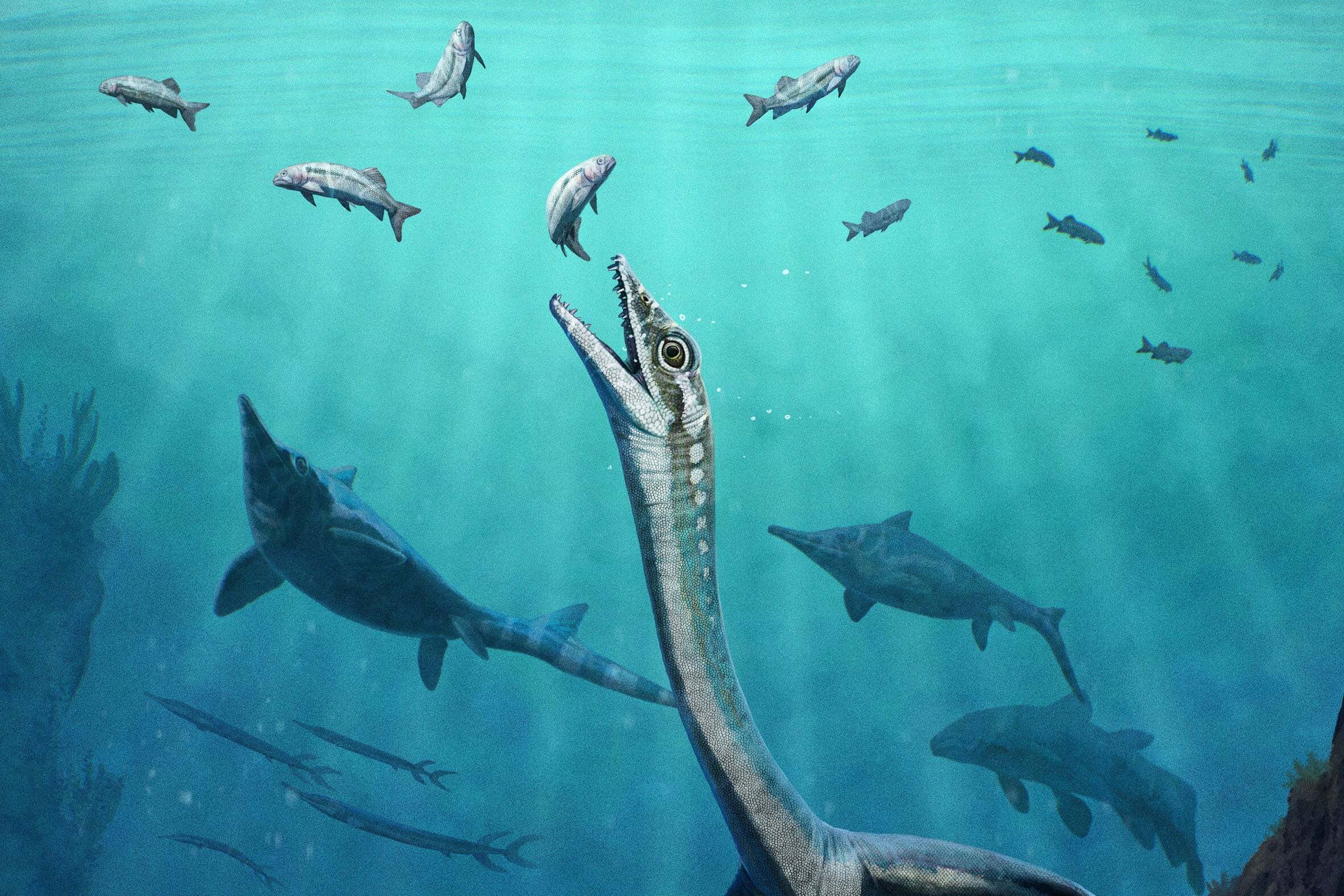
This Austronaga minuta was about 60cm long. It had a small head, a long neck and an even longer tail. Its fang-like teeth helped it eat slippery fish.
Its fossil was found in China’s southwestern Yunnan province.
This animal lived during the Triassic period. The fossil is in such good condition that scientists can see its entire digestive system. They found tiny fish scales in its stomach from its final meal.
Austronaga minuta was a fast swimmer and a distant relative of archosaurs. This group of animals includes crocodiles, dinosaurs and birds.
The fossil shows that the ancient reptile had a sac-like stomach with a single chamber for digestion. This is different from the double chambers found in birds, crocodiles and some dinosaurs.


