Say hello to American scientist Joseph Dituri, also known as "Dr Deep Sea".
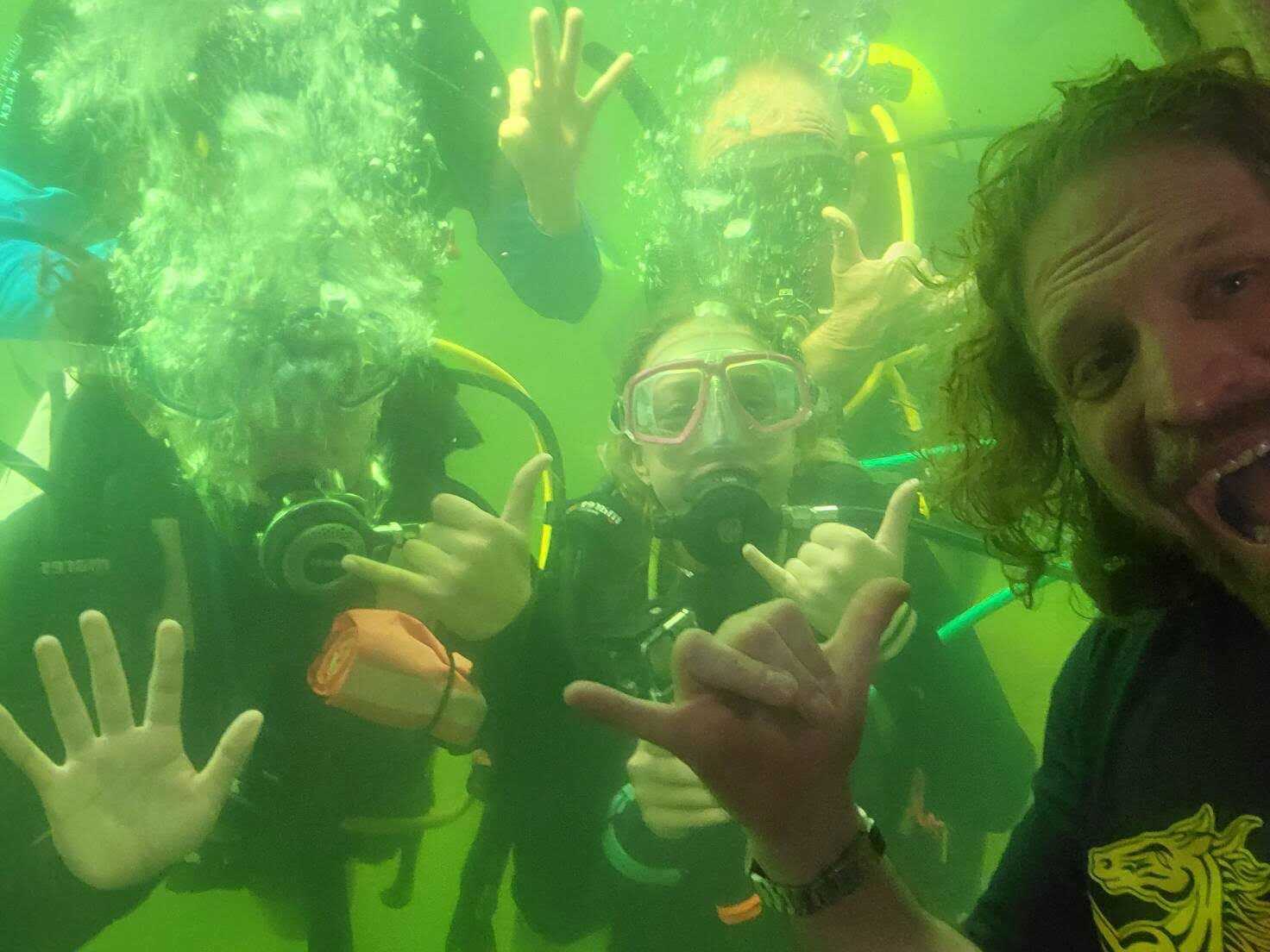
In the photo, he is enjoying his 33rd day underwater in a 9 square metre habitat nearly 7 metres below the waves. It's at Jules' Undersea Lodge in the US state of Florida.
Joseph spent 28 years as a diver with the American Navy. After seeing some of his friends get brain injuries while diving, he wanted to learn about helping people with brain injuries to heal.
He earned a degree in medicine and is now a professor. He is teaching virtual classes from his underwater home during his mission. Joseph is trying to break the world record for living in an underwater habitat. He plans to spend 100 days under the sea.
During his mission, he will do experiments and use new technology.
Our ecosystem on earth creates countless diseases, but it also holds the cures for them, Joseph says. We just need to find them, and "everything we need is on this planet". He won't be alone in his quest. Lucky students will have a chance to visit. Doctors will drop by to check his health. And he is hosting live-stream video conversations with visiting scientists.
The more we know about the laws of physics and the human body, he believes, the more we will know about our limits and capabilities. That is why he is collecting data on himself for medical research.
Joseph is having his blood, urine, saliva and brain function tested regularly in the hope of understanding the human body in an underwater environment. He is seeing how far he can push his body (and mind).
He wants this mission to get more children interested in STEM subjects.
"STEM is one of the things that we need to start making science popular," he says.
Joseph is the opposite of boring. He wants to make science exciting again!
Five things to know about
1. The Deep Sea is the largest habitat on our planet, taking up more than nine-tenths of the Earth's living space, but it's also the most unexplored!
2. The first 200 metres of the ocean's depth is called the "open ocean". Much of the sea life we know about lives here, where there is light.
3. Deeper than 200 metres, where there is little light, you enter the "twilight zone". When you pass 1,000 metres, the water is completely dark, and you have reached the Deep Sea.
4. We know very little about the Deep Sea and the things that live there because of its great depth. This creates big difficulties for explorers.
5. In fact, we probably know more about the surface of the moon than about the deepest seas of Earth!