The International Day for the Eradication of Poverty falls on October 17 every year. On this day, people gather to discuss ways to end poverty, which is when people do not have enough money to get food, medicine, education and a place to live.
The United Nations (UN) has programmes to help poor people around the world.
In 2000, UN countries set the Millennium Development Goals (MDGs). These aimed to reduce poverty in areas such as health and education.
In 1990, there were 1.9 billion people who were living on less than US$1.25 (HK$9.76) a day. That number went down to 836 million by 2015. In 2000, there were 100 million young children who were not going to primary school. By 2015, that number went down to 57 million.
Now, the UN is working to end poverty through its Sustainable Development Goals for 2030.
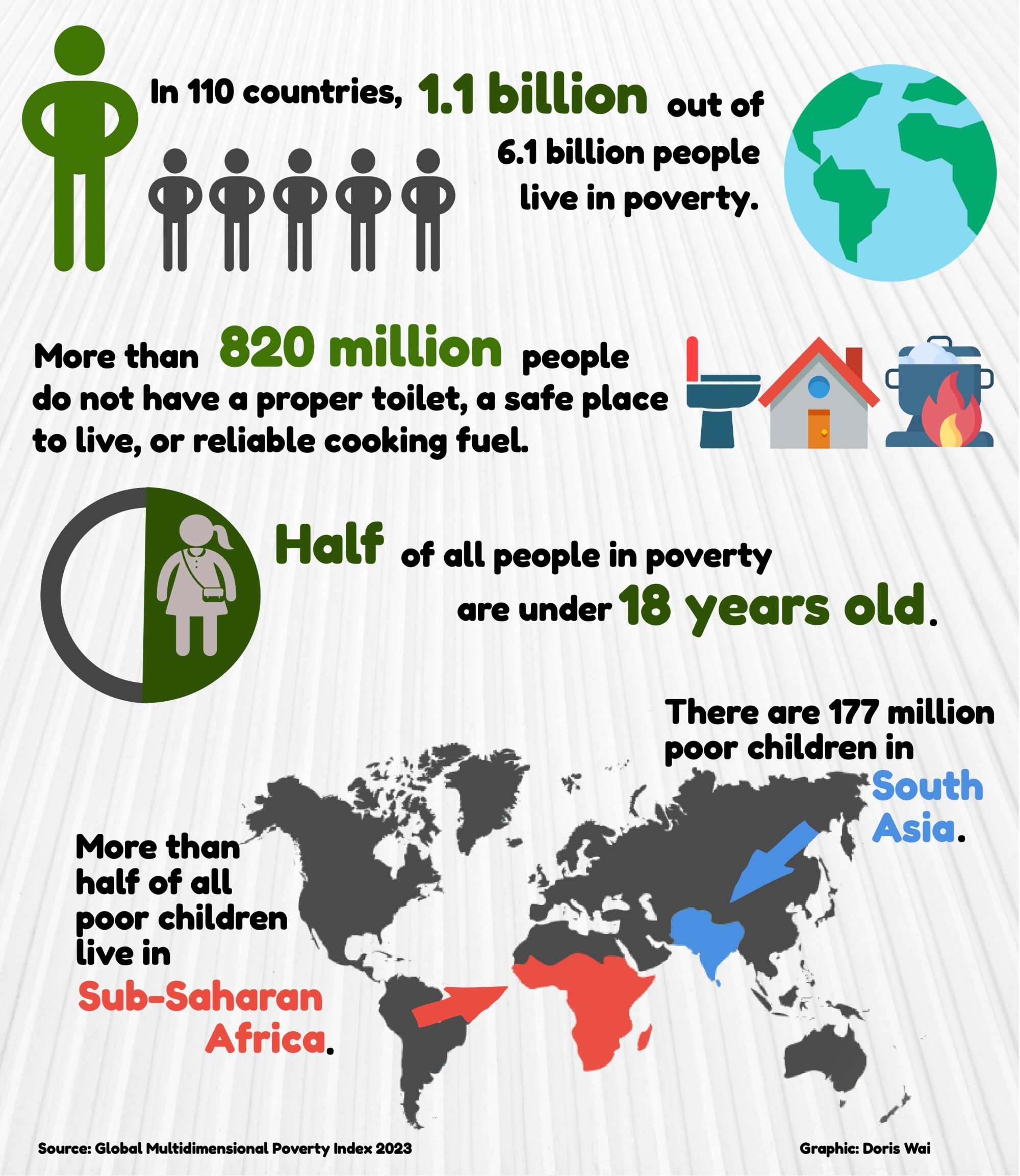
The UN also has other programmes to address poverty. The United Nations Children’s Fund (Unicef) helps improve the lives of the world’s children. The World Food Programme (WFP) gives food to people in need and helps farmers grow more crops. But there is still more to do because 1.1 billion people today still live in poverty (see graphic).