YoungPost Club Learn
DOWNLOAD OUR APP
appstoregoogleplay
FIND US AT
My JourneyMy VocabularyMy Leaderboard
My AccountSearchAbout UsContact Us
Subscription Plan
School Subscription
YOUNG POST
NewsTrendingBeing wellLearning zoneShare with usQuizzes
SPARK
NewsTrendingBeing wellLearning zoneShare with usQuizzes
POSTIES
Big readEye on the newsHa-ha-happeningsThings to doYour saySteam studioHealth and happinessQuizzes
Subscribe to Young Post Club to access our great content
ABOUT US|CONTACT US|WRITE FOR US|PRIVACY POLICY|TERMS & CONDITIONS
©2026 Young Post Club. All rights reserved.
My Journey Hello
Brand Avatar
Young Post
My Journey illustration

With a subscription, you can answer quizzes and track your reading progress.

Read / STEAM studio

Meet the newly-identified dinosaur named after a trickster god

Fossils of the Lokiceratops were found in the US and reveal it had curved horns, making it a relative of the Triceratops
byReuters, Doris Wai
Published: 10:45pm, 18 Aug 2024
Length: 288 words
Meet the newly-identified dinosaur named after a trickster god

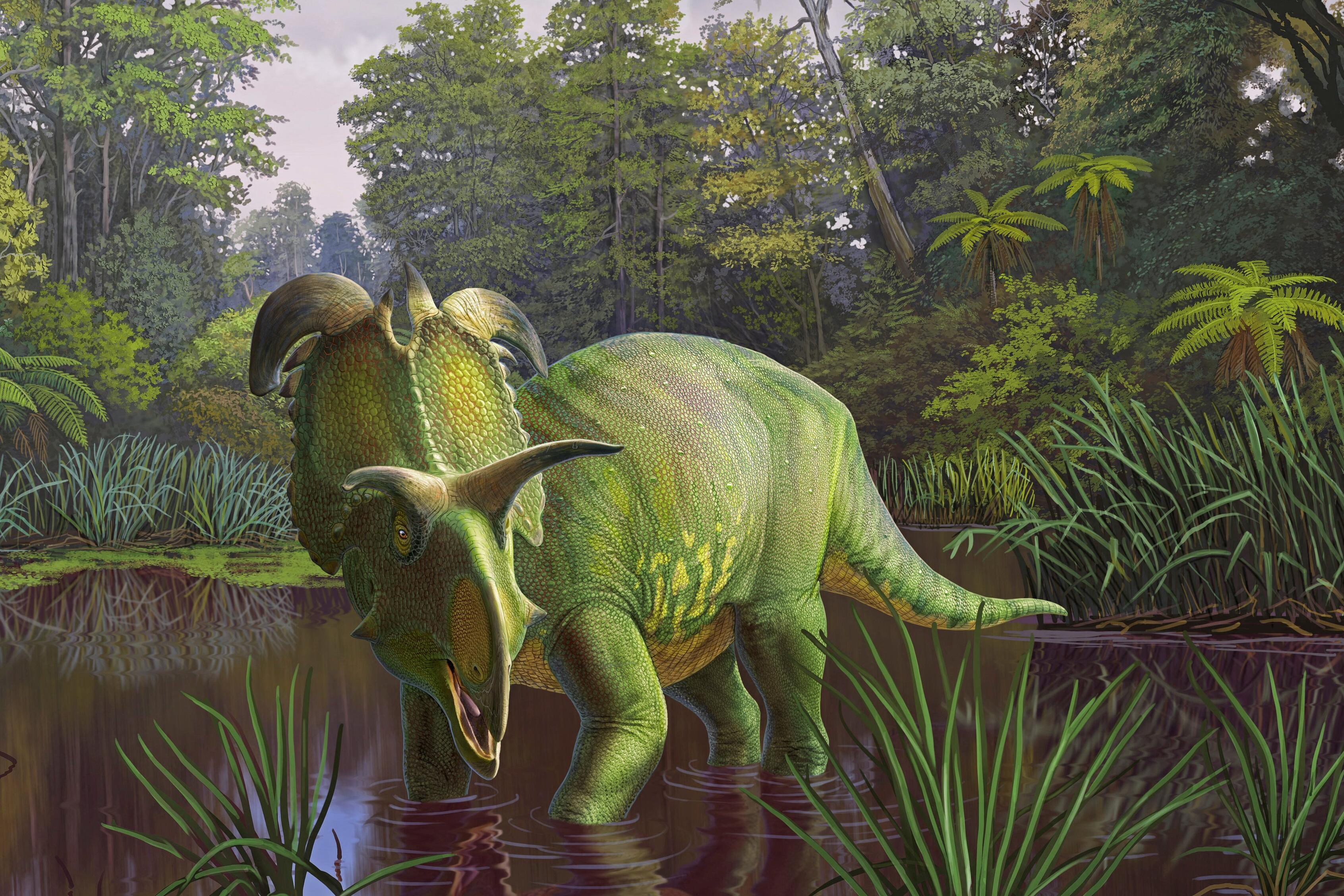
An artist’s impression of the newly-identified Lokiceratops, whose fossils were unearthed in northern Montana in the US. Photo: Sergey Krasovskiy/Handout via Reuters

Difficulty: Challenger (Level 2)

About 78 million years ago, in what is now Montana in the US, a four-legged plant-eating dinosaur lived. It looked a bit like a rhinoceros. However, it had a set of horns on its head.

This newly identified dinosaur is called Lokiceratops rangiformis. It was about 6.7 meters long and weighed around five and a half tonnes. It used a powerful beak at the front of its mouth to eat ferns and flowering plants, scientists said in June.

The horns looked like weapons the trickster god Loki had in Norse mythology. This is why they named the dinosaur after him.

Lokiceratops had two curved horns more than 40 cm long above their eyes. They also had small horns on their cheeks and blades and spikes along their head shield.

They had at least 20 horns on their frills, including a pair of curved blade-shaped ones. Each was about 61 cm long. Those are the largest frill horns ever observed on a dinosaur.

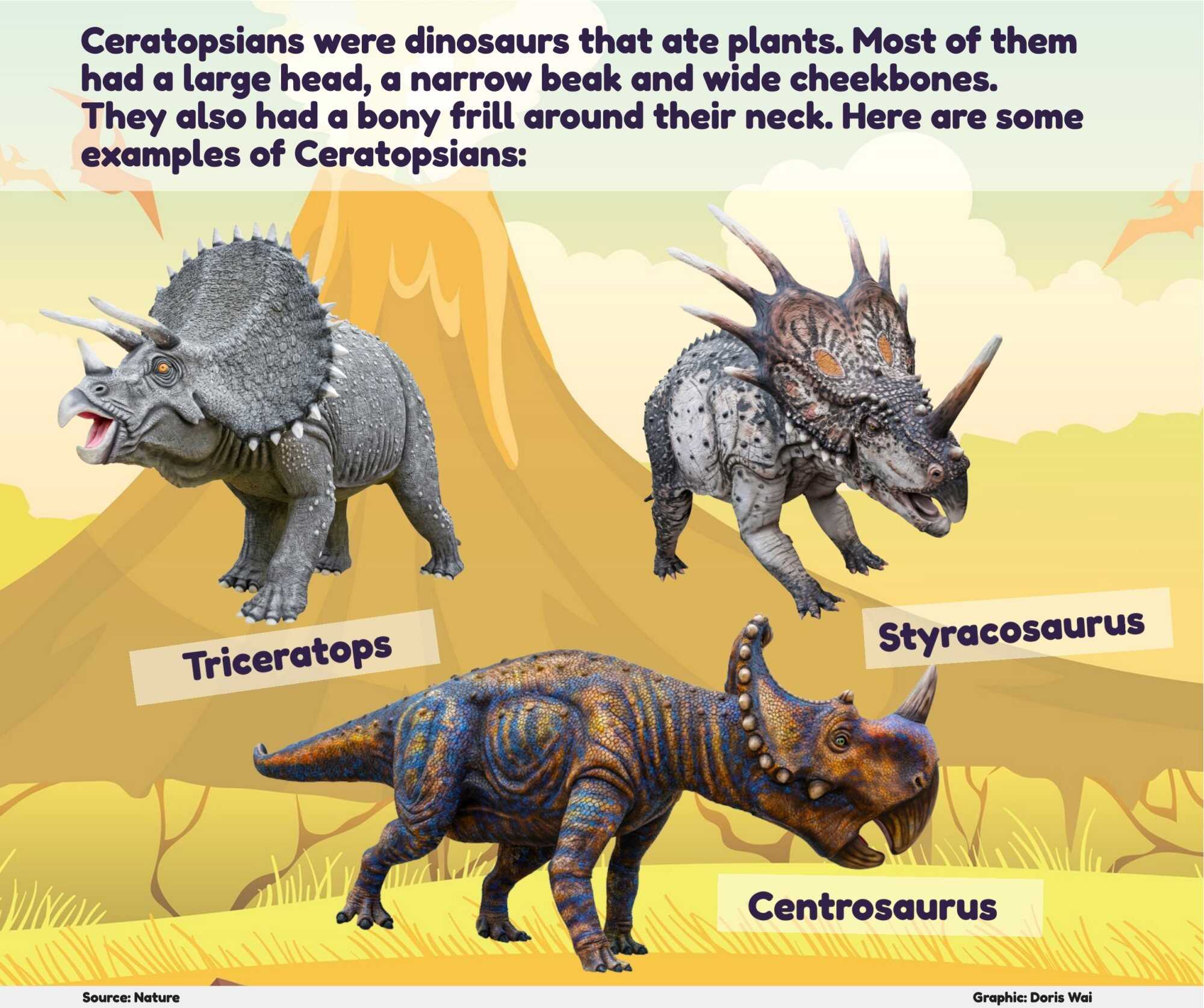
Lokiceratops was one of several species of horned dinosaurs. This species was called ceratopsians (see graphic).
Joe Sertich is a palaeontologist at the Smithsonian Tropical Research Institute and Colorado State University. He said the horns and frill on Lokiceratops and other horned dinosaurs were probably for show.

They might have used them to scare other dinosaurs or attract mates. They also helped them find others of the same species.

IN THIS ARTICLE
Dinosaurs
Science

KEEP READING
cover
Things to do
Activities that will give you a glimpse into palaeontology
10 Mar 2024
cover
Big read
What a palaeontologist wants you to know about dinosaurs and fossils
10 Mar 2024
cover
STEAM studio
Facts about the T. rex, king of the tyrant lizards
03 Mar 2024