Difficulty: Challenger (Level 2)
Heatwaves are going to be more frequent, be more intense and last longer, the World Health Organization (WHO) has warned.
“The summers ahead will be harder,” Hans Kluge said. He is the director of the WHO’s European region.
Human-made climate change is making heatwaves around the world worse. Will the human body be able to adapt to higher temperatures?
Yes, to some extent. However, that adaptation has clear limits, said medical meteorologist Kathrin Graw. She works with Germany’s national weather service, the Deutscher Wetterdienst (DWD).
“Within a heatwave, the longer it lasts, the more of a burden it becomes for people day by day,” Graw said. “Especially … when nights remain warm, and sleep quality deteriorates as a result. The heat can be harder to cope with the following day.”
“The longer the heat persists, the more people die,” Graw said.
She pointed to a recent DWD study. It showed that the risk of fatal consequences from heat rises the longer a heatwave lasts.
For people with heart disease, extreme heat can be very dangerous.
In the first few days of a heatwave, deaths increase by 8.5 per cent. By the 11th and 12th days of continuous heat, deaths increase by 18 per cent.
The human body is somewhat able to adapt to heat over the course of a summer, the medical meteorologist said. Weather services like DWD are changing how they issue heat warnings. They send out warnings at lower temperatures at the beginning of summer, or after a cooler period. By the end of summer, they only send warnings when it gets much hotter.
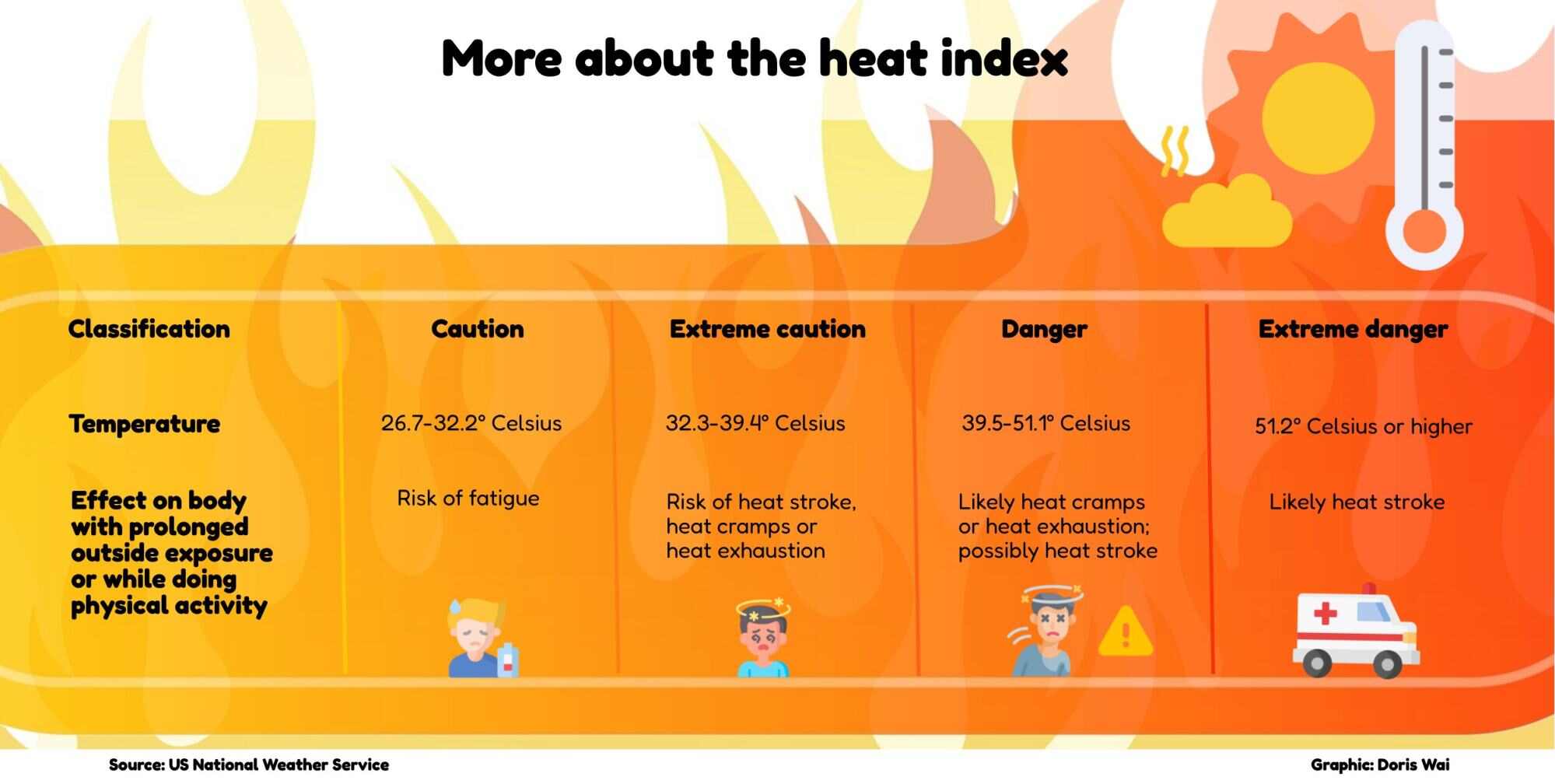
To decide the best time to send a heat warning, meteorologists also rely on the heat index. The heat index looks at both the temperature and the moisture in the air. This tells us how hot it actually feels outside (see graphic).
Graw warned that people cannot adapt to rising temperatures forever. Because of climate change, temperatures have been rising faster in recent years.