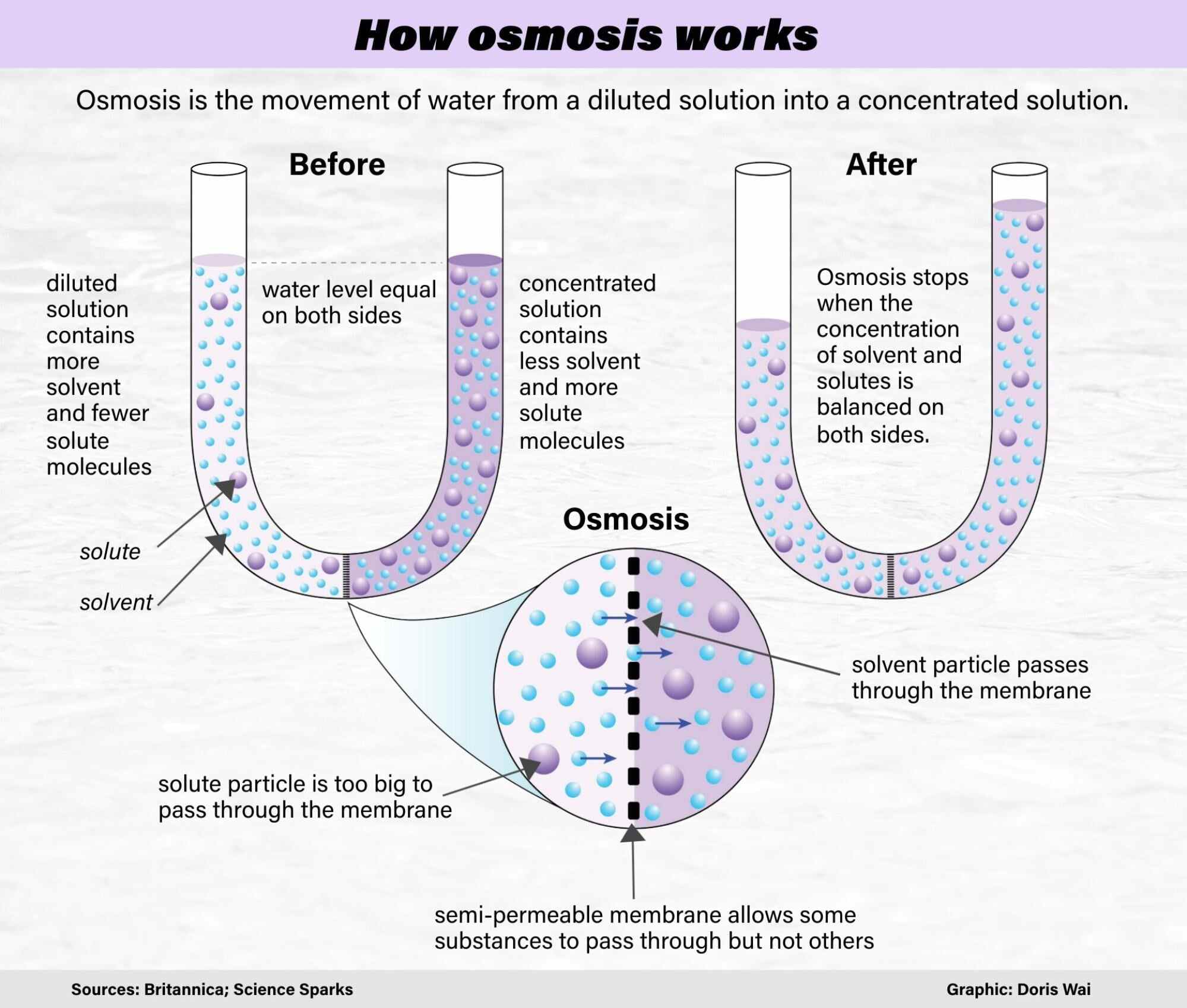
A Japanese water plant is hoping to use osmosis to create renewable energy. Osmosis is when water molecules pass through a membrane from a less salty solution to a more salty one (see graphic).
At scale, that movement can be enough to turn a turbine and generate electricity.
Scientists have long known that osmosis could create power, but it is not easy to do. One reason is that it is difficult to design the membrane through which the molecules pass.
Engineers in the city of Fukuoka and their private partners think they might have found the secret. They have opened the world’s second osmotic power plant.
It generates power by transferring molecules between treated sewage water and concentrated seawater.
“If osmotic power generation technology advances to the point where it can be practically used with ordinary seawater ... this, in turn, would represent a major contribution to efforts against global warming,” Kenji Hirokawa said. He is a manager at the Sea Water Desalination Plant.
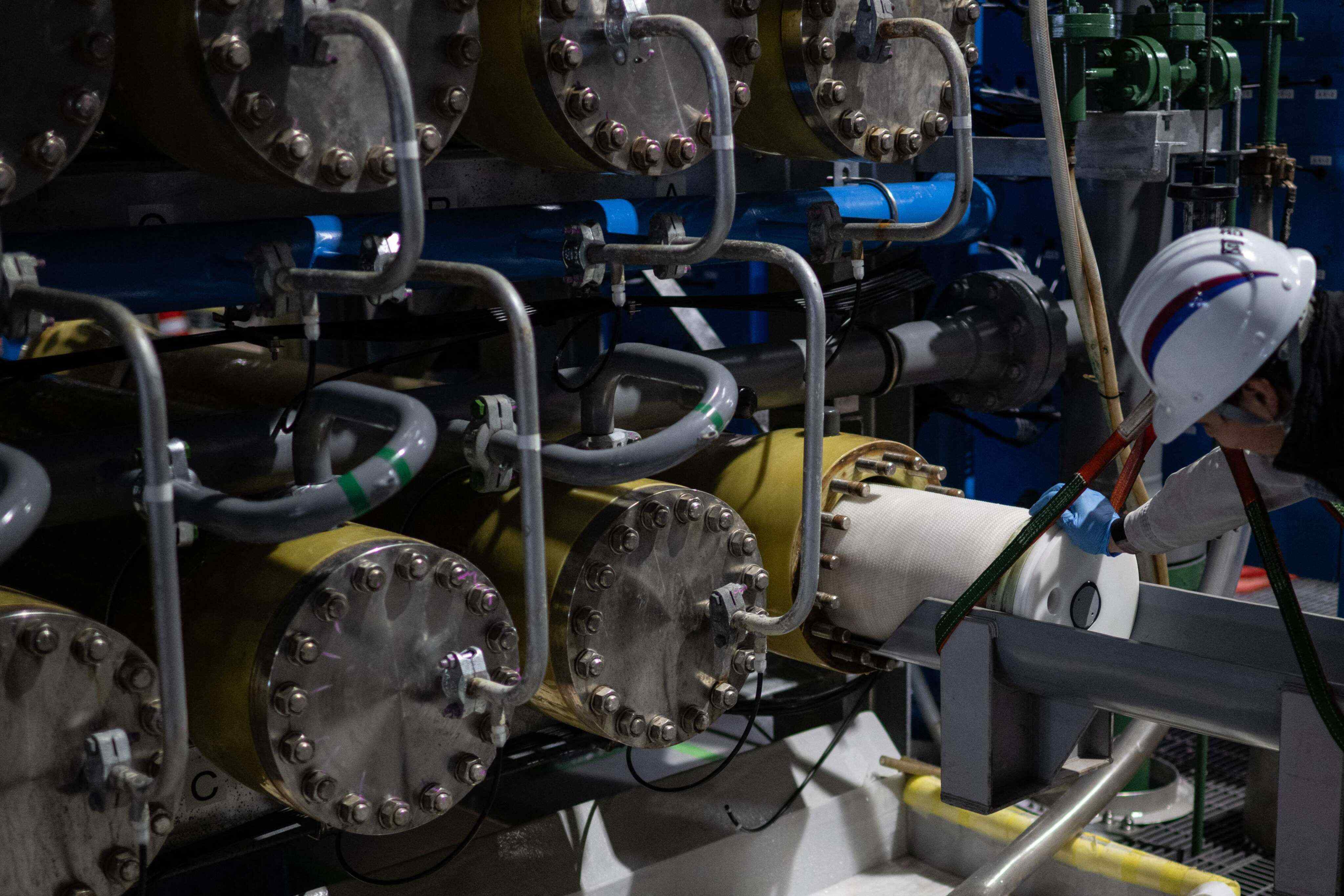
Desalination solution
Fukuoka can easily use this technology because it can get extremely salty water from a nearby desalination plant.
About 2.6 million people live in the city and the wider region. But they have no major rivers to source their water. Since 2005, they have relied on a major desalination plant for drinking water. These plants remove the salt from seawater, making it safe to drink.
After desalinating seawater, the city is left with large amounts of concentrated saline waste water. Usually, it is diluted and released into the sea.
Engineering firm Kyowakiden Industry approached the city about using the salty waste water for osmotic power.
The power generation system cost 700 million yen (HK$34 million) to build.
It began running in August. Once it is at full capacity, it should generate up to 880,000 kilowatts of energy annually.
But this covers only a tiny bit of the energy needed to power the facility.
Not ‘a pipe dream’
Still, the engineers involved are dreaming big. They will monitor the system’s performance for five years. They will also measure the amount of maintenance required and the cost of the plant.
Engineers admitted that for now, the system’s power costs “a lot more” than fossil fuels or renewable energy.
Pumping the water into the system also uses energy. Improving osmotic power to produce energy for a large number of buildings has not been done anywhere.
The high cost is partly due to the company having to build a one-of-a-kind power plant.
Still, officials and experts believe the power source has a future. Unlike solar and wind energy, osmosis does not depend on weather or light.
The technique could also be useful for countries with large desalination facilities, such as Saudi Arabia and other Middle Eastern nations.