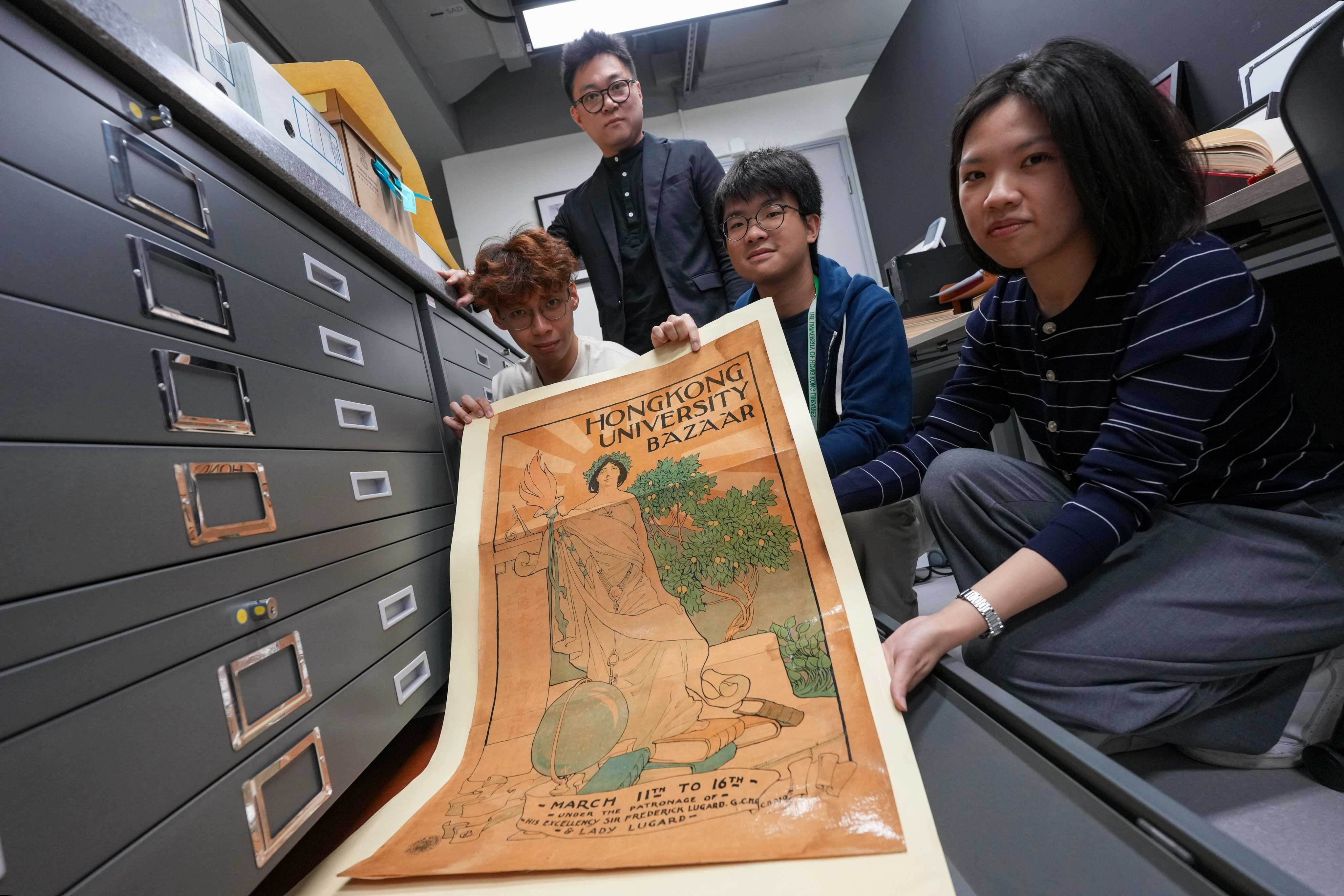
Rows of cabinets and shelves hold the carefully organised archives of the University of Hong Kong (HKU).
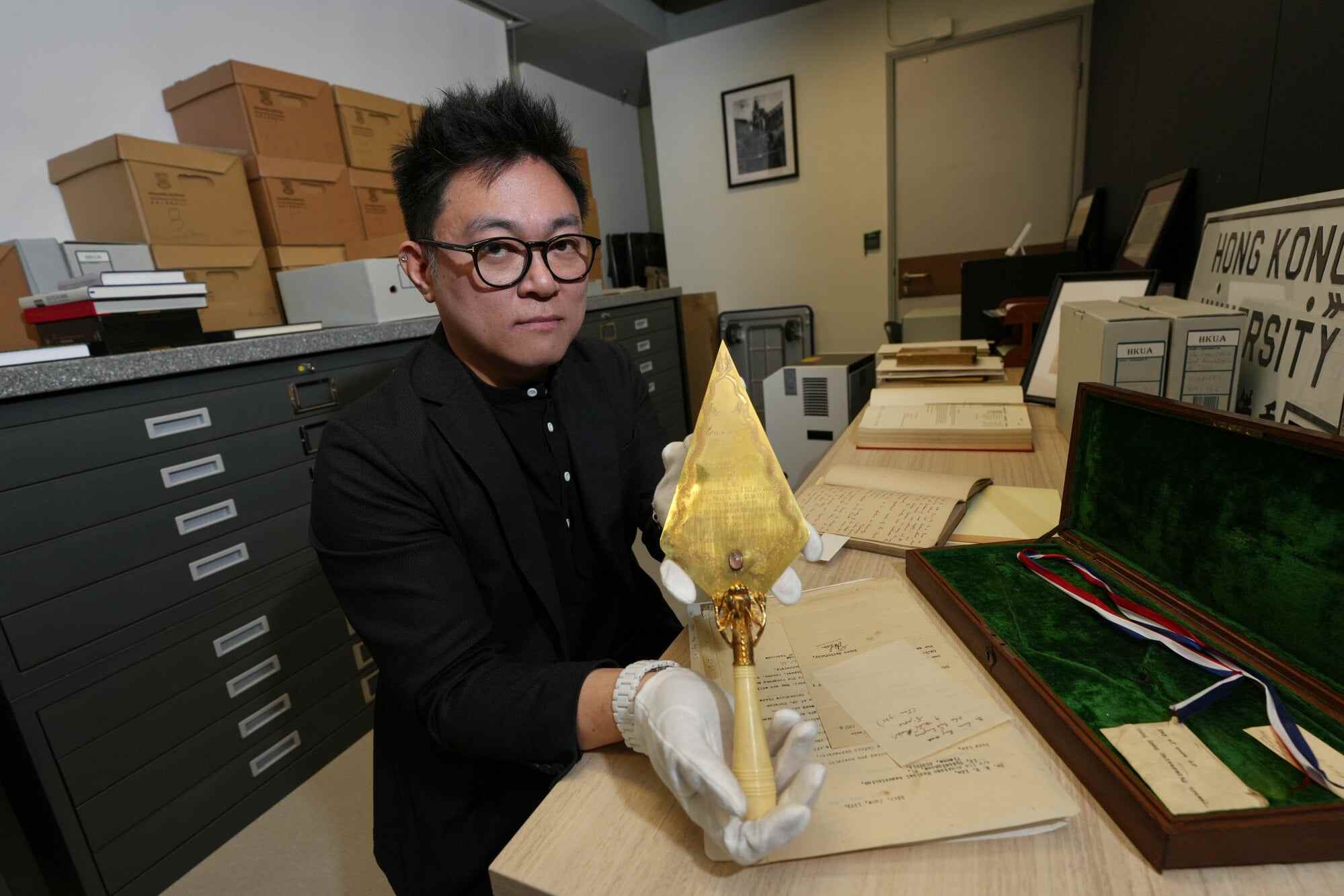
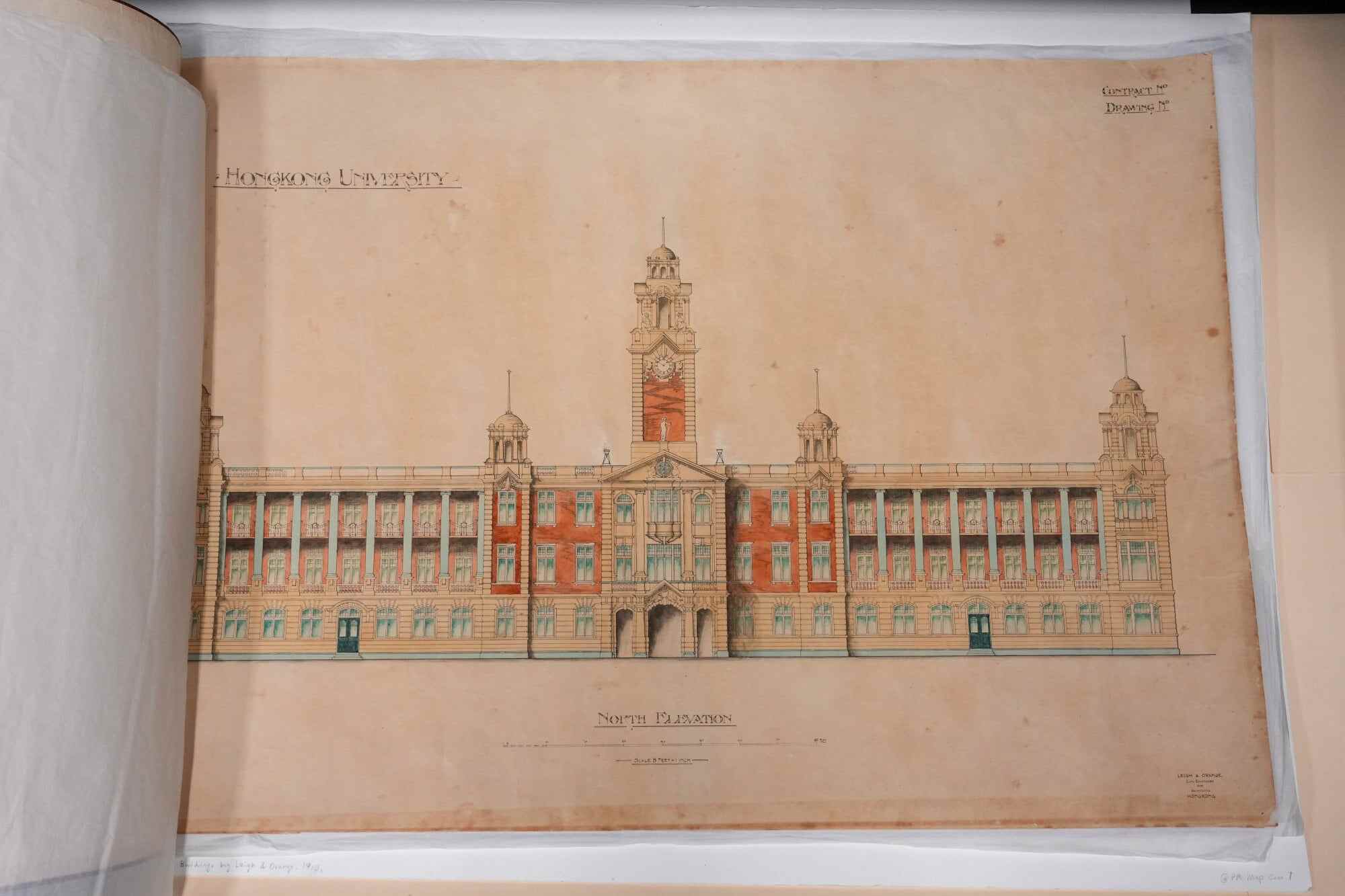
The university archives store the academic records of its students, such as the modern Chinese writer Eileen Chang. It also has the tool that was used to lay the foundation of HKU’s oldest building in 1910.
Garfield Lam Kin-shun is the head of HKU’s archives.
The main function of an archive isn’t just about “keeping old stuff”, said Lam, who is in his forties.
“The common misconception is that as soon as people hear the word ‘archives’, they think ... we are a museum,” he noted.
“In reality, we are talking about records management for our own institution.”
Museums collect items from many different sources. But archives do not collect material from other institutions.
Archives are also different from libraries.
“We aren’t like a library where everything is accessible via open stacks. Our records are irreplaceable,” Lam said.
“The difference between us and a library is that you can find the same book in many different libraries, but a specific file in our archive exists only here and nowhere else in the world.”
What do archivists do?
Every day, HKU’s archivists examine and preserve records sent from various departments. They place the documents into folders that protect them from being damaged by the environment over time.
To keep up with how the media has evolved, archivists now also preserve things digitally.
Many of these carefully filed documents and items have stories that connect them with the real world.
For Lam, one of his most memorable records involved a Swedish family who came to see their late son’s thesis. Their son had just finished his PhD at HKU before he died in a car accident.
“It was a very emotional moment for them because they saw his original signature on the final submission ... I’m sure they have many of his things at home, but finding his dissertation and his signature here, in a professional archive abroad, meant a lot to them,” Lam said.
“We aren’t just providing access to data. We are providing a bridge to the past, to their own history and to their emotions.”
Another example of the archive’s impact is Eileen Chang’s student record.
“At the time we archived it, we had no idea she would become famous. We kept it simply for the sake of maintaining the record,” he said.
“Now that she is world-renowned, it has become an invaluable resource for researchers.”
What it takes to be an archivist
Colin Loong Ho-lam is an assistant at the HKU Archives. He graduated with a history degree from HKU last year. His interest in this field was sparked by a summer seminar hosted by Lam.
“We don’t preserve things just for the sake of hoarding. We do it because we have a ... duty to provide a record of truth,” said the archivist in his 20s.
The team’s advice for graduates interested in the job is to “never stop learning”.
A degree is not enough for this career. You must be prepared to study many different subjects.
“This work can be tedious. It involves long hours of repetitive tasks,” Loong said.
“However, the meaning behind those tasks – the act of preserving history – carries a significance that you won’t easily find in other jobs. It isn’t about the money; it’s about the legacy.”