Content provided by British Council
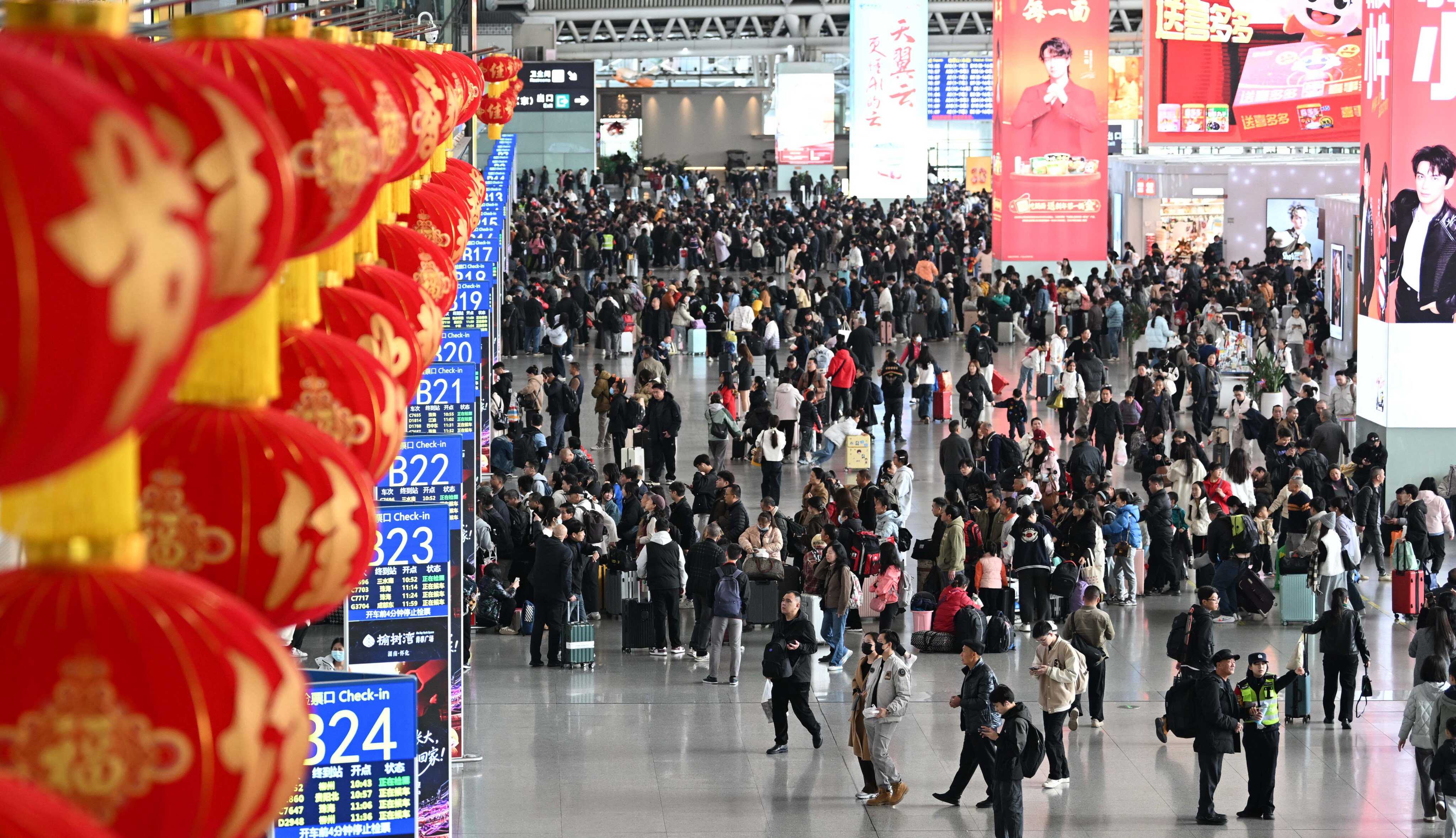
[1] A railway station in Guangzhou has set a national record in China for trips in a single day. It has also drawn attention for the frequency of bullet train departures. This happened during this month’s holiday period, the Guangdong provincial government said.
[2] Guangzhou South Railway Station handled 1,252 train services on October 1. It also handled just over 1 million trips. It was the start of the seven-day National Day holiday across mainland China. The publicity department of the province’s Communist Party committee announced the figures on its WeChat account.
[3] Crossing the 1 million-trip milestone was a first for China. At peak periods that day, trains departed every 40 seconds. It was an interval the publicity department said was “faster than people could scroll through short videos”. By comparison, combined shinkansen departures at Tokyo Station reach up to 24 trains per hour during peak periods. This averages out to one bullet train leaving every 2.5 minutes.
[4] Guangzhou South was designed to handle high traffic volumes, said Peng Peng, executive chairman of the Guangdong Society of Reform. It is a think tank associated with the provincial government. The station is one of five major railway hubs in Guangzhou, the capital of Guangdong. The city has a population of 18.7 million and the station has 15 platforms and 28 tracks. Guangzhou moved early to integrate its subway system, intercity railways and high-speed railways. The city wanted to make travel relatively “seamless”, Peng added.
[5] Guangzhou South also operated 202 overnight high-speed services for the October holiday. This accounted for about one-sixth of all trains departing the station on a single day. China State Railway Group had projected a record 284 million passenger trips during a 16-day period. The number covered the National Day break and the Mid-Autumn Festival in late September.
[6] To prepare for the holiday rush, Guangzhou South expanded transfer areas and departure lanes. It also improved passenger information services and added train services based on wait-list data. The additional services strengthened links with major cities including Shenzhen, Changsha, Nanning and Zhuhai.
[7] Guangzhou South connects with a total of 196 cities, including Beijing and Hong Kong. “When you add all this together, it’s not rocket science to see why Guangzhou South is as busy as it gets,” said David Feng. He is an independent railway specialist.
Source: South China Morning Post, October 5