Deep Dive delves into hot issues in Hong Kong and mainland China. Our easy-to-read articles provide context to grasp what’s happening, while our questions help you craft informed responses. Check sample answers at the end of the page.
News: Popularising traditional Chinese medicine
-
Hong Kong’s first hospital dedicated to Chinese remedies has opened, with the goal of promoting the practice worldwide
-
High demand for appointments has led to an increase in quotas
Hong Kong’s first traditional Chinese medicine (TCM) hospital opened its doors to patients this month.
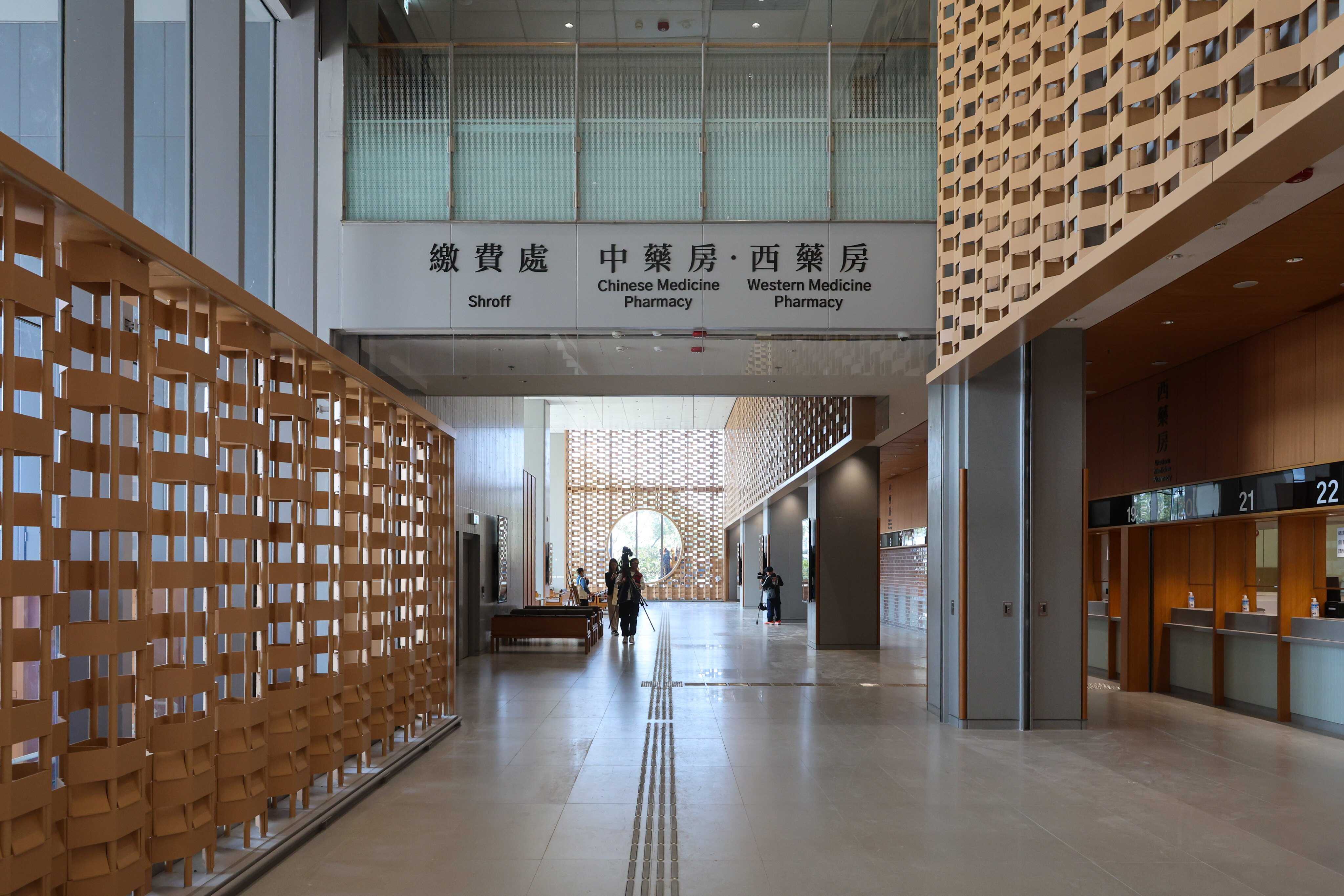
The Chinese Medicine Hospital of Hong Kong, located in Tseung Kwan O, aims to provide services for more complex cases under a model that features Chinese medicine as the primary approach, integrated with Western medicine. Its subsidised services have been in high demand by patients.
In the first year, the hospital will offer general outpatient consultation, specialist clinics and day hospitalisation services. It focuses on specialised Chinese medicine services across six areas, including internal medicine, external medicine, gynaecology, paediatrics, orthopaedics, traumatology, acupuncture and moxibustion. Inpatient service will be available from the second year.
The facility aims to develop a “Hong Kong model” that it hopes would be easier for overseas institutions to adopt. This consists of three service types: pure Chinese medicine, another where traditional Chinese medicine plays a predominant role, and Chinese-Western medical services.
The hospital will roll out 12 special disease programmes in its first year of operation. Four will follow a purely Chinese medicine model, covering conditions such as chronic pain, according to the Health Bureau.
Five programmes, including those for digestive disorders, will run under the service model where Chinese medicine plays the predominant role. The remaining three will operate under the integrated model.
TCM-Klinik Bad Koetzting, the first officially recognised Chinese medicine hospital in Germany, has already agreed to collaborate with the Hong Kong facility.
The German hospital’s general manager, Christina Staudinger, said the partnership covered the exchange of expertise in traditional Chinese medicine, discussions on clinical pathways and opportunities for collaborative research.
“Both institutions are engaged in regular scientific exchange and ongoing discussions to explore potential areas of collaboration,” Staudinger said. “New ideas and possible joint projects are being continuously evaluated.”
Professor Bian Zhaoxiang, the hospital’s chief executive, added: “The country hopes that Hong Kong, during the development of Chinese medicine, can become a flagship and a bridgehead in bringing [the treatments] to the world.”
Staff writers
Question prompts
1. List TWO services provided by Hong Kong’s first Chinese medicine hospital.
2. According to the information in the news, what does Professor Bian Zhaoxiang hope the new hospital will achieve?
3. To what extent do you think this new medical facility will be able to popularise traditional Chinese medicine? Explain using the news, glossary and your own knowledge.
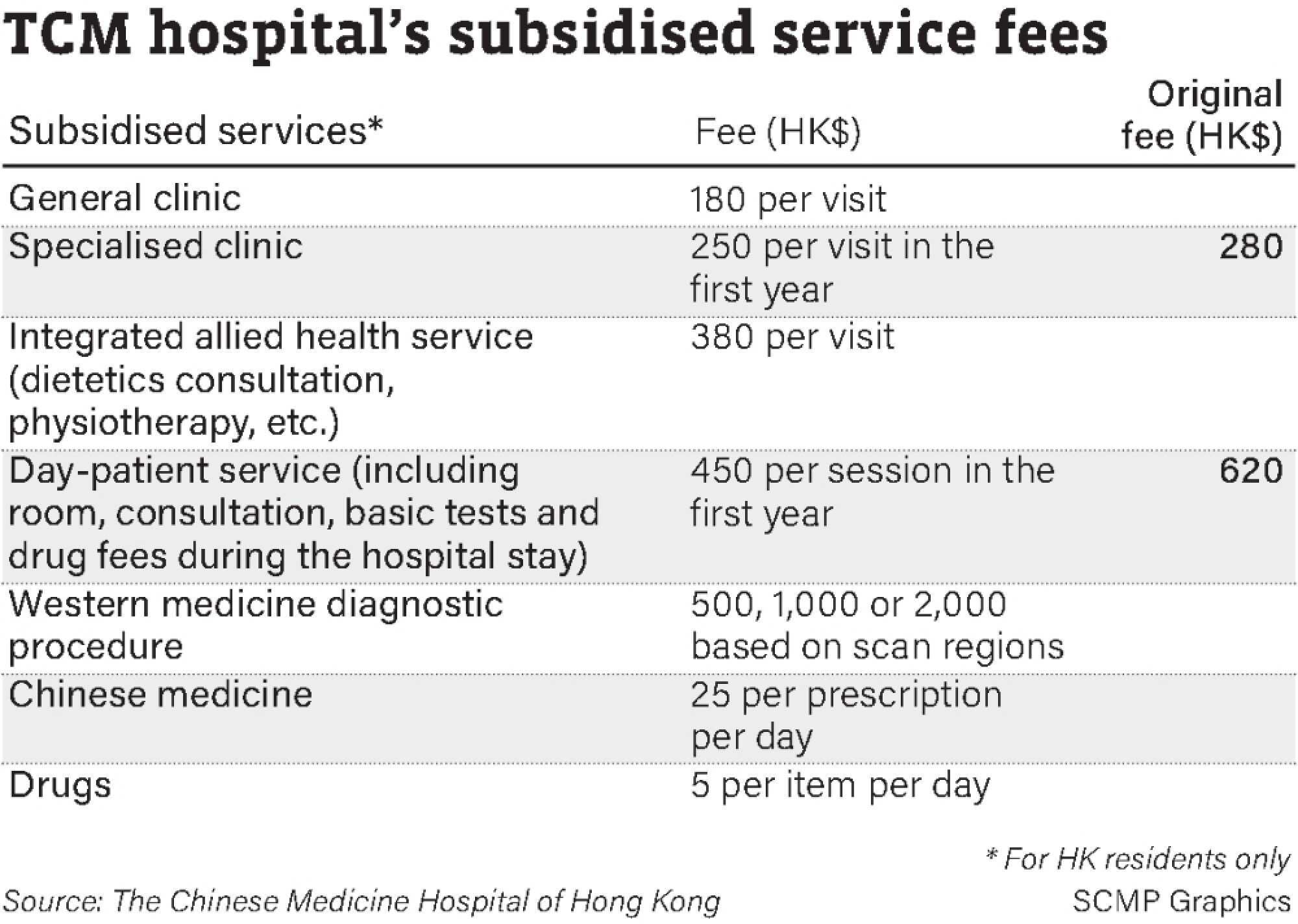
Chart
Question prompts
1. How much does it cost for a general appointment at the new hospital?
2. Are the service fees financially sustainable for the general public? Explain using the chart, news and your own knowledge.
Glossary
subsidised services: services partially paid for by the government to lower costs and make them more affordable. About 65 per cent of services at The Chinese Medicine Hospital of Hong Kong are subsidised by the government. The remaining 35 per cent are private services. For example, a subsidised outpatient consultation costs HK$180, while a private consultation starts at HK$450.
traumatology: the study and surgical treatment of injuries caused by violence or accidents, focusing on wounds and their impact
moxibustion: a traditional Chinese therapy that uses the heat from burning dried mugwort near or on specific body points to promote healing and stimulate energy flow
chronic: to continue for a long time; long-lasting
Sample answers
News
1. General outpatient consultation, specialist clinics and day hospitalisation services (accept any two).
2. Professor Bian Zhaoxiang hopes that Hong Kong can become a flagship and a bridgehead for bringing Chinese medicine treatments to the world.
3. The new hospital will help popularise traditional Chinese medicine (TCM) because it combines Chinese and Western medical approaches under the “Hong Kong model”. This model can serve as a reference for other countries, making it easier to adopt. The hospital also has international collaborations planned, for example, with a hospital in Germany, enabling the global exchange of expertise and research in TCM. Moreover, since 65 per cent of its services are subsidised, many patients can access affordable treatments, increasing public exposure and trust in TCM. By offering advanced care, such as traumatology, acupuncture and moxibustion, alongside inpatient services, the hospital showcases TCM’s ability to handle complex conditions. Therefore, through international partnerships, affordable care and integrative medical practices, the facility will likely play a major role in promoting TCM both locally and globally. (accept all reasonable answers)
Chart
1. HK$180
2. I believe the service fees are sustainable for the general public. Around 65 per cent of the services at the clinic are subsidised by the government, making the services more accessible for low-income residents. (accept all reasonable answers)