Content provided by British Council
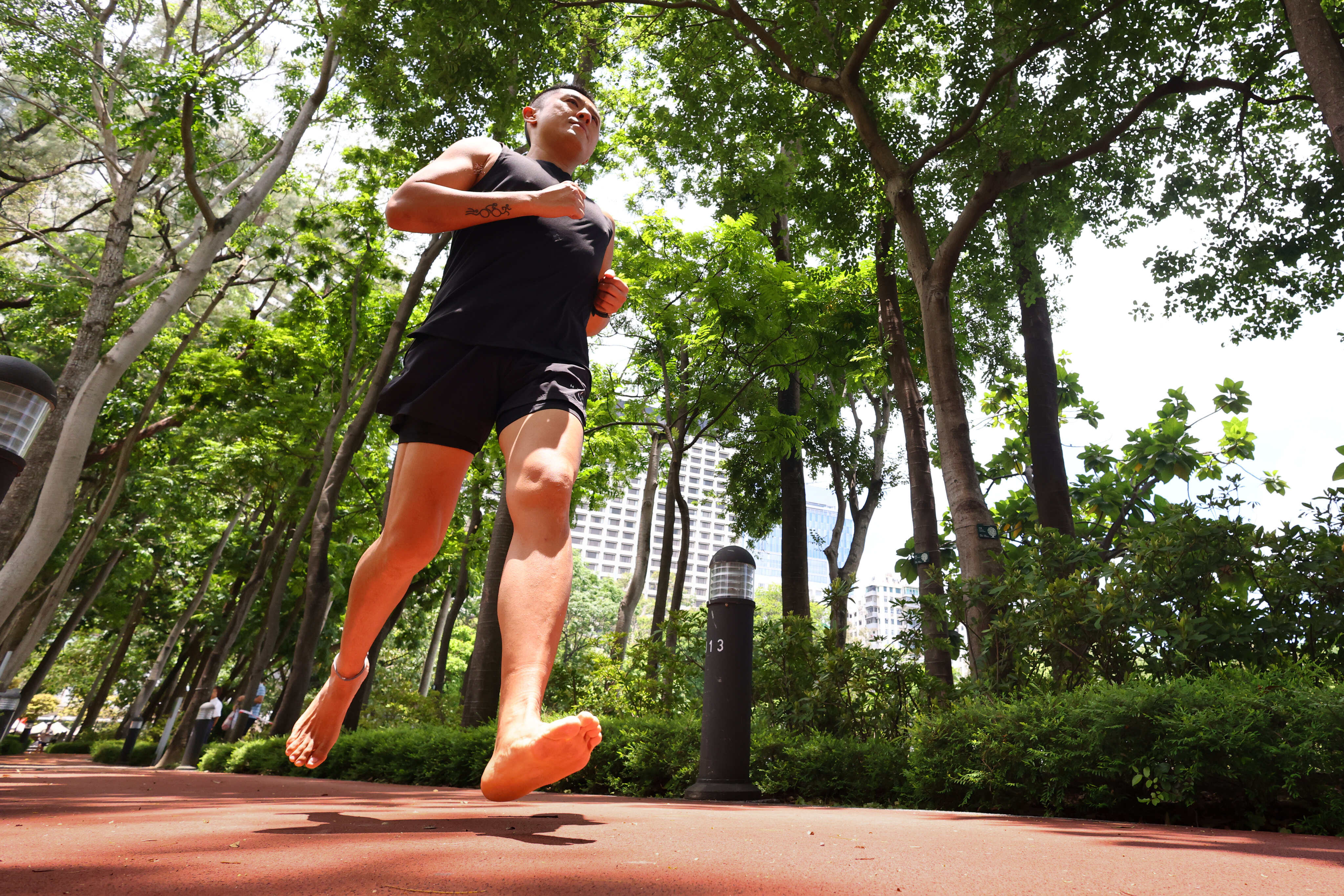
[1] If you are a seasoned marathon runner, you may have experienced that brief, bewildering moment mid-race when you realise the competitor passing you is missing shoes. The barefoot running movement is stepping onto running courses and hiking trails. In Hong Kong, a small but passionate community is ditching hi-tech running shoes. They are tackling everything from roads to the unforgiving stairs of the MacLehose Trail completely barefoot.
[2] Leo Chan is one of them. The 51-year-old entrepreneur has swum across the English Channel. He has also competed in more than 100 triathlons, including nine full Ironman competitions, and finished 30 marathons and three Hyrox races. He founded his own distribution company that often partners with fitness gadget brands.
[3] His most recent athletic pursuit may be his most striking. It began nearly three years ago in Singapore when he spotted a shoeless competitor in a race. “It’s actually the most natural way to run,” the man told him.
[4] Chan soon started experimenting himself. He ran barefoot for 1km at first, then built up to longer distances. He finished his first full marathon – the Standard Chartered Hong Kong Marathon – shoeless in January 2026. Since running barefoot, Chan has felt less foot and heel pain.
[5] Chan believes this is a result of building strength in his lower leg muscles. He added that his soles, with their “thick cushioning”, provide extra support. He said barefoot fitness provides a “grounding effect” that helps him de-stress and sleep better.
[6] To run a full marathon – around 42km – without shoes requires a long conditioning period, Chan said. He warned that a runner could easily hurt themselves if they do not gradually build up their skill. He advised starting with short distances and not worrying about speed. He also suggested choosing where to train carefully. “Places like Singapore or Hong Kong are actually relatively clean. In [Hong Kong neighbourhood] Happy Valley, for example, most of the ground is actually quite smooth,” he said.
[7] Most barefoot runners train in “barefoot” shoes or “zero-drop” shoes. Barefoot shoes have thinner soles and a wider toe box that allow toes to splay more naturally, as they do when they are bare. Zero-drop shoes are specifically designed with no height difference between the heel and the forefoot. Most barefoot runners train in “barefoot” shoes or “zero-drop” shoes. Barefoot shoes have thinner soles and a wider toe box that allow toes to splay more naturally, as they do when they are bare. Zero-drop shoes are specifically designed with no height difference between the heel and the forefoot. Chan alternates between these types of shoes. Ultimately, he prefers to go shoeless when racing.
Source: South China Morning Post, June 3