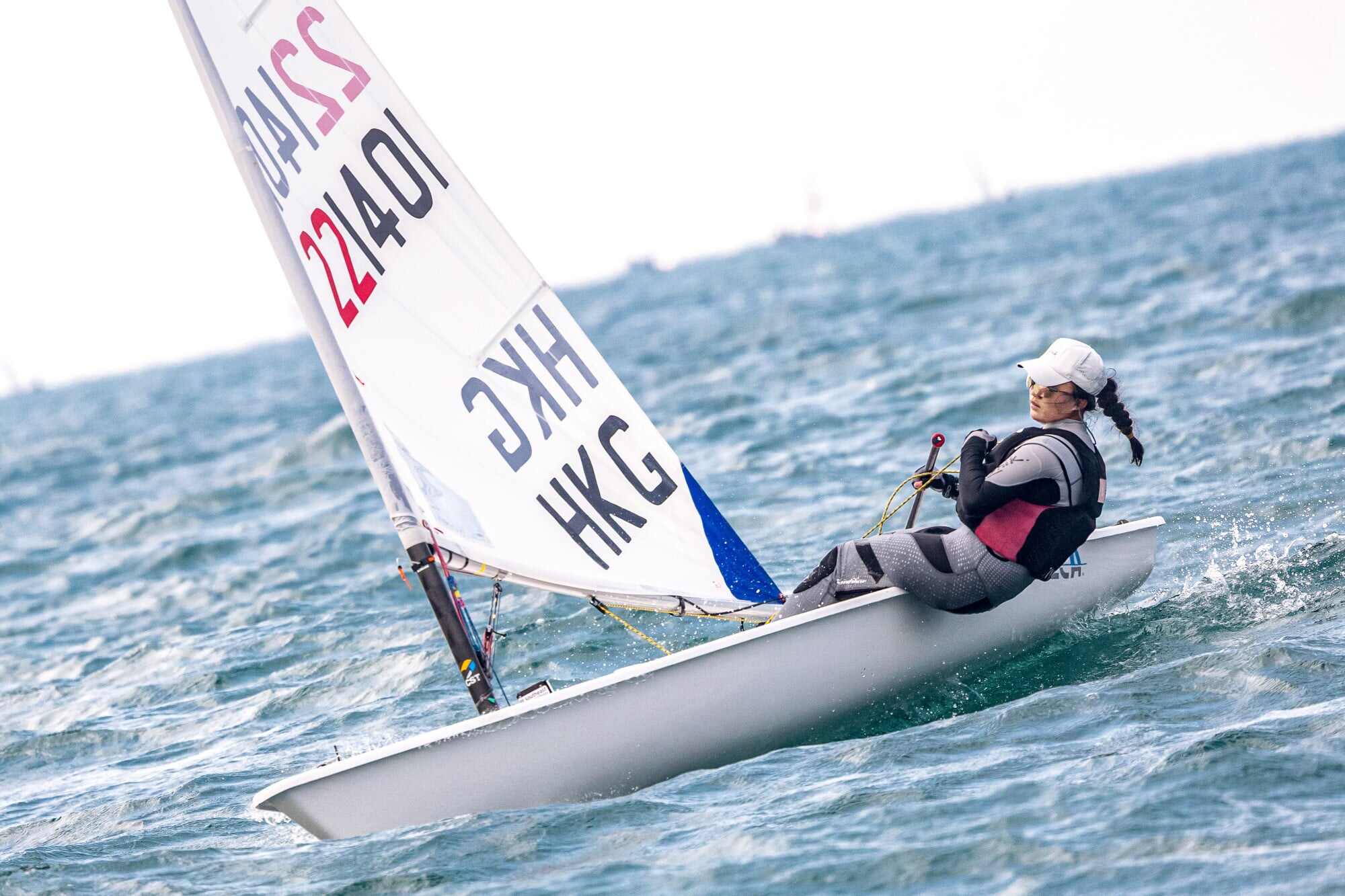
Before joining Hong Kong’s sailing team, 17-year-old Huang Ziyan thought a career in sports meant being an athlete or a coach.
She represented the city at the Asian Games in 2023 and at the Youth Sailing World Championships in 2024 and 2025. She is also a student at Harrow International School Hong Kong.
“I was under the impression that opportunities in sport were a lot more narrow,” Ziyan said. “Going to the [Hong Kong] Sports Institute opened my eyes ... You could be a sports psychologist, a physiotherapist, a strength coach or work in sports science.”
In recent years, the city has seen huge success from its athletes. Earlier this month, Coleman Wong Chak-lam won Hong Kong’s first Asian Games tennis gold.
Not every athlete can get to this level. But a think tank is hoping to show young sportspeople how to turn their passions into a career.
Jobs in sports
In August, Our Hong Kong Foundation released a study of 1,098 secondary school students in the city.
The think tank found that 28 per cent of students are interested in a career in sports. But 56 per cent are not aware of jobs beyond competing or coaching.
Many students are unsure about how to enter jobs in the sports industry and do not have experience with them.
Our Hong Kong Foundation suggested ways to help more student-athletes learn about sports careers, such as physiotherapists, data analysts and event coordinators. The think tank recommended forming a team to organise events exposing young people to these jobs.
It also urged government departments to work together to make guidelines for how schools can support student-athletes. They should set rules on taking leave for competitions and flexible scheduling for classes and exams.
Combine your interests
The University Grants Committee offers the Student-Athlete Learning Support and Admission (SALSA) Scheme for elite athletes.
Clara Wong led the launch of the SALSA scheme at City University (CityU).
“My goal when setting up the programme was to show athletes that sports aren’t limited to just one rigid path ... It opens up a whole new world for them,” Wong said. She is also a senior physical education officer at CityU.
“Students eventually realised that ... almost any discipline can be merged with sports.”
Wong has done this in her career. She is a former national table tennis player, and she studied accounting. She said managing the SALSA scheme was a way to combine her interests. She hopes other athletes can also find jobs like this.
Student-athletes need support as they keep up with their studies while training for their sports.
Wong said that young athletes would often focus on winning medals. But that is when mentors can step in to ask: “What will you do after graduation?”
She added: “It made me start planning ahead and take my education seriously.”
For Ziyan, she hopes to study psychology, economics or public policy. In the future, she wants to be involved in sports development in Hong Kong.
“I’m really passionate about ... increasing access to sailing and other sports,” she said. “I’m also interested in psychology because it plays a crucial role in youth development ... for athletes and youth in general.”
Ziyan added that being a student-athlete taught her many lessons.
“The skills I’ve developed as an athlete – discipline, resilience and organisation – have helped me in my studies. Similarly, being able to focus on things for a long period as a student has helped my training,” she said.