On March 23, 2025, Saturn’s rings seemed to vanish. This illusion was created by how Saturn, the sun and Earth lined up.
Why does Saturn have rings?
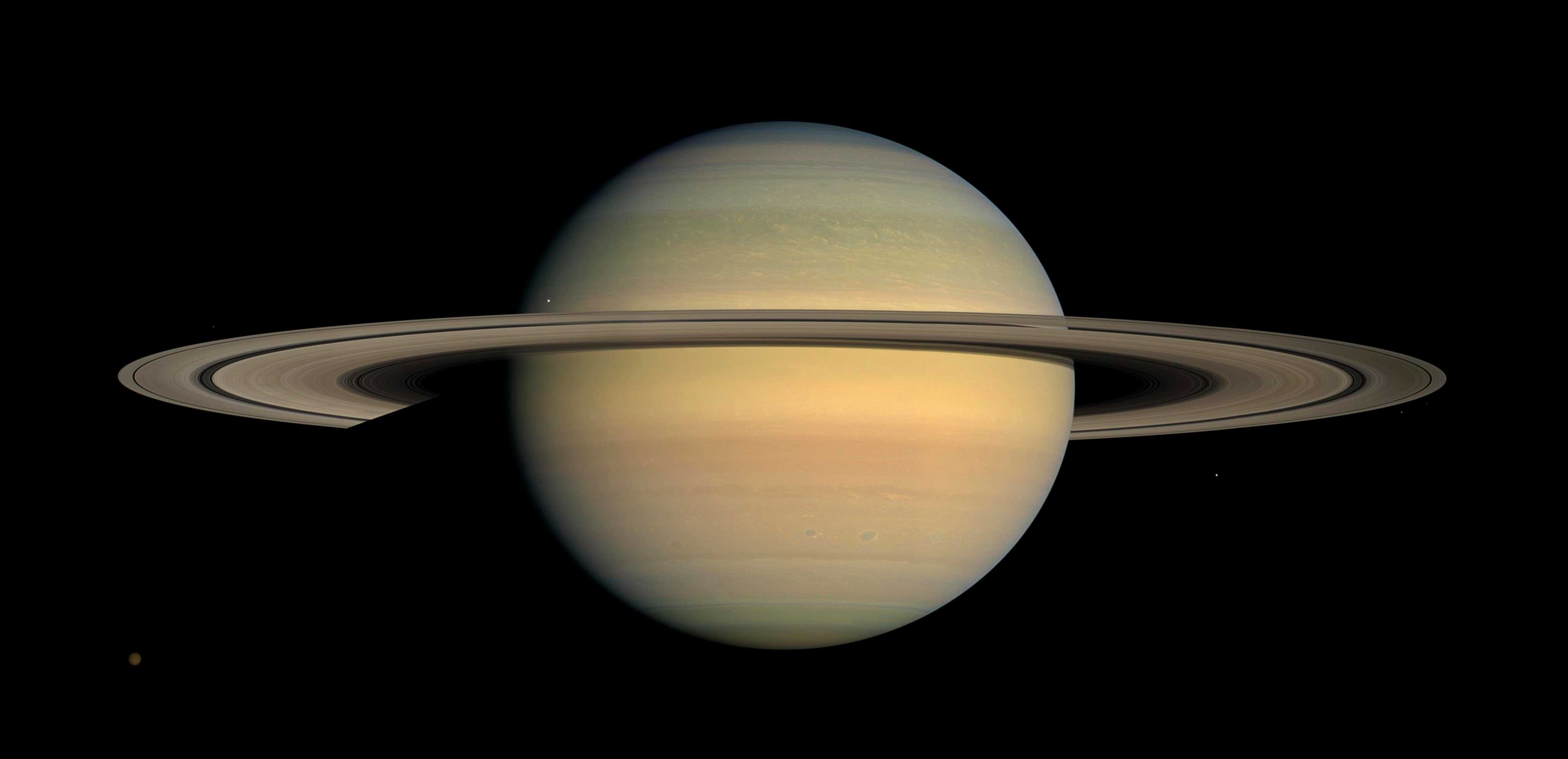
Saturn is the sixth planet from our sun and the second largest in our solar system. This giant, gaseous planet is about 1.4 billion kilometres from the sun. Astronomers have long been curious about Saturn’s rings.
The planet’s rings are mainly made of ice chunks, rock fragments and dust particles. Some of these pieces are tiny grains, and others can be boulders the size of a house. These materials likely came from shattered comets, asteroids or moons destroyed by Saturn’s powerful gravity.
The main rings visible from Earth are about 280,000 kilometres across. That is almost three-quarters of the distance from Earth to the moon. But the rings are thin, averaging only 10 metres in height.
If Saturn were the size of a basketball, its rings would be thinner than a sheet of paper. This thinness is why the rings seem to disappear from certain angles.
How do the rings vanish?
The “disappearing” rings result from an event astronomers call a ring-plane crossing.
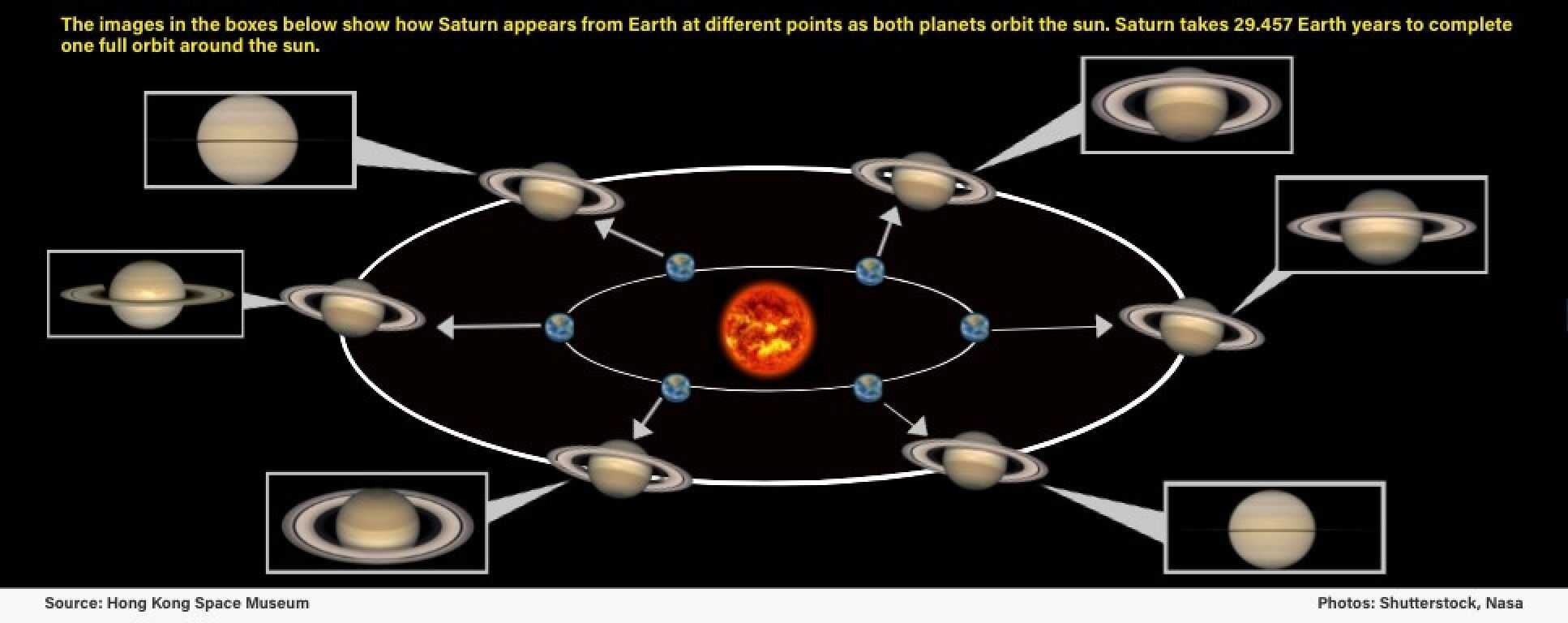
Saturn takes 29.5 Earth years to orbit the sun. The planet’s tilt means that as it travels around the sun, we see the rings from different angles: sometimes from above, sometimes from below and occasionally directly at its edge (see graphic).
When we see the rings from their edges, they are so thin that they almost become invisible, even through powerful telescopes. It is like trying to see a sheet of paper when looking directly at its edge – you might see just a thin line or nothing at all. From our view on Earth, the ring system simply vanishes from our sight.
When to see the rings ‘disappear’
This event happens about every 13 to 16 years. Another chance comes in late November 2025 when Saturn’s rings are at an edge-on angle of about 0.4 degrees. While that is not a formal ring-plane crossing, it is a good chance to try spotting the ultra-slim rings with a telescope under steady skies. Patient stargazers might catch a glimpse of this celestial magic trick.
Saturn’s rings will be edge-on to us three times in total during 2038 and 2039. Of these, the one that is predicted to take place on October 15, 2038, will be the easiest to spot because Saturn will be further away from the sun in our sky that day.
Young Post has partnered with the Hong Kong Science Museum and the Hong Kong Space Museum to encourage your pursuit of science. Every month, the museums answer questions about the world around us, the cosmos and beyond.