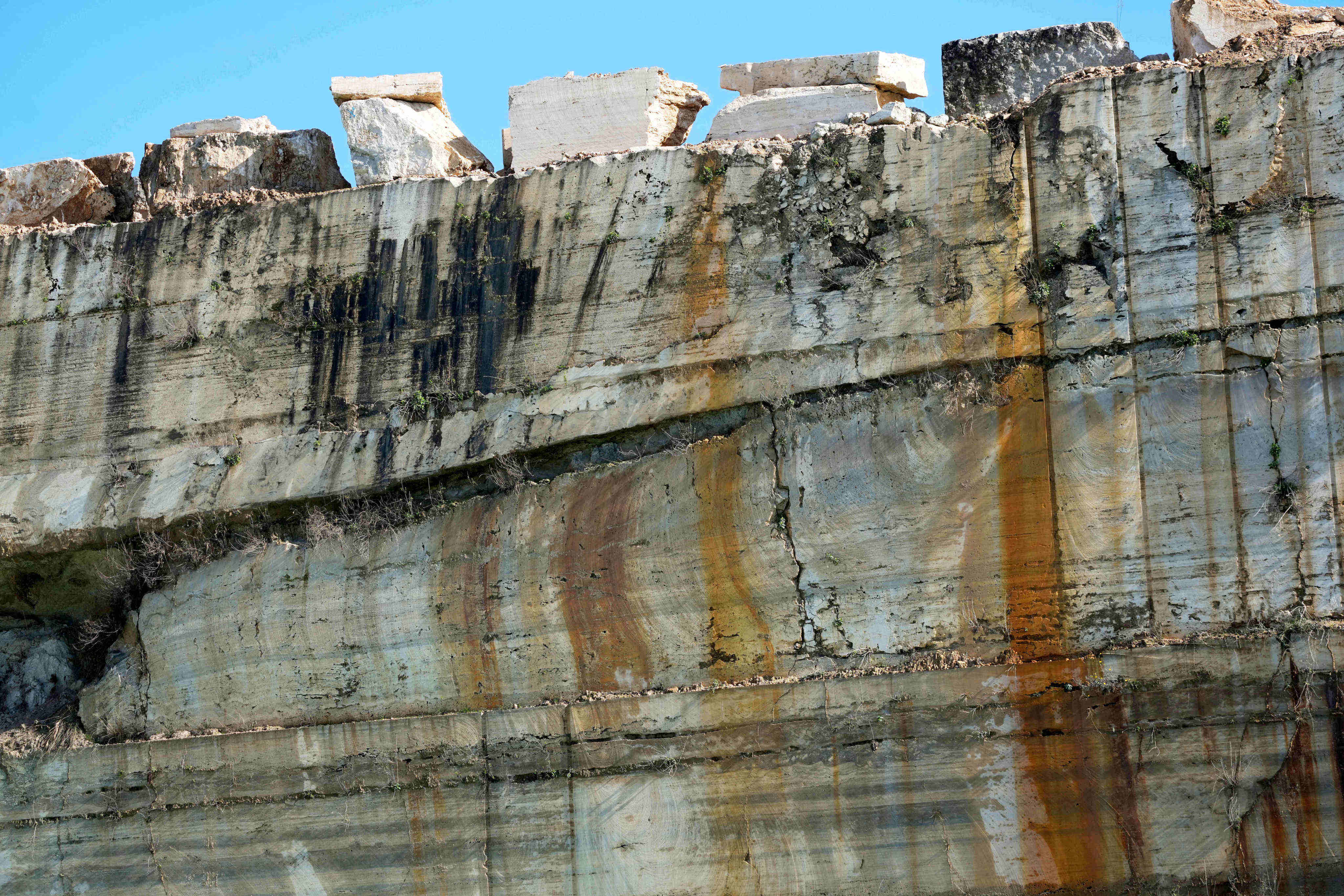
A long time ago, when the Romans wanted to build a new temple, they would go to the nearby stone quarries in Tivoli. They would cut out blocks of soft stone called lapis tiburtinus, which we now call travertine. After that, they would put the blocks on rafts and float them down the river to the workers in town.
Today, the quarries that helped build Rome with their unique stone are still being mined to create new churches, temples and mosques around the world. They are also used to build banks, museums, government buildings and homes.
Roman travertine is different from other types of sedimentary limestone because it is mined underground in the hot springs and basins near Tivoli.
Made up mostly of calcium carbonate minerals, Roman travertine was formed hundreds of thousands of years ago by deposits of calcium, sulphur and other minerals.