Raw milk can be unsafe and has made at least five children sick in the US in the past year. However, people who like raw milk want to help make it easier for others to buy it.
Raw milk legislation
Raw milk has not been pasteurised, which is a heating process that kills germs that could make people sick.
More than 30 bills to support raw milk have been introduced in state governments across the US. More states are making it legal to sell raw milk. The price can go over US$10 (HK$78) or US$20 a gallon (3.78 litres).
On social media, posts about raw milk have increased in recent months. They often talk about unproven claims about its health benefits.
US public health officials are worried about this. They have long warned that unpasteurised milk can have risky germs.
In March, there was a problem with raw milk Cheddar cheese from a farm in California called Raw Farm. It made nine people sick with E coli. One person got really sick and might have kidney problems for life.
Petra Anne Levin, a biology professor at Washington University in St Louis, said there was a reason for pasteurisation.
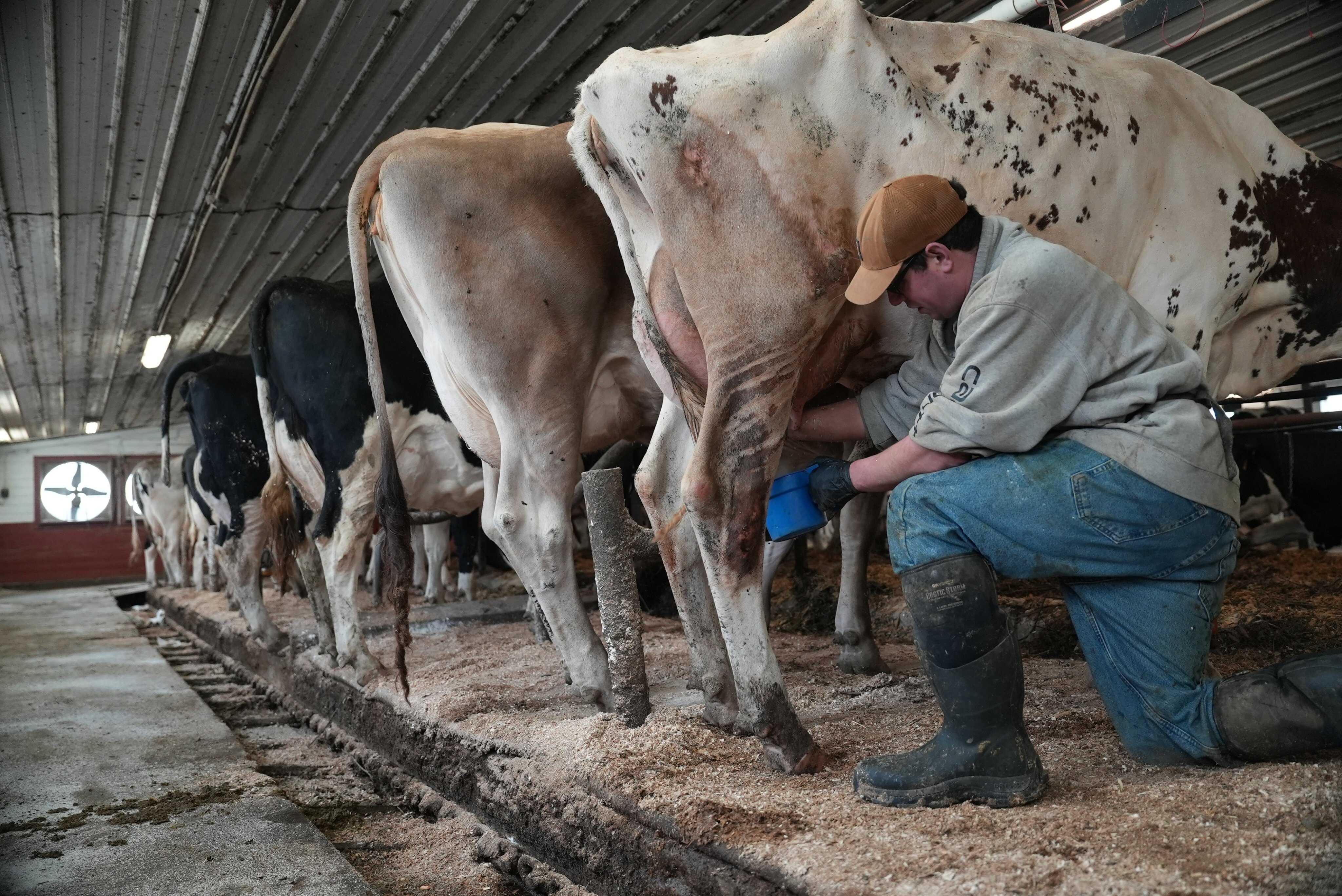
“If you wouldn’t lick a cow’s underneath, why would you drink raw milk?” she said.
Risks are well-documented
The US Centres for Disease Control and Prevention (CDC) website points to the risks of illness from a host of germs. These include campylobacter, listeria, salmonella and E coli.
A CDC review counted more than 200 outbreaks tied to raw milk that sickened more than 2,600 people and sent 225 to hospitals between 1998 and 2018.
Another analysis found that raw dairy products cause 840 times more illness and 45 times more hospitalisation than their pasteurised counterparts.
Children are especially vulnerable to such illness, because their immune systems are immature and because they drink milk frequently, noted Alex O’Brien, food safety and quality coordinator for the Centre for Dairy Research in Madison, Wisconsin.
Before milk standards were adopted more than a century ago, about 25 per cent of foodborne illnesses in the US were related to dairy consumption, O’Brien said. Now, dairy products account for about 1 per cent of such illnesses.
What is pasteurisation and how does it work?
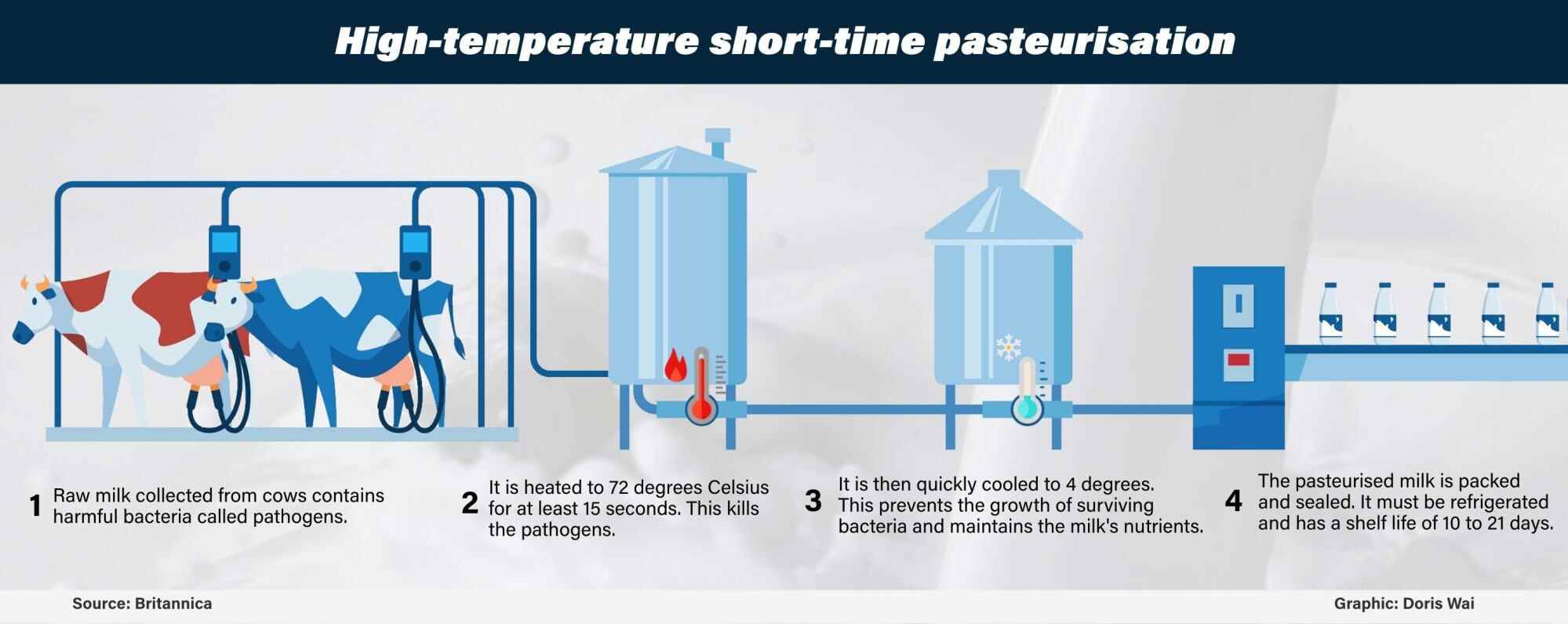
Named after Louis Pasteur, pasteurisation is a process used to kill germs by heating raw milk. Experts say it has no significant impact on milk’s nutritional quality and has saved millions of people from illness. Here are two methods of pasteurisation.
-
High temperature short time (HTST): the most common method in the United States (see graphic)
-
Ultra high temperature (UHT): heating milk and filling it under aseptic conditions into airtight packaging. UHT milk does not require refrigeration until after the package has been opened.