If you are interested in joining future Face Off debates, fill out this form to submit your application.
For: Isabelle Cho, 13, Canadian International School of Hong Kong

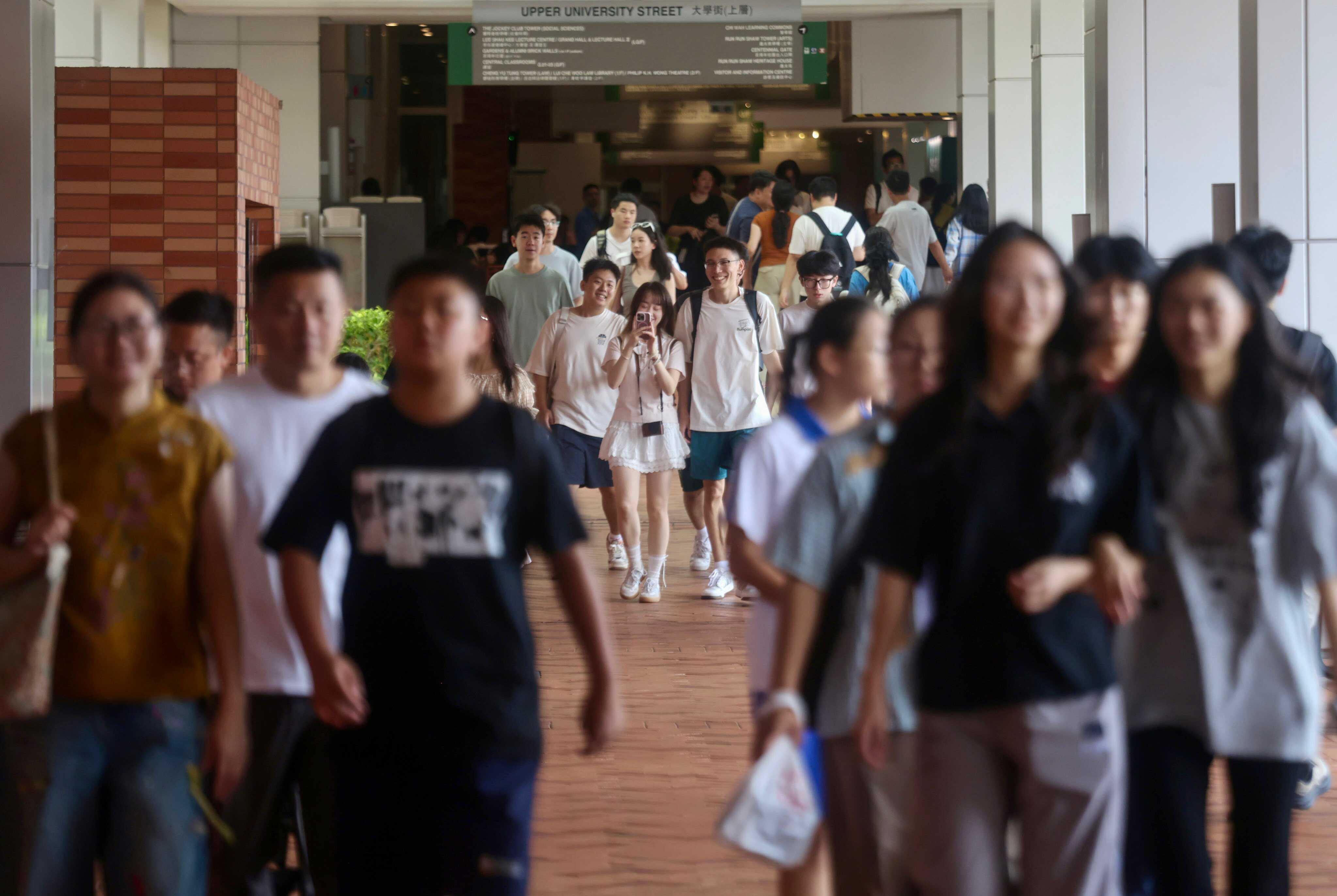
In recent years, universities in Hong Kong have been increasing the quota for non-local students to attract global talent. However, these decisions have raised concerns about the city’s goals.
According to an analysis by the South China Morning Post, 75 per cent of first-year non-local undergraduates at Hong Kong public universities were mainland Chinese in the 2024-25 school year. Meanwhile, the percentage of non-local students from other countries decreased. This came after the government increased the cap on non-local admissions in 2023.
While Hong Kong is attractive to international students, if it is primarily drawing students from mainland China, it will not become more culturally diverse. Therefore, removing the caps serves no purpose if it does not contribute to establishing an “international education hub”.
Secondly, removing caps on non-local students means that many of them might seek private housing in the city.
A 2025 report from real estate agency Colliers projected a shortage of 120,000 student beds by 2028. During the 2024-25 academic year, Hong Kong had 92,000 non-local university students but only 48,100 hostel beds available for them. Consequently, many students turn to private rentals. This shift has increased the demand for private housing, which in turn can drive up rental prices for everyone else living in Hong Kong.
Lastly, a report on students who took the Diploma of Secondary Education (DSE) exam shows that among the 2024 graduates pursuing full-time studies, 92.2 per cent stayed in Hong Kong. Meanwhile, only 7.8 per cent studied abroad.
In contrast, data collected by the English Schools Foundation (ESF), the largest international school organisation in Hong Kong, revealed that only 30.7 per cent of its 2024 graduates remained in Hong Kong.
This comparison highlights that DSE students are more reliant on the local university system. If the government further increases competition for DSE students, it may become challenging to retain local talent.
To conclude, Hong Kong should not stop students from applying outside the local exam system, but we should have a limit on these students so that economic risks are minimised and local talent is preserved.
Against: Valerie Shek, 16, The Independent Schools Foundation Academy

While I believe it is important to protect opportunities for local students, having a cap on applicants who are outside the Diploma of Secondary Education (DSE) system is unfair and harms Hong Kong’s global reputation.
The cap on non-DSE candidates is unfair, as they should not be at a disadvantage simply for choosing a different examination system.
The International Baccalaureate (IB), A-levels and Advanced Placement (AP) programmes are all internationally recognised qualifications that provide students with alternative routes to demonstrate their academic abilities. These international exam boards have far greater universal recognition than the DSE.
It is also important to note that the Hong Kong government has already established effective protections for DSE students. Currently, Hong Kong provides 15,000 government-funded first-year university places specifically for local students, and the government has stated that this number will not be reduced.
Therefore, this additional cap on non-DSE students is unnecessary and restricts students who have worked equally hard to gain admission through an alternative system.
Furthermore, not all students in Hong Kong take the DSE exam. This cap disproportionately affects students who have grown up in the city and wish to continue their education at one of Hong Kong’s universities.
The limit on students applying through pathways other than the DSE could be undermining Hong Kong’s growing global reputation as a university destination.
Recently, Hong Kong universities have achieved record results in the Quacquarelli Symonds (QS) World University Rankings. The Hong Kong government has been investing heavily in education and is striving to develop the city into an international hub for education and high-calibre talent.
International students can provide significant economic benefits. They spend money on accommodation, food, transport, telecommunications and retail, thereby stimulating the economy.
Ultimately, restricting the number of students who can enter Hong Kong’s universities with international qualifications would mean sacrificing the broader benefits that the city receives from their presence.