Every week, Talking Points gives you a worksheet to practise your reading comprehension with exercises about the story we’ve written.
According to legend, long ago in ancient China, people feared a terrifying monster named Nian. At the start of every new year, Nian would emerge from its cave to hunt.
Then, one year, a man named Gao came up with an idea to protect his village. He made sweet rice pastries and left them outside people’s homes. When the monster found the pastries, it ate its fill and went back to its cave. The villagers were left unharmed.
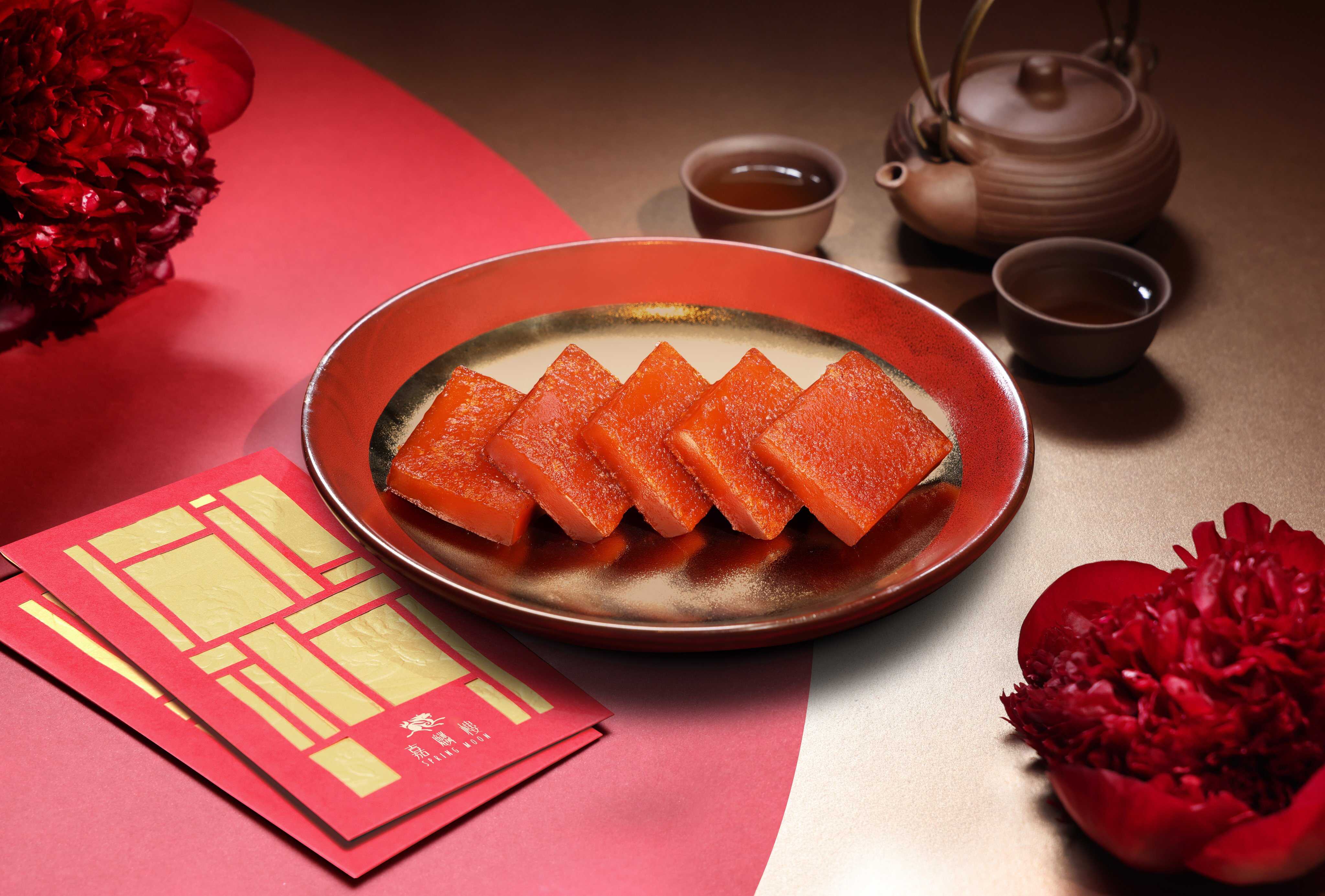
Because of this legend, making nin gou, or sticky rice cake, has become an annual tradition.
Some also believe nin gou is an offering to the Kitchen God. According to tradition, this spirit lives in every home and watches over the family.
Once a year, he travels to heaven to report the family’s activities to the Jade Emperor. The Emperor then rewards or punishes the family based on what they did. Eating sticky rice cakes makes the Kitchen God’s teeth “stick” together so he cannot speak ill of people.
Regardless of its origin, this steamed glutinous rice cake is a must-have in many Chinese homes during the Lunar New Year.
The name of this treat, nin gou, also sounds like the words for “reaching new heights”. Many believe that eating it will bring growth and success in the new year.
Not just ‘empty calories’
The traditional version of nin gou is made with glutinous rice flour, brown sugar slabs and water. The dark brown sugar gives it a malty taste.
Kathy Ng Yiu-fan is a senior nutritionist at the Kat-Spirit Nutrition Centre in Hong Kong. She said glutinous rice flour is not just “empty calories”.
The ingredient provides carbohydrates for energy and contains small amounts of protein and minerals such as manganese and selenium, similar to white rice. Manganese is an essential mineral that supports strong bones. The body uses it to produce energy and support our immune function.
Meanwhile, selenium is an antioxidant that helps defend the body from chronic conditions such as heart disease and cancer.

Symbol of a better year
One serving of sticky rice cake contains 130 calories, about eight grams of fat and 30 grams of sugar.
“Traditional brown sugar nin gou ... [has] a high glycaemic index, meaning it can cause a rapid spike in blood sugar levels,” Ng explained.
On the other hand, the variety with coconut milk is lower in sugar but higher in calories.
You can pair nin gou with Chinese teas such as Puer and oolong. These teas help wash away the sticky richness of the cakes. They also help regulate blood sugar.
“As with all foods, moderation is key,” Ng said. “Since the tradition of eating nin gou symbolises a better year, you can prepare your rice cakes from scratch to ensure that your journey towards improvement begins with wholesome ingredients.”
Healthy baked coconut nin gou
Ingredients (serves 8)
-
400g of glutinous rice flour
-
1 tsp of baking powder
-
a pinch of salt
-
200ml of low-fat coconut milk
-
200ml of low-fat milk
-
1 tablespoon of dark brown sugar
-
1 tablespoon of stevia
-
2 tablespoons of vegetable oil
-
1 teaspoon of vanilla extract (optional)
-
optional garnishes: toasted sesame seeds or red dates
Directions
1. Preheat the oven to 175 degrees Celsius. Lightly grease a 20cm by 20cm baking pan with coconut oil or line it with baking paper.
2. In a bowl, whisk together the glutinous rice flour, baking powder and salt.
3. In another bowl, whisk together the coconut milk and low-fat milk, dark brown sugar, stevia, oil and vanilla extract until the sugar is dissolved.
4. Pour the wet mixture into the dry ingredients and mix until a smooth, thick batter forms. To remove lumps, you can strain the batter through a fine-mesh sieve.
5. Pour the batter into the baking pan. Sprinkle sesame seeds or place red dates on top for garnish. Bake for 50–60 minutes, or until golden brown and a toothpick inserted into the centre comes out clean.
6. Allow the nin gou to cool completely at room temperature. Then, cut it into squares and enjoy.
7. If you refrigerate it overnight, re-steam until soft. You can also dip the slices in egg wash and pan fry with a few drops of vegetable oil until soft.