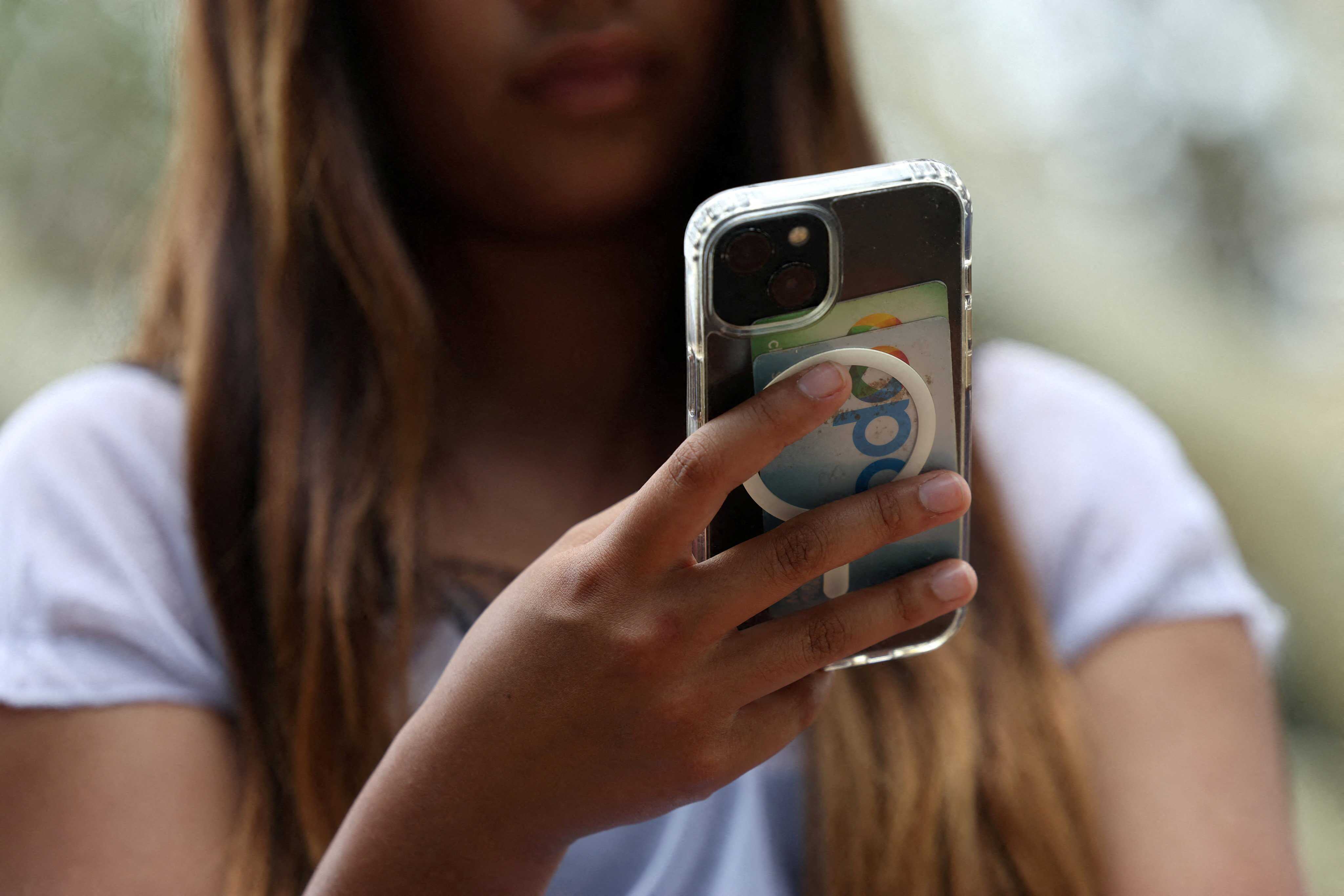
When was the last time you actually finished reading something without repeatedly checking your phone?
If you have to think for a moment, that may be your answer. Many of us are concerned that our ability to concentrate is dwindling.
“In recent years, we’ve forgotten how to focus and concentrate for any length of time,” said coach and author Cordula Nussbaum.
The main cause of our shortened attention spans is the changing media landscape, Nussbaum explained. Social media gives us bite-sized snippets of information, and we always have smartphones in our hands, keeping us up to date with a stream of alerts. We have become wary of silence.
How to regain focus
“The brain has got used to something happening every few minutes; otherwise, you become restless,” said neuroscientist and author Henning Beck.
Paradoxically, people engrossed in their phones seem captivated, attentive and focused. But this kind of attention ultimately fails to fulfil us, he said.
“There’s no goal and no end; you can’t get anywhere,” Beck explained. “You haven’t achieved anything to be proud of after watching countless Instagram videos.”
That sounds rather discouraging at first. But Nussbaum offered some good news, too. “Everything we’ve forgotten, we can learn again,” she said.
Targeted training and new routines
There is no point in demonising technology in general. Instead, it’s better to use it sensibly and purposefully, Beck said.
That involves consciously putting it aside to do things that offer more than just a short-term thrill.
In practical terms, it means focusing on a consistent activity rather than letting your mind jump from one thing to another. “Distraction is a choice,” Beck said.
If habits – such as constantly reaching for your phone – have become ingrained over the years, you need to rewire them.
Beck suggested setting aside specific spaces and times without screens.
“A good rule, for example, is: not in the morning before, and not in the evening after, brushing your teeth.”
You could also banish your phone from the dining room, only check emails on your computer, and disable notifications on your device.
In addition, you could find alternatives to technology. For example, take a printed magazine with you on the train journey, rather than getting lost in your phone.
Beck also recommended finding hobbies where you can’t look at a screen, saying our brains need such periods of rest.
Clarify your inner motivation
“Recognition is the first step towards change,” Nussbaum said. In her experience, once people understand how they are being manipulated by social media’s short-term reward system, many want to resist it.
“The key is asking ‘why’,” she said. Ask yourself: do I want to move away from feeling torn and dashing from one topic to the next? Clarifying your motivation is important, as people are more inclined to change their behaviour when they know what they want to discover or gain.
Nussbaum recommended taking small steps. Start by putting your phone away for five or 10 minutes, and keep it out of sight. If you feel restless, acknowledge that feeling and observe it as if from the outside.
“Taking a few calm, deep breaths helps,” she said. “And then try to hold out for just a moment longer.”
It is easier to retrain your attention with topics you find engaging. “Don’t try to read a thick book that doesn’t interest you at all,” Nussbaum said.
“Make it as easy as possible for yourself. Perhaps some light reading or a good audiobook, where you try to hold your attention.” During these activities, notice when your mind wanders without judging it, and consciously refocus your attention, she said.
‘Mind-cleansing’: Let it all out in one go
If, in everyday life, your head is too full of thoughts to focus on anything, Nussbaum advised trying “mind-cleansing.” That means “to let your mind let out everything that’s swirling around in there, and write it all down in a completely random way,” she said.
If you like, you can then organise the list. If you find you have things to do, you can consider which items you could tackle first.

If you really want to tick off tasks with full concentration, stick to one basic principle: only ever do one thing at a time.
After all, our brains aren’t designed for multitasking, Beck said. It leads to more mistakes, making it harder to prioritise. People may also struggle to concentrate.
The brain isn’t a computer with multiple tabs open and programmes running simultaneously, he explained. “Our strength compared to a machine is our ability to think deeply and be creative, rather than constantly jumping back and forth.”
Focusing on just one thing pays dividends.
“The attention I give to other people – for example, in conversation – is the greatest mark of appreciation I can offer,” Nussbaum said, adding that this principle applies in your personal life as well as at work or school.