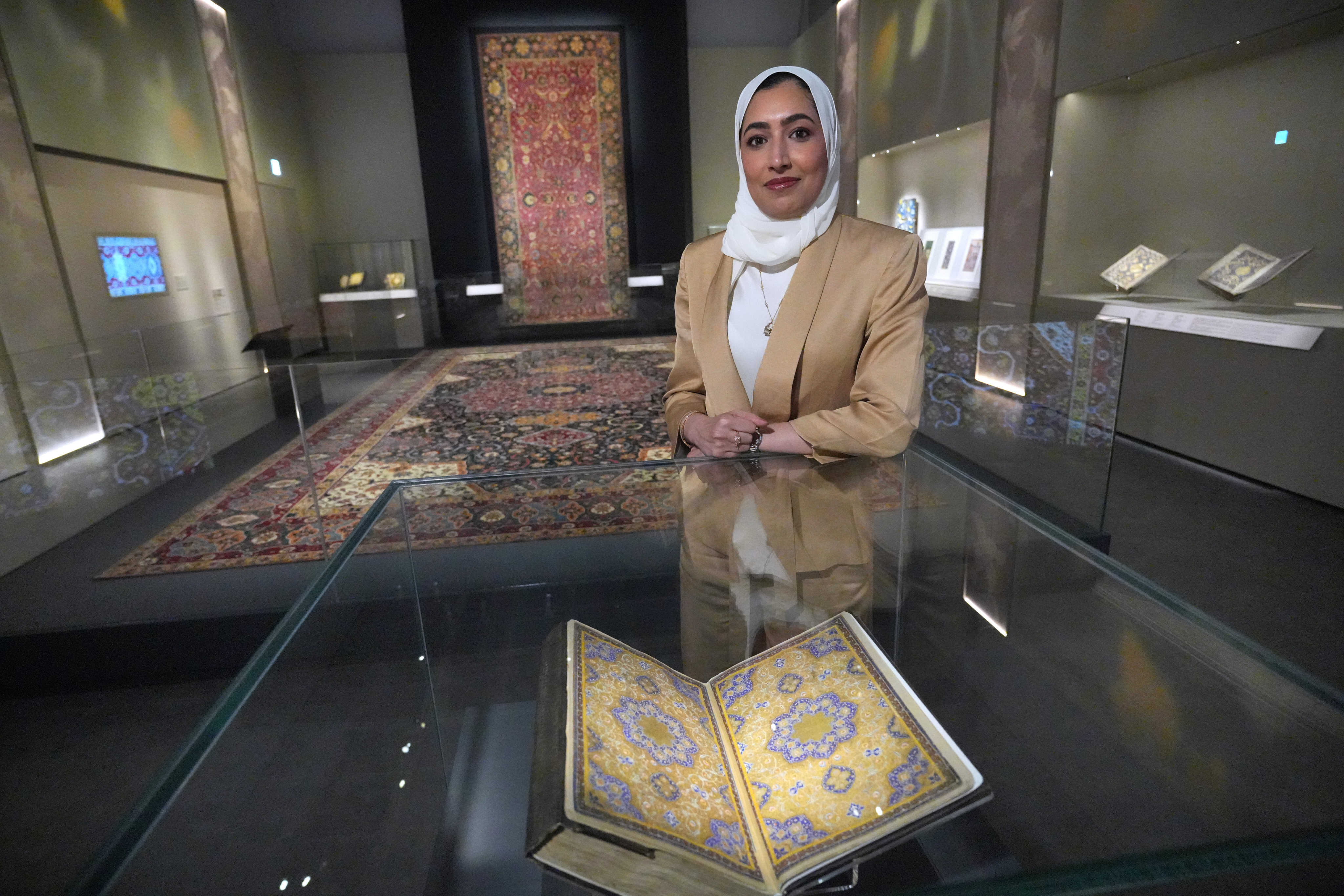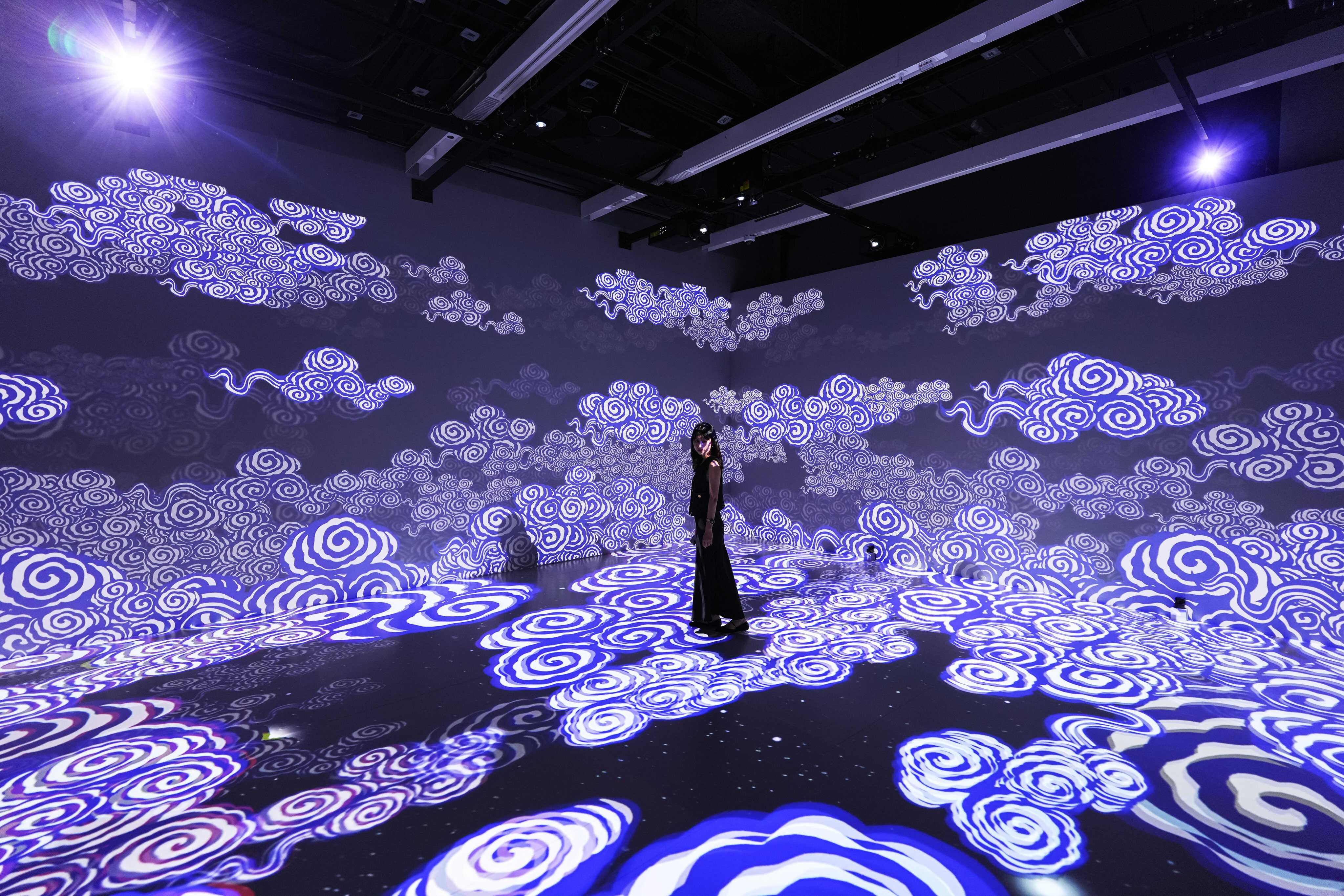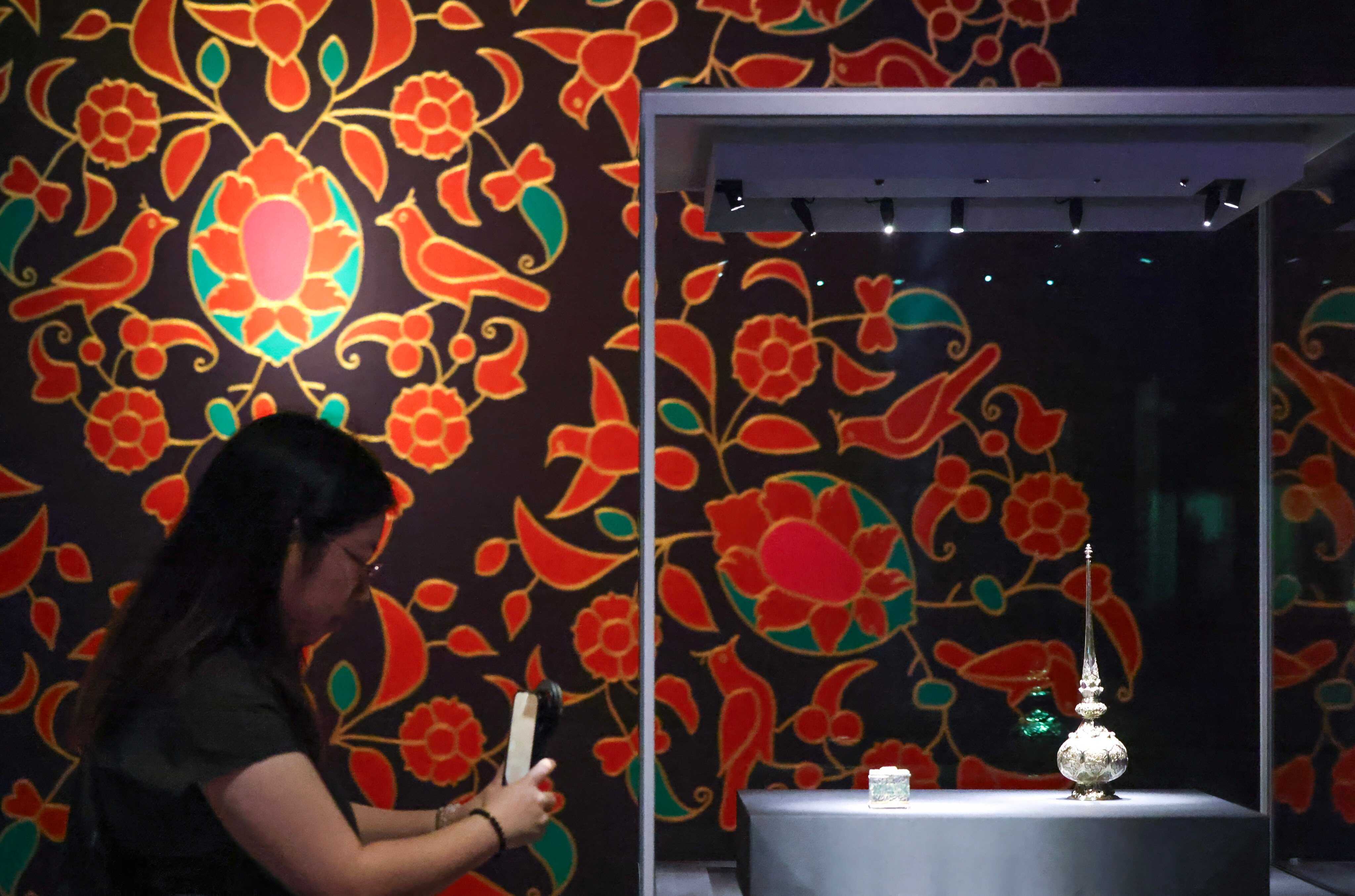
An exhibition showcasing over 100 pieces of art, including jewellery, weaponry and fragments of architectural history from the Mughal court, opened in Hong Kong on Wednesday. The Mughals were a Muslim dynasty that encompassed much of present-day South Asia.
The Hong Kong Palace Museum is the first stop on the travelling exhibition’s itinerary and the only venue in Asia. The original edition in London attracted 150,000 visitors and concluded earlier this year.
Other destinations for the “Treasures of the Mughal Court from the Victoria and Albert Museum” exhibition have yet to be announced.
“We are also looking at the link with China – that’s one of the themes that runs throughout the show here in Hong Kong, which we’ve only hinted at in London,” said Emily Hannam, curator of the South Asia collection at the British institution.
“Although there were no diplomatic relations between the Chinese court and the Mughal court, we look at three distinct areas of this connection throughout the show,” she said, referring to ceramics, jade and paintings.
According to Hannam, the Victoria and Albert Museum in London has been collecting Mughal art since its founding in the 1850s and boasts one of the most important collections outside of India.
The exhibition traces the development of Mughal art through the reigns of three emperors – Akbar, Jahangir and Shah Jahan.
The Mughal empire, which lasted from 1526 until 1857, spanned modern-day northern India, Pakistan, Afghanistan and Bangladesh. Its emperors were “arguably the wealthiest rulers in the early modern world”, Hannam said.
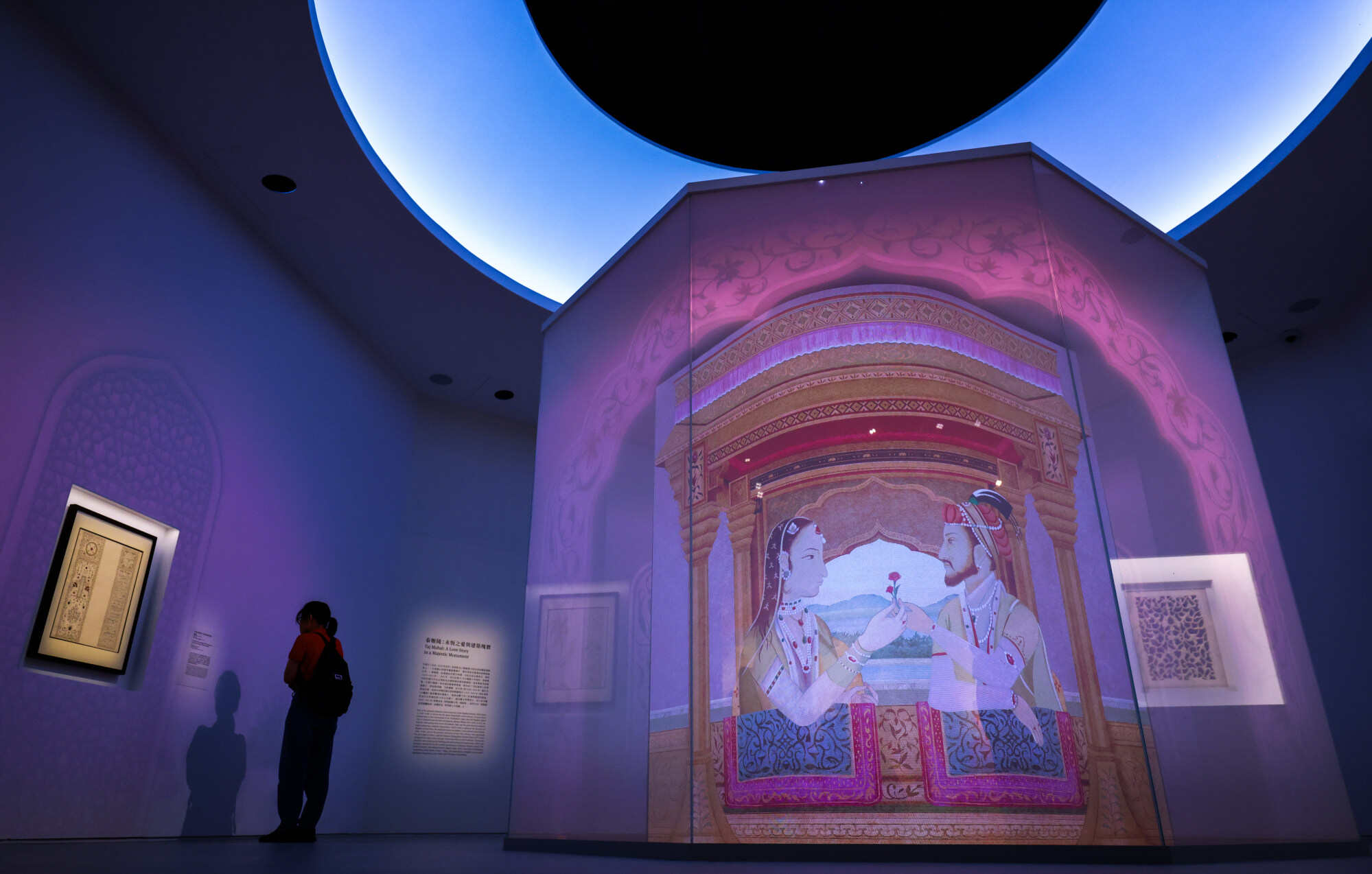
Daisy Wang Yiyou, deputy director of the Hong Kong Palace Museum, said the show was the first comprehensive exhibition dedicated to Mughal art in Hong Kong and that the exhibits from the core of the London institution were of “superlative quality”.
“It’s so exciting because I was trained in Chinese art, I never realised there was so much going on between China and South Asia even way back,” said Wang, highlighting that the period corresponded to the country’s late Ming and early Qing dynasties.
One of the exhibits that illustrates the cultural exchange between the Ming and Mughal courts is a yellow-glazed porcelain dish produced in Jingdezhen, China, between 1488 and 1505. The piece entered Emperor Jahangir’s collection in about 1613, according to inscriptions on the bottom of the dish.
The Ming dynasty prohibited the unauthorised production of yellow-glazed porcelain as it was designated for the exclusive use of the Chinese emperor, making its presence in Jahangir’s collection very rare.
Another highlight is a jade pendant inlaid with rubies, emeralds and gold. Hannam said the piece exemplified the gemstone setting technique unique to the Indian subcontinent, known as kundan.
The stones depict a type of bird called hoopoes, which symbolise the archetype of royal wisdom in Persian culture that Mughal emperors admired, with a Koran verse inscribed on the back of the pendant.
Exhibits in the show are bolstered by those from Kuwait’s Al-Sabah Collection, the UK’s Fitzwilliam Museum, Ashmolean Museum and Royal Asiatic Society, as well as the Hong Kong Palace Museum’s own collection.
The exhibition is priced at HK$150 for adults with timed visits and HK$75 for concessionary tickets. The show will run until February 23.