




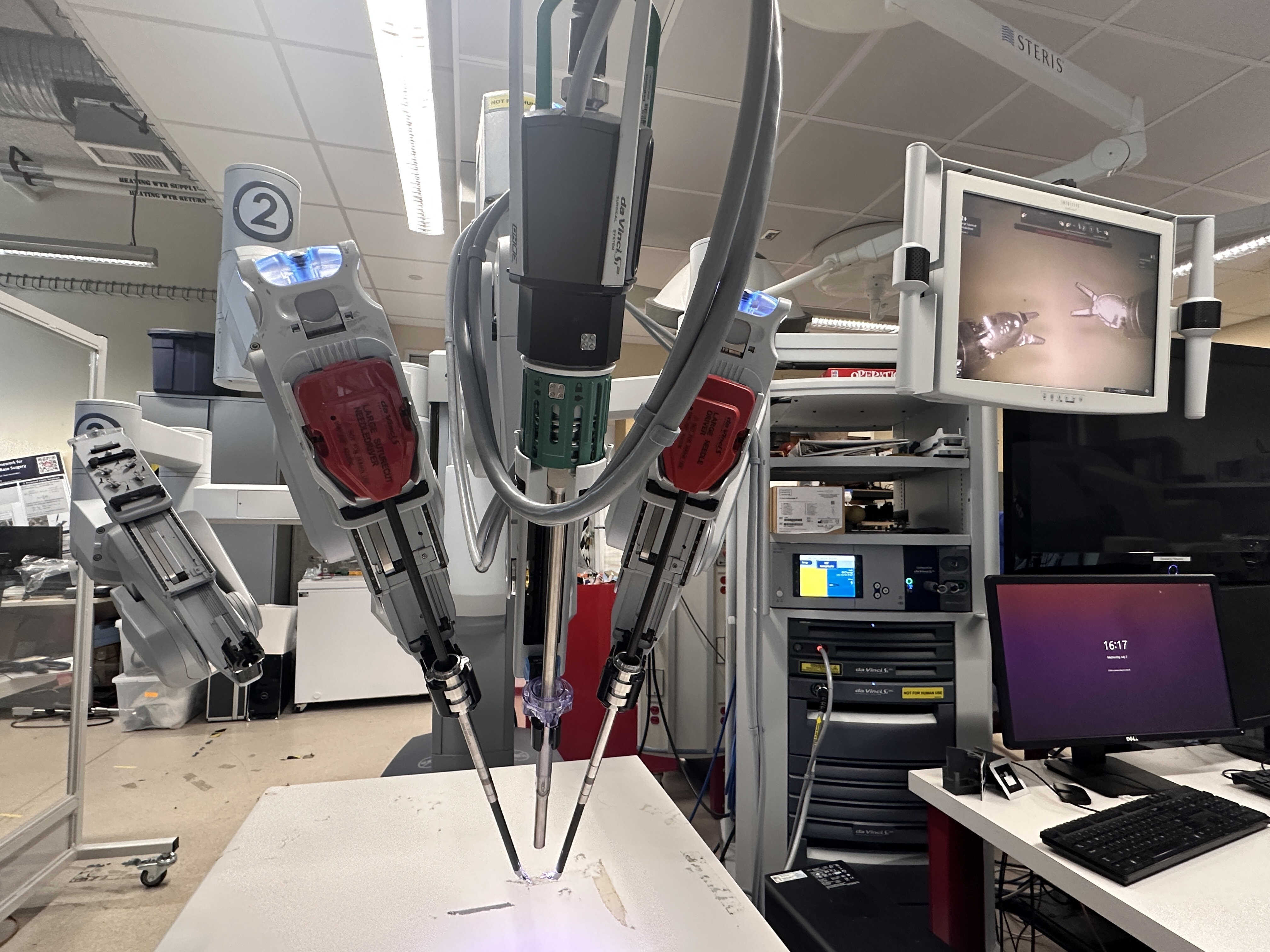
Researchers have developed an experimental AI-guided robot capable of autonomously performing a delicate and complex phase of a common gallbladder operation. This marks a significant advancement towards the automation of medical procedures.
Unlike existing surgical robots, which are controlled remotely by surgeons, this new system utilises artificial intelligence to make independent decisions and adapt to unexpected complications during surgery.
Axel Krieger from Johns Hopkins University in Baltimore, who led the research, compared it to an autonomous vehicle that can navigate any road and respond intelligently to various conditions. Krieger stated, “This advancement moves us from robots that can execute specific surgical tasks to those that truly understand surgical procedures.”
The SRT-H robot was trained via an AI framework known as language-guided imitation learning, using videos of surgeons performing gallbladder removal surgeries on pig cadavers, the researchers reported in Science Robotics.
The robot was tested on eight varying sets of pig gallbladders and livers that had been removed from the animals.
Separating the gallbladder from the liver takes several minutes and involves “diverse tool use, including grabbing, clipping, and cutting – skills common in real surgical procedures,” along with decision-making and adaptation, the researchers said.
SOTY 2023/24: Grand Prize second runner-up wants to combine technology with healthcare
The pig organs and blood vessels in the tests varied widely in appearance and anatomy, “mirroring the diversity encountered in human surgeries,” they said.
While the robot achieved 100 per cent accuracy in the surgeries, it took longer to perform the work than a human surgeon.
Commercially available surgical robots include Intuitive Surgical’s da Vinci Surgical System, which has been used in over 12 million procedures globally since receiving FDA approval in 2000.
Unlike SRT-H, the da Vinci system relies entirely on human surgeons to control its movements remotely.
The global surgical robotics market is approaching US$10 billion (HK$78.5 billion) annually, with about 2.7 million robotic procedures performed in 2024, Baird analyst David Rescott estimated.
Eventually, autonomous surgical robots could help address surgeon shortages, minimise human error, and provide consistent, high-quality care in underserved regions, the researchers said.
