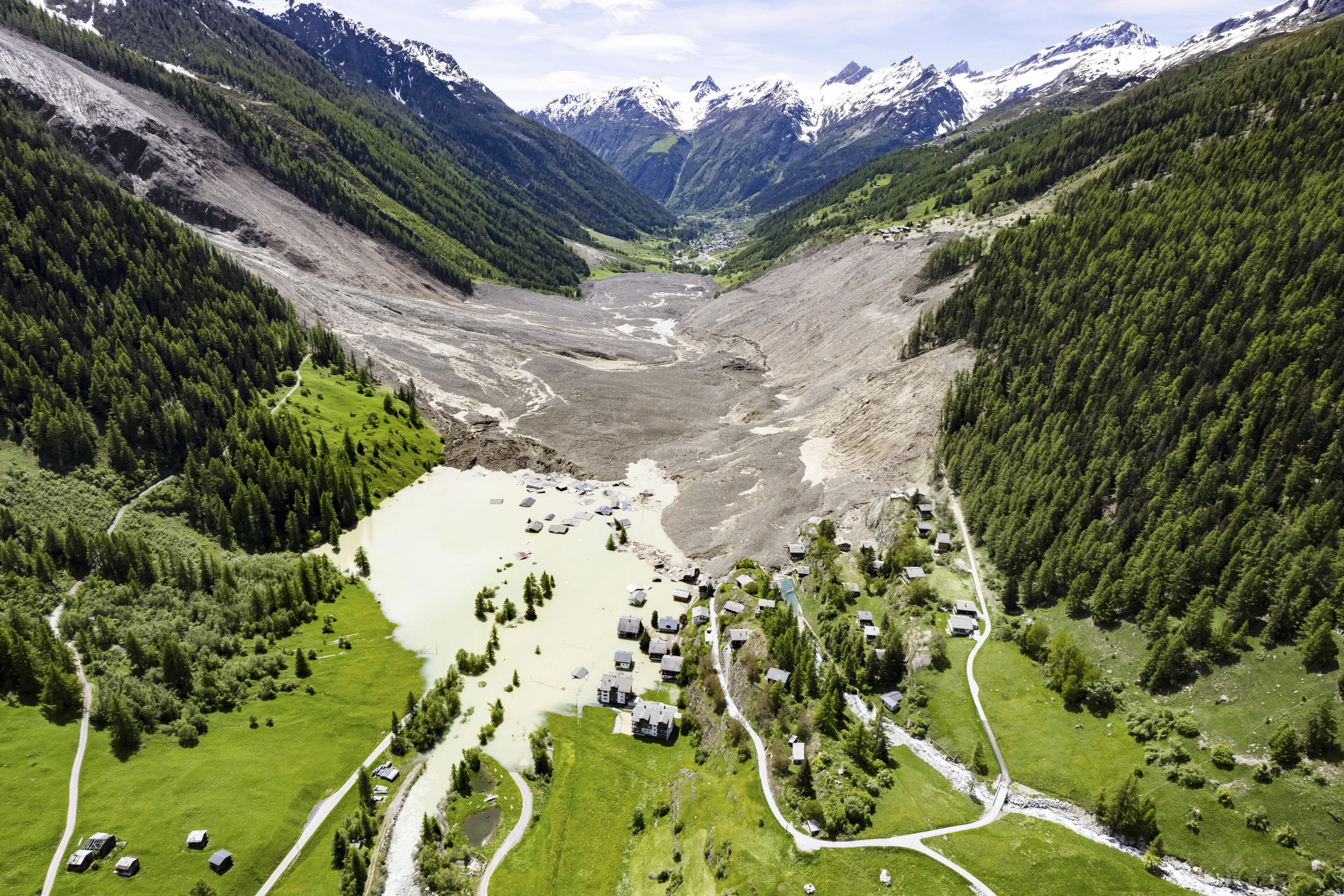
Switzerland’s glaciers are melting at an alarming rate this year, with scientists warning that the loss of ice cover began weeks earlier than usual due to a lack of snowfall in winter.
Researchers in Switzerland observe Glacier Loss Day (GLD) annually. This day marks the point when a glacier has lost all the snow and ice it accumulated during the winter.
This year, GLD occurred as early as late June or early July, depending on the specific glacier.
“In some regions in northeastern Switzerland, we’ve never had such a small amount of snow on the glaciers at the end of winter,” said researcher Andreas Bauder of ETH Zurich of the mountain conditions going into the summer months.
“As long as there is snow on the ground, the ice won’t melt. But this year, the snowmelt began at the end of May and continued rapidly throughout June and into July,” he said.
In Switzerland, snow and ice cover are measured in detail every spring and autumn on about 20 of the country’s roughly 1,400 glaciers. Between 10 and 15 of those are also monitored during the summer. These observations are used to determine the GLD.
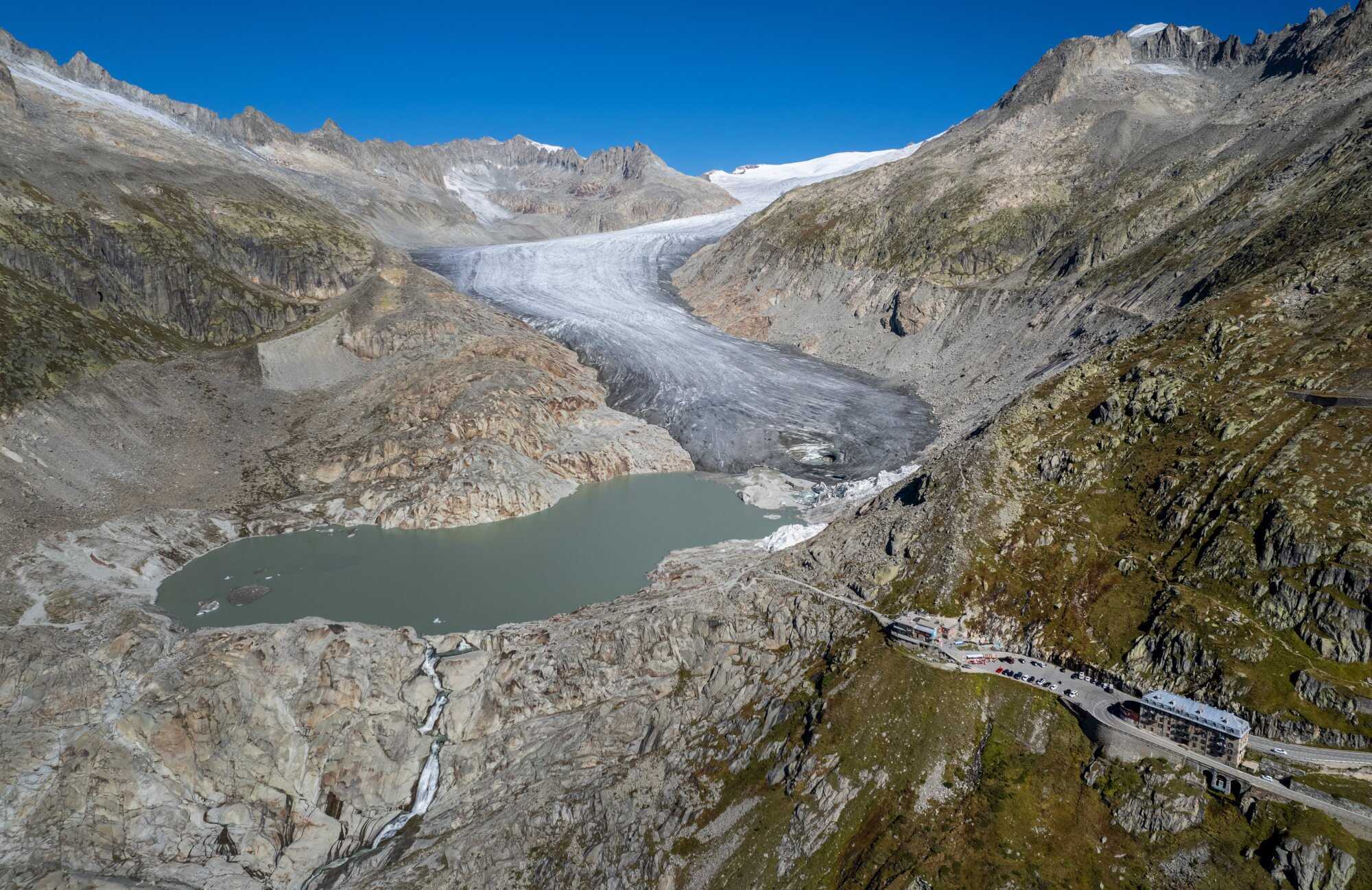
Among Switzerland’s largest glaciers are the Aletsch and Gorner glaciers.
Looking back to last year, the summer began with much larger snow reserves than this year, according to Bauder. Even so, glaciers still lost more mass in 2024 than they gained during the winter, leading them to shrink.
“In the past, GLD usually came at the end of August or early September – but we haven’t seen that in the past 20 years,” said Bauder.
Due to climate change, Switzerland has not experienced a single year of glacier growth in more than two decades.
According to the glacier monitoring network Glamos, Switzerland’s glacier volume has practically halved since 1950: from 92.3 to 46.5 cubic kilometres as of last year. One cubic kilometre is equivalent to an ice cube with 1,000-metre sides, or put another way, a billion ice cubes, each one metre in size.
Even a cold August with snowfall at high altitudes is unlikely to change the outlook, Bauder said, because summer snow isn’t as dense as winter snow and melts quickly.
“A glacier is like a viscous mass of honey on a sloped surface. It flows downward,” he explains. When there’s not enough snow feeding it from above, too little flows down. The glacier tongue at the bottom can no longer sustain itself and recedes.