





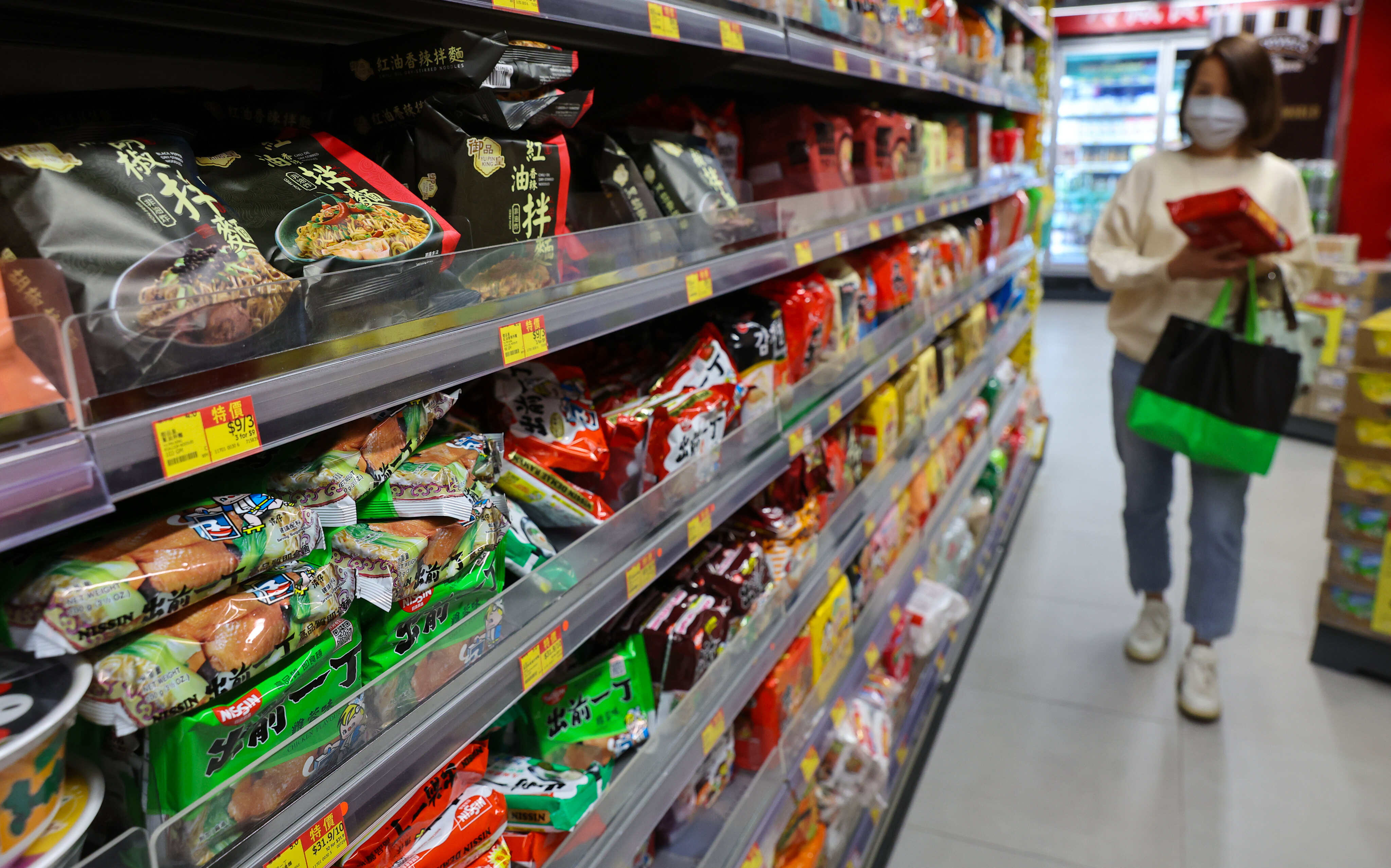
Nearly 90 per cent of instant noodles tested by Hong Kong’s consumer watchdog have been found to contain potential carcinogenic contaminants, it said, urging the industry to reduce production of harmful substances to safeguard public health.
In a study published on Thursday, the Consumer Council revealed it had detected potential cancer-causing chemicals 3-MCPD and glycidol in 17 out of 19 samples of pre-packaged fried and non-fried instant noodles tested along with their seasoning packets and toppings.
Three types with seasonings containing palm oil – Kung Tak Lam Vegetarian Noodle (Mushroom), Meadows Tom Yum Flavour Instant Noodles and Mamee Pepper Noodles – were found to have levels of contaminants exceeding European Union (EU) limits for their relevant vegetable oils.
Stay warm during the Hong Kong winter with this healthier version of clay pot rice
The first two contained 3,100 ug/kg of 3-MCPD, while the third had 5,111 ug/kg of glycidol in its seasoning.
The International Agency for Research on Cancer has classified 3-MCPD as a “possible human carcinogenic” and glycidol as a genotoxic experimental animal carcinogenic.
The EU regulation for palm oil has set the maximum limit of sum of 3-MCPD and its fatty acid esters at 2,500 micrograms/kg. The maximum levels of glycidol in general edible vegetable oil stand at 1,000 mcg/kg.
But both Hong Kong and the EU have not set out maximum limits for the detected levels of 3-MCPD and glycidol in instant noodles and their seasonings.

While no scientific research has found a link between instant noodles consumption and increased cancer risk, the council called on the industry to tighten control over the quality of raw materials and the production process to reduce levels of both contaminants to protect consumer health.
“Although normal consumption of these seasonings does not pose significant risks to the health of adults, the council urges manufacturers to use ingredients with fewer contaminants to improve product safety and safeguard consumer health,” it said.
The sodium intake ranged between 1,509 milligrams and 2,477mg in all tested samples. All samples exceeded the recommended adult intake limit set at 667mg per meal for adults by the World Health Organization (WHO) for one whole serving (noodles with sauce). It suggests that adults should consume less than 2,000mg of sodium per day.
“Even seemingly healthier non-fried noodle samples were no exception, with all samples found to be high in sodium,” the watchdog said.
“The sodium intake from nine of these samples was even higher than the recommended adult daily intake limit, with the highest sample (2,477mg) almost 23.9 per cent higher than WHO’s recommendation,” it said, referring to Kung Tak Lam Vegetarian Noodle (Mushroom).
The council advised people not to consume too much sodium, warning excessive intake could lead to greater health risks.
“Although the human body does require an appropriate amount of sodium to maintain body functions … excessive sodium intake over extended periods may adversely affect health and increase the risk of cardiovascular and renal diseases,” it said.

Among these nine samples, a whole serving of non-fried Prima Taste’s Premium Noodle in Aromatic Coconut Soup had the highest total fat and more saturated fat content than the adult intake limit per meal. It was found to contain total fat of 34.1g and saturated fat of 22.4g, mainly from its seasonings and toppings.
According to WHO, the maximum intake of total fat and saturated fat per meal for adults eating three meals a day should be 22.2g and 7.4g, respectively.
The watchdog warned saturated fat increased bad cholesterol levels in blood, raising the risk of cardiovascular diseases.
“As such, consumers concerned about cardiovascular health should pay attention to the amount of saturated fat ingested, and it is advisable to appropriately reduce the amount of accompanying seasonings added into lo mein or stir noodles,” it said.
As relevant tests showed instant noodles were generally high in sodium and fat, the council advised consumers to reduce sodium intake and refrain from using all accompanying seasonings, consuming the soup or eating instant noodles regularly.
The distributor of Meadows noodles said its products in question had fulfilled the city’s regulations but it had already removed them from shelves. It also pledged to improve the quality of its new products.
The manufacturer of Mamee said the level of 3-MCPD and glycidol found in its product had met the standards under the Harmful Substances in Food Regulations and the Joint FAO/WHO Expert Committee on Food Additives (JECFA), among others.
The manufacturers of Prime Taste’s noodles also said the level of 3-MCPD and glycidol found in its product was lower than the upper limit of the EU standard, insisting it was safe to consume.
