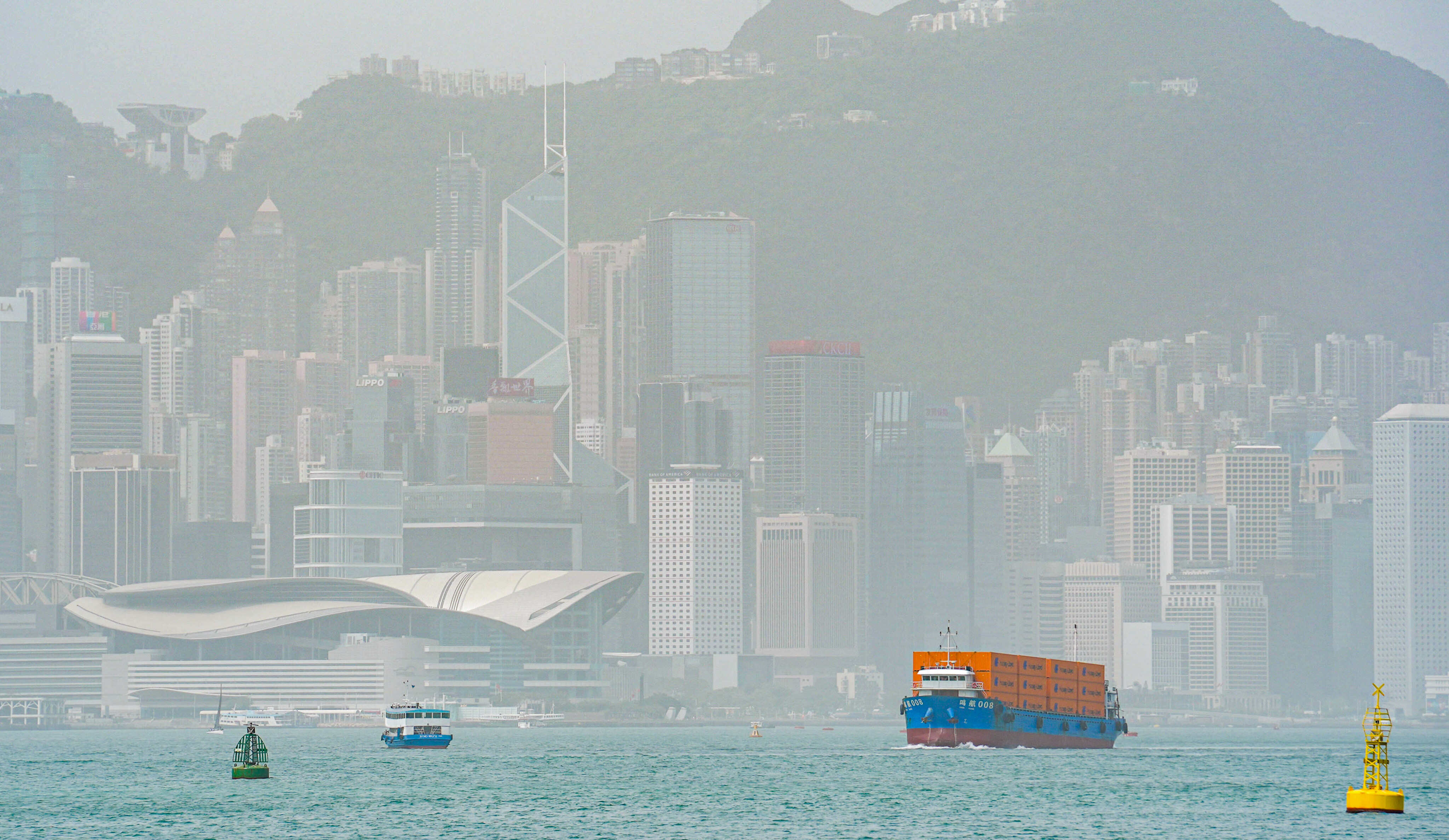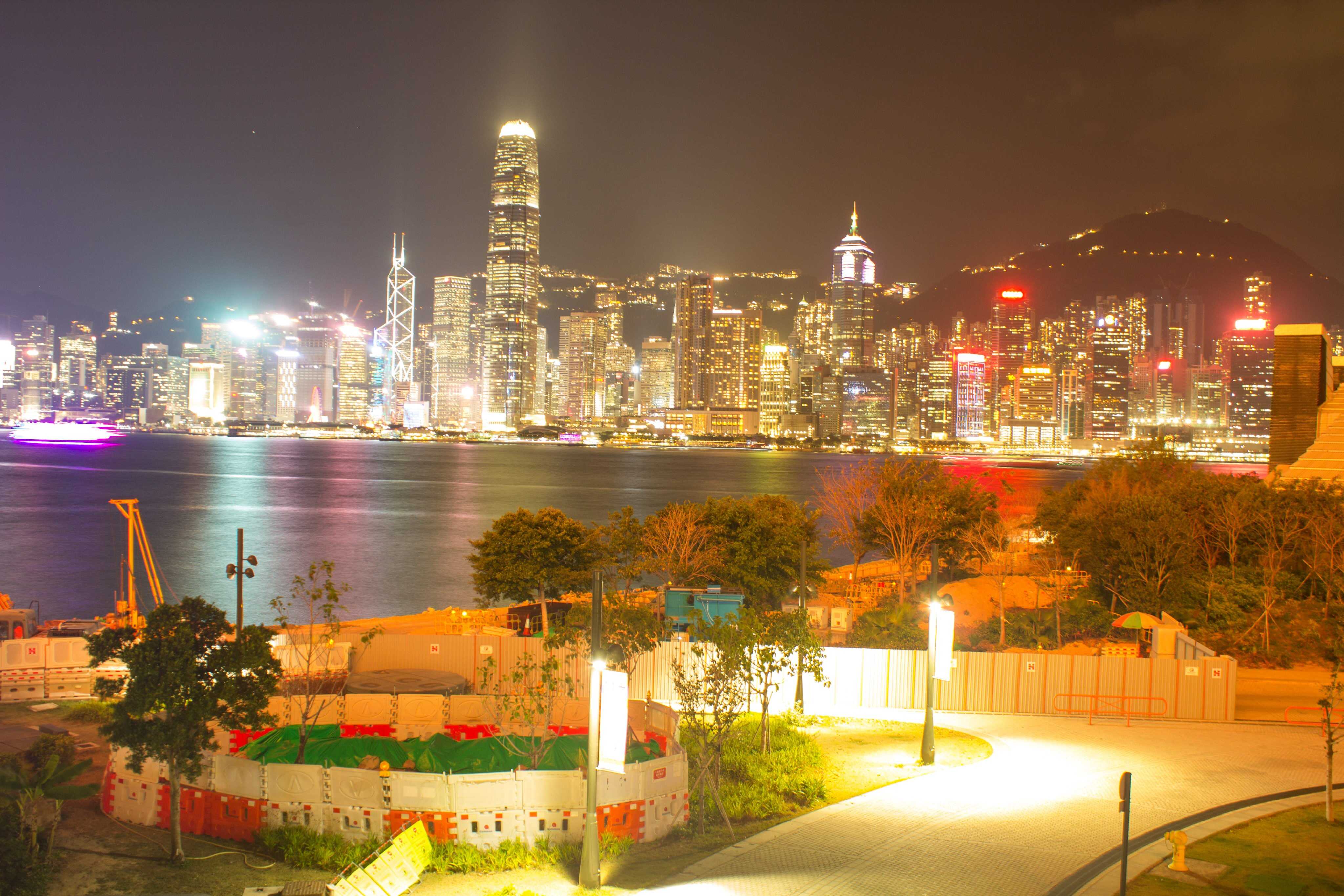
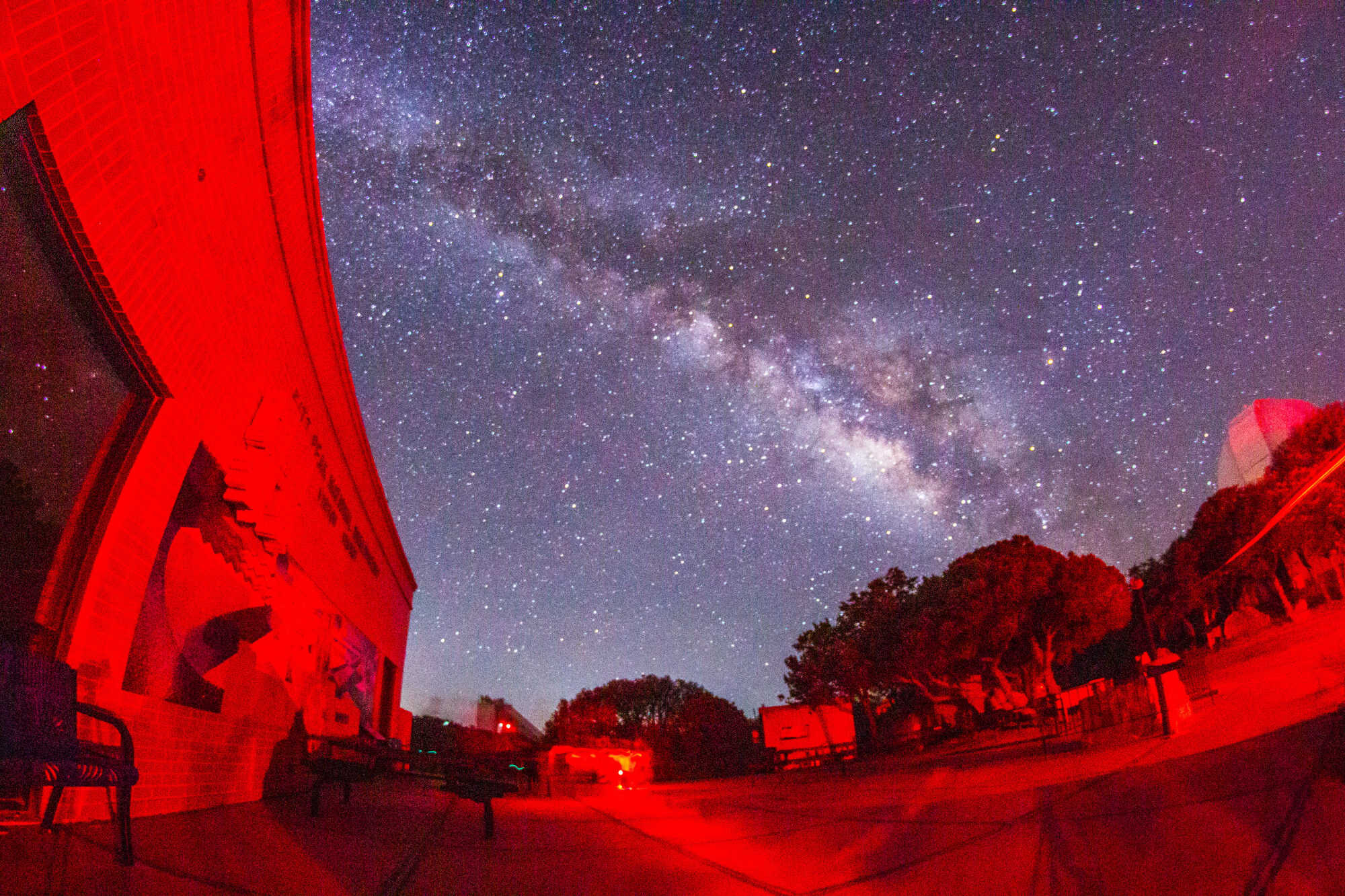
A few decades ago, if you lay down on a patch of grass in Sai Kung on a clear night and looked up at the sky, you could probably make out the Milky Way with the naked eye. That sight today is difficult to find, mainly because of Hong Kong’s immense light pollution.
Exodus Sit is an astronomer, educator and science author. He shed some light on the human-made environmental phenomenon that results from the extensive use of artificial light at night.
“Light pollution impairs our ability to see the night sky. It is essentially excessive outdoor lighting that wastes energy. It’s caused by things like too bright street lights or the neon signs used for advertising on storefronts and skyscrapers,” he explained.
Troubling impact
Light pollution can affect human health and wildlife, according to Sit, who is the chair of the National Astronomy Education Coordinator Team for China-Hong Kong of the International Astronomical Union Office of Astronomy for Education.
“It can disrupt sleep, particularly in densely populated areas like Mong Kok and Tsim Sha Tsui, where light from the streets can spill into homes,” he said.
According to the American Academy of Neurology, people who live in areas with more intense light are more likely to sleep less than six hours a night.
In a study conducted by the academy, 29 per cent of respondents living in areas with high exposure to light were dissatisfied with their sleep. Only 16 per cent of those living in places with low exposure to light felt the same. The former group was also more likely to wake up feeling confused at night.
Chronic poor sleep can increase the risk of dementia, heart disease, type 2 diabetes and obesity. Low-quality rest also affects your ability to function.
Light pollution is not only an issue for humans. The man-made problem affects the ecosystem, especially nocturnal animals.
Excessive artificial light disrupts the breeding cycles of fireflies and birds. Predators such as bats and frogs may also struggle to hunt for food under bright lights. And insects can be drawn to and disoriented by street lights that lack proper shielding.
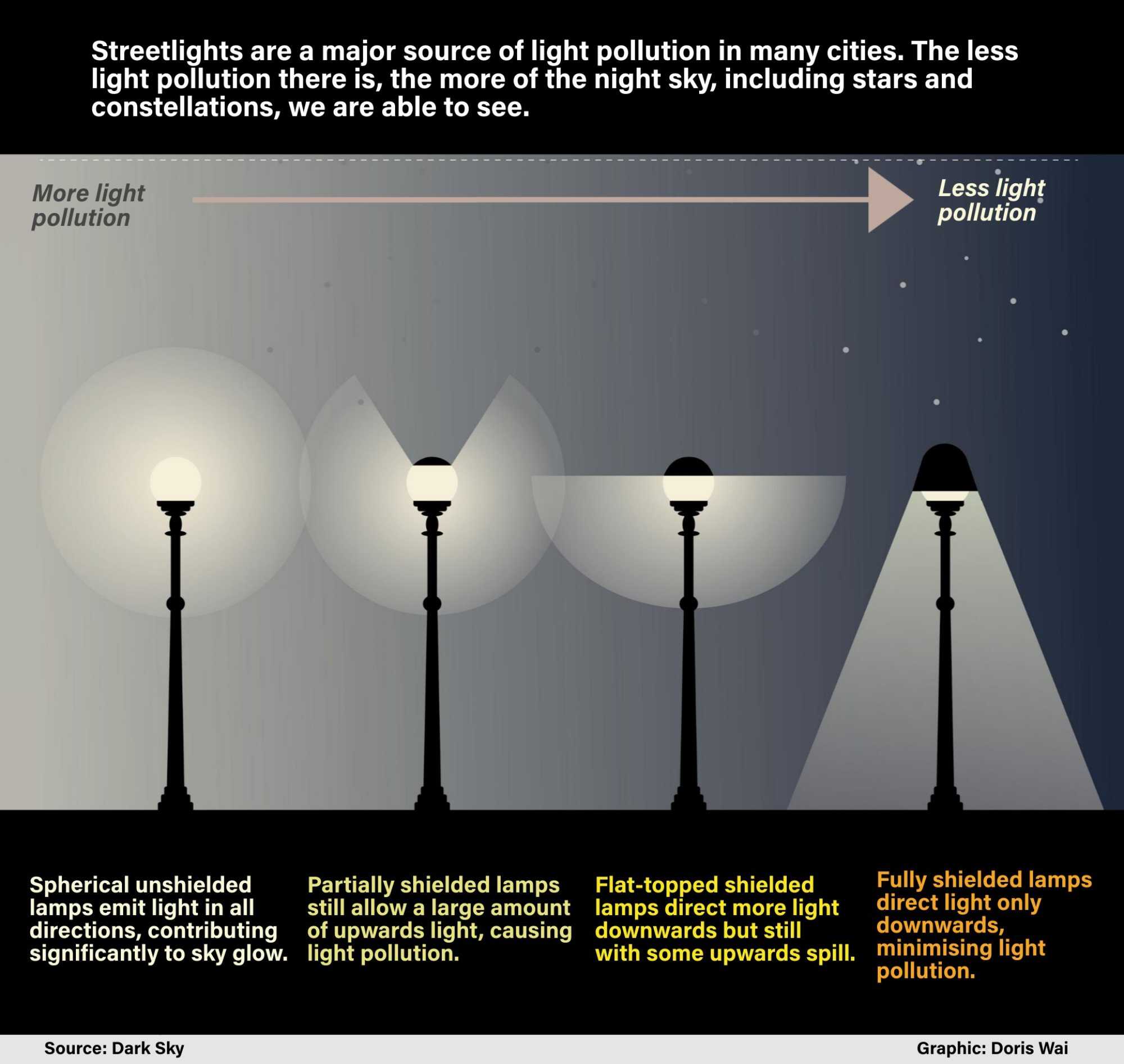
Proper shielding is a design feature on a street light that focuses the light on the ground. When a street light is unshielded or has improper shading, light ends up shining everywhere. This creates “glare” and contributes to the sky glow that makes it difficult to see stars at night (see graphic). This is a problem in many cities around the world.
Growing concern
While light pollution has slightly decreased in Hong Kong, especially in comparison to before the recent pandemic, it remains a pressing issue. In particular, Sit noted the slight sky glow over the sea that is caused by fishing vessels and other ships.
“The colour of this sky glow, which is a bit like the aurora [a natural display like the northern lights], is a form of light pollution,” Sit said. “It has become one of the most serious light pollution issues we have faced, particularly in the last two to three years.”
The annual Earth Hour observed in Hong Kong where non-essential lights are turned off for one hour is a good step towards reducing energy waste. But more work needs to be done to raise awareness of the problem.
“This requires the collaborative efforts of many different groups, including astronomers, environmentalists and government agencies,” Sit added.

Sit said young people who are interested in learning more about issues such as light pollution should read up on astronomy and the dark sky. He is the author of the educational book Explore Astronomy A to Z: Get Hands-on with STEAM Space Science.
Astronomy, the scientific study of celestial objects and the cosmos, is closely linked to environmental awareness. Light pollution, energy conservation and climate change are all issues astronomers can help explain and educate others on.
“We all have a responsibility to reduce light pollution ... [to ensure] the future generation gets to see natural wonders,” Sit said.
How do scientists measure light pollution?
Scientists have various ways to measure light pollution. One method involves an instrument called a sky quality meter (SQM), which measures how bright the night sky is. Scientists can also use the Bortle Scale, which has nine levels, with Class 9 being the most extreme amount of light pollution. The Bortle Scale is more of a guide that astronomers use to assess the quality of the night sky based on what they can see with the naked eye. The SQM gives a more precise reading.