Deep Dive delves into hot issues in Hong Kong and mainland China. Our easy-to-read articles provide context to grasp what’s happening, while our questions help you craft informed responses. Check sample answers at the end of the page.
News: The plight of pregnant domestic workers in Hong Kong
-
Many of the city’s domestic helpers fear losing their jobs if they become pregnant
-
Advocacy groups have called for improved public education and support services to protect the rights of the city’s 368,000 domestic workers
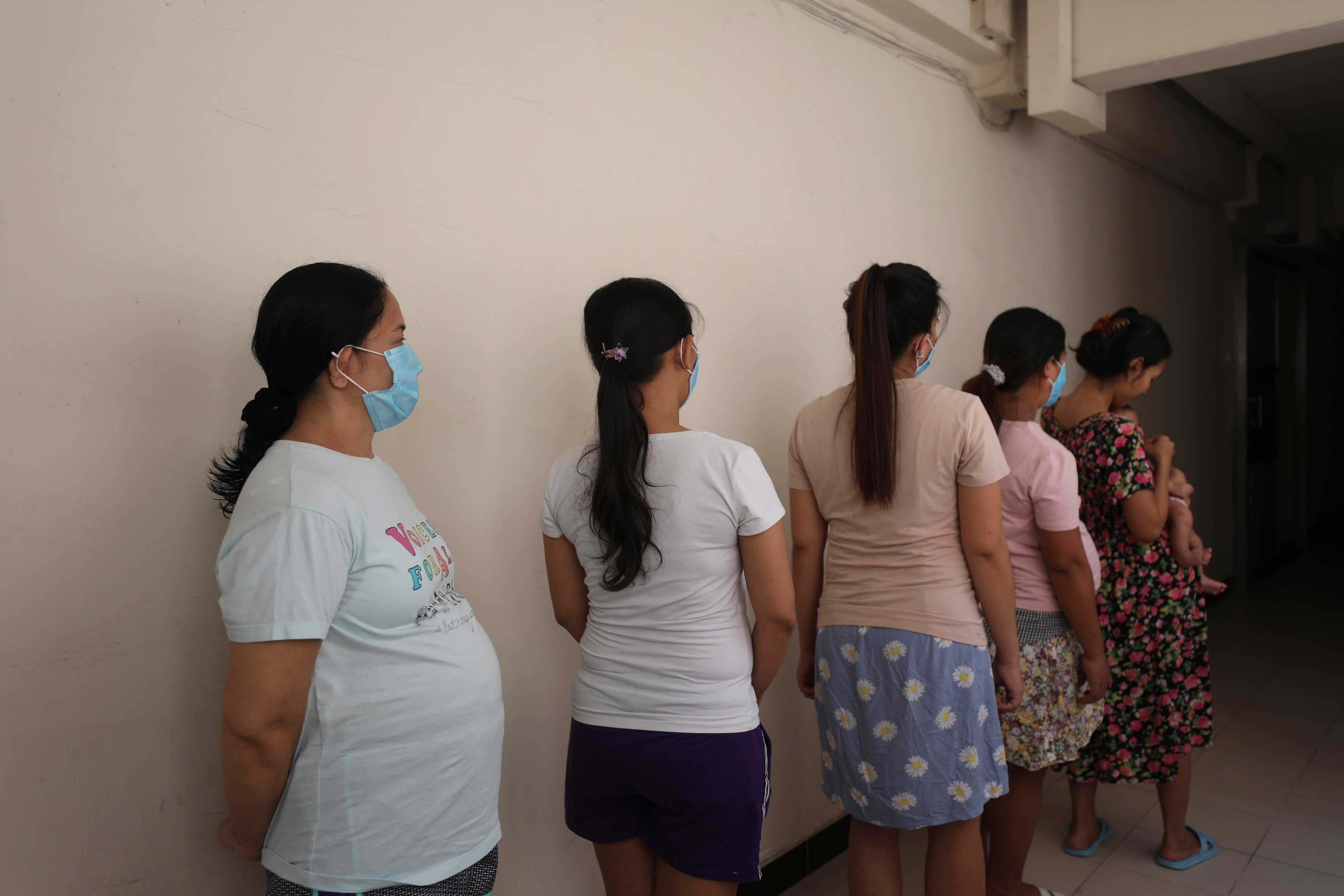
At five months pregnant, domestic helper Daisy* was kicked out of her Hong Kong employer’s home one night.
The 32-year-old called home in the Philippines, crying over what had happened.
“I felt so scared as I was pregnant and I had no family or friends here I could turn to,” Daisy recalled.
She arrived in Hong Kong in 2023 to work for a couple with a seven-year-old son, but fell pregnant last December after spending a holiday at home.
Things took a turn for the worse in May when the couple tried to force Daisy to terminate her contract. After Daisy refused to quit, her employer told her to leave their home immediately, she said.
In Hong Kong, it is illegal for an employer to dismiss an employee because she is pregnant. But advocates say it is not easy for helpers to find legal help, and the process can drag on for months.
Daisy, who received help from an NGO, filed claims with labour authorities for her unpaid wages and maternity leave payments from her employer. The claims were settled after about two months.
Daisy’s plight was not unusual, according to advocates and domestic workers. With the live-in rule, some pregnant helpers faced job loss, separation from their babies or resorted to illegal abortions, they said.
The issue was thrust into the public spotlight in August when police arrested 11 helpers for allegedly selling illegal abortion pills or performing abortions unlawfully.
Unions and groups called for better public education and support services to protect the rights of the city’s about 368,000 domestic workers, primarily women from the Philippines and Indonesia.
Stephanie Kwok Chi-ying is a senior case worker at PathFinders. The NGO offers services to pregnant migrant workers and their children in Hong Kong. As per Kwok, the biggest challenge is that many helpers fear being fired.
Kwok reported that 42 per cent of the pregnant helpers supported by her organisation last year lost their jobs.
A domestic helper in Hong Kong is eligible for 14 consecutive weeks of paid maternity leave. They can access the city’s public healthcare, receive free prenatal and postnatal check-ups and have their baby delivered in a public hospital at affordable fees. Employers do not need to cover their helpers’ pregnancy-related expenses.
*Name changed at interviewee’s request.
Staff writers
Question prompts
1. Why was Daisy kicked out of her employer’s home?
(1) Daisy was selling illegal abortion pills.
(2) She refused to terminate her employment contract.
(3) Daisy’s employer believed that her pregnancy would affect her work.
(4) She hid her pregnancy from her employer.
A. (1), (2) only
B. (2), (3) only
C. (2), (4) only
D. all of the above
2. List TWO challenges that pregnant domestic workers face in Hong Kong.
3. Should Daisy have been fired for her pregnancy? Explain using News, Glossary and your own knowledge.
Graphic
Question prompts
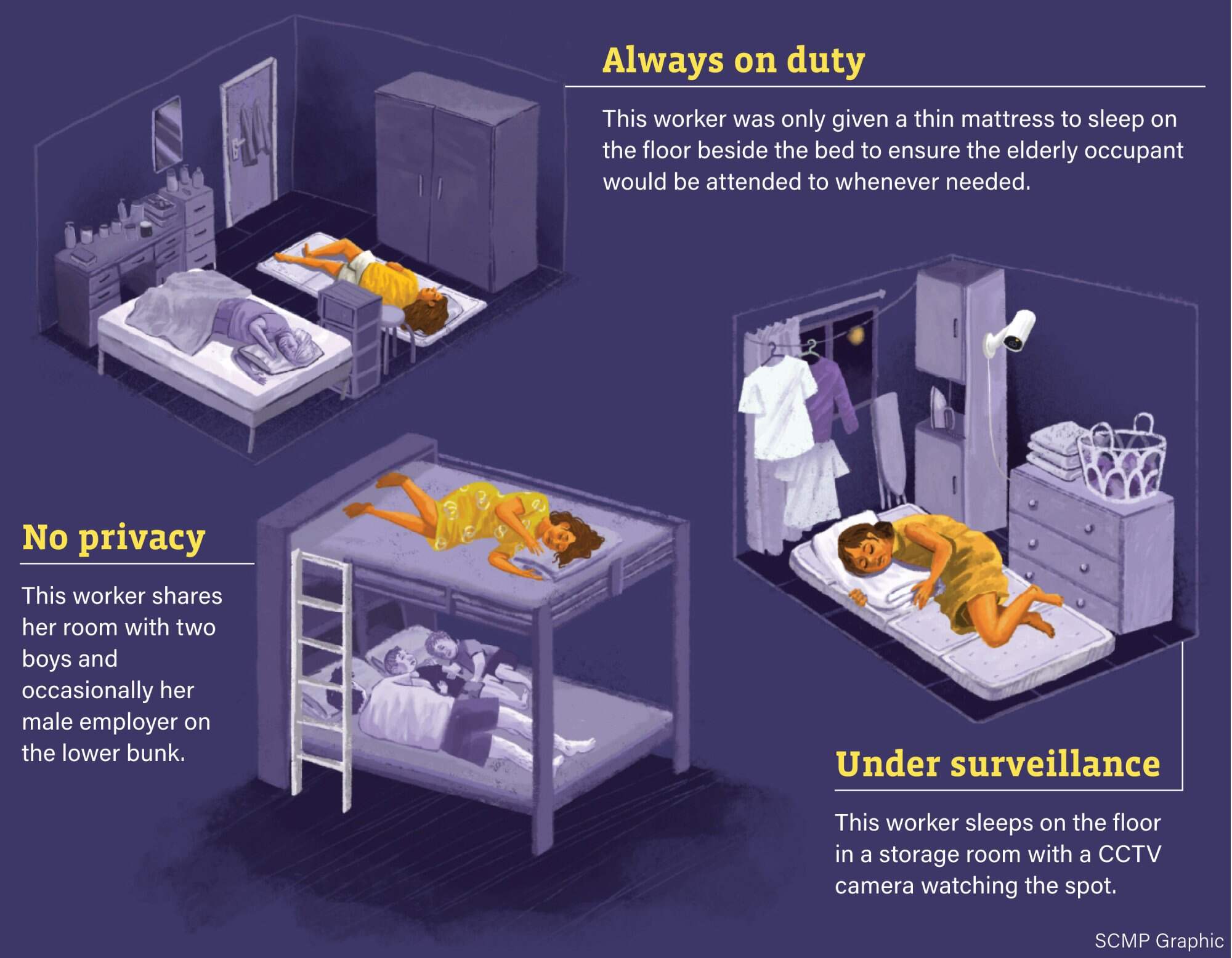
1. What is the live-in rule, and how does it impact domestic workers? Use Glossary and Graphic to explain your answer.
2. In what ways might the live-in rule have influenced some domestic workers to terminate their pregnancies? Why might some of these workers have resorted to illegal abortions? Explain using News, Glossary and Graphic.
Graphic
Question prompts
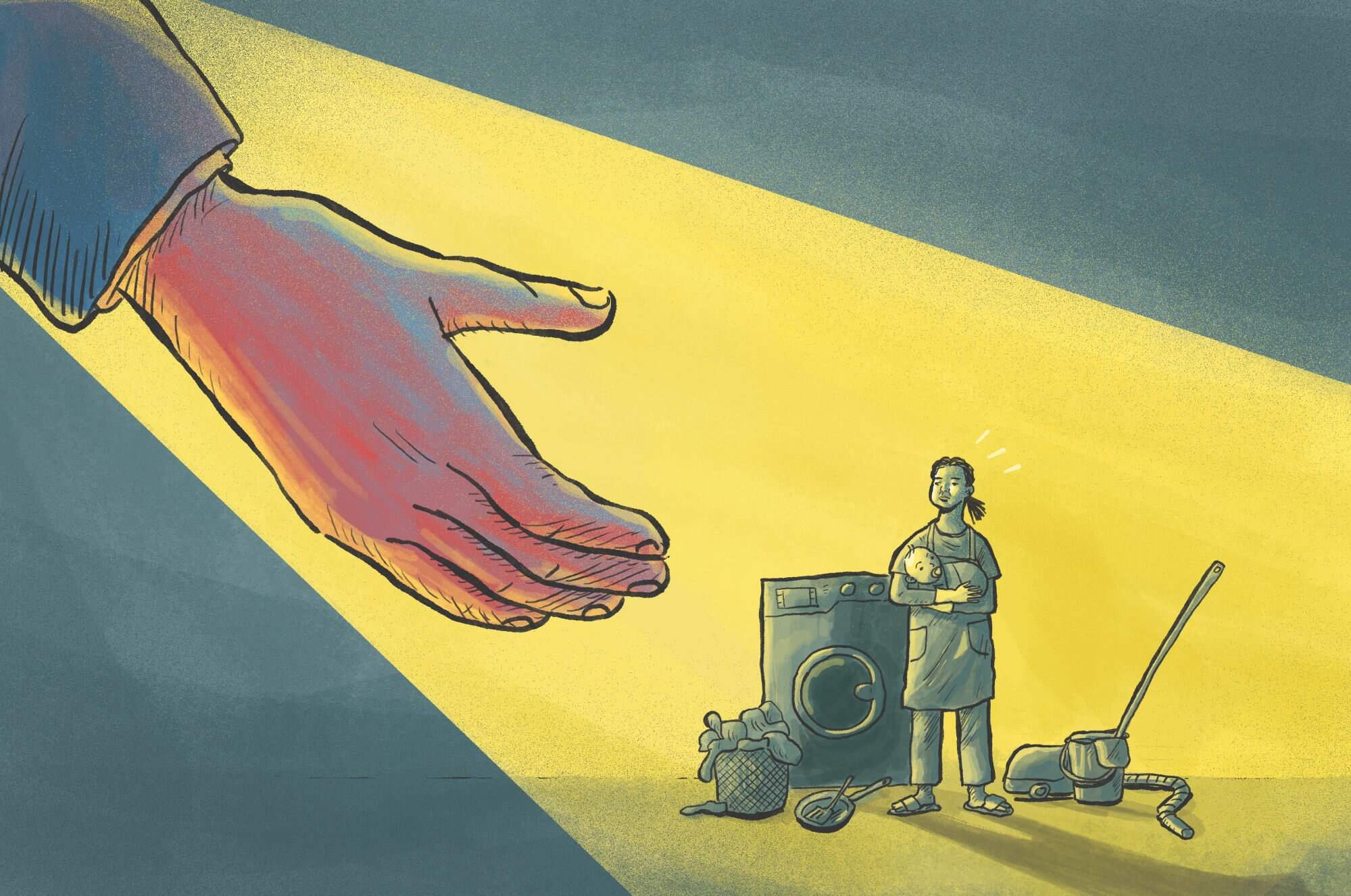
1. What could the hand depicted in the illustration symbolise?
2. Do you think it is possible for domestic workers to continue working while pregnant? Explain using News, Issue, Glossary and your own knowledge.
Issues: Calling for more education and support
-
Unions and support groups call for an exemption of the live-in policy for workers to deliver their babies
-
Advocates say there is a need to enhance public education, raise awareness of maternity rights among domestic helpers
Helpers, groups and experts have called for more support and protection for domestic workers with childbearing needs.
Stephanie Kwok Chi-ying from the NGO PathFinders said one major barrier was finding a place to accommodate their newborn babies if helpers chose to give birth in Hong Kong, as most employers were unwilling to house their workers’ babies.
Kwok said a lack of information and knowledge about Hong Kong’s laws, maternity rights and services could lead some helpers to resort to illegal abortions.
Some did not know where they could seek an abortion legally, while some affordable procedures were only offered for pregnancies of up to 10 weeks, they said.
Edwina Antonio-Santoyo, executive director of Bethune House, which offers shelter to migrant women in Hong Kong, said the refuge took in about 10 pregnant helpers every year.
A report released by PathFinders in September showed that some employers expressed stress and uncertainty about how they would handle a helper’s pregnancy, with one saying that it was “not the time and place” for a helper to get pregnant.
Thomas Chan Tung-fung, chairman of the Hong Kong Union of Employment Agencies, said almost all employers would not hire pregnant helpers, and his agency also would not introduce pregnant helpers or those with childbearing plans to employers.
“Employers are concerned about pregnant helpers feeling physically unwell at home and are afraid of asking them to do household chores as usual,” he said.
NGOs urged the government to step up public education to raise awareness of maternity rights among helpers, and improve their access to related services by also offering them on Sundays, when most domestic workers had their day off.
Training for employers on how to handle helpers’ pregnancy should be made mandatory and offered by labour authorities, they said, while calling for the live-in rule to be lifted to allow helpers to live out with their newborn babies.
Puja Kapai, an associate professor of the law faculty at the University of Hong Kong, said the city should bridge the educational gap and change the mindset towards these domestic workers.
“There are attitudes which people believe helpers don’t have the right to get pregnant because they’re working and that this is part of their contractual obligation not to,” said Kapai, who is the convenor of the university’s Women’s Studies Research Centre.
She said transitional arrangements should be made available for helpers, including accommodation and care for their newborns in the city. She suggested turning vacant buildings into temporary boarding facilities for helpers who gave birth and were in need, so they had a place to stay and support each other.
Staff writers
Question prompts
1. List ONE reason why most employers may hesitate to hire pregnant helpers
2. List THREE suggestions made by support groups to help pregnant domestic workers.
3. Do you agree with the support groups’ suggestion to lift the live-in rule to cater to domestic workers’ childbearing needs? Explain using News, Issue and Glossary.
Glossary
live-in rule: a policy that requires migrant domestic workers to reside in their employers’ homes to obtain a work visa. Implemented in 2003, this policy aimed to protect workers and prevent them from seeking part-time employment elsewhere.
illegal abortions: any termination of pregnancy that is not performed by qualified medical practitioners or carried out in a designated clinic or hospital is subject to legal penalties under the Offences Against the Person Ordinance of Hong Kong. Terminations are permitted only within 24 weeks of pregnancy, except in cases where it is absolutely necessary to save the mother’s life.
paid maternity leave: a period during which a woman is entitled to receive payment while she is absent from work before and after giving birth. According to the Hong Kong Labour Department, employers must provide employees with 14 weeks of paid maternity leave if they have been employed for at least 40 consecutive weeks. Workers who have been employed for fewer weeks are still permitted to take unpaid maternity leave.
prenatal and postnatal check-ups: medical care from doctors or nurses is provided before and after childbirth to help ensure the health of both the mother and the baby. These services are free for holders of Hong Kong identity cards but are typically only available on weekdays. This poses a challenge for many domestic workers, who usually have Sundays off.
Bethune House: a nonprofit that has operated in Hong Kong since 1986, providing shelter for female migrant workers in crisis
Sample answers
News
1. B
2. They may have nowhere for their newborn child to stay because of the live-in rule / The lack of support for these workers can lead to unsafe and illegal abortions. / Many of them also fear losing their jobs because of their pregnancies. (any two)
3. Daisy should not be fired due to her pregnancy. Firstly, this would be against Hong Kong law. Being pregnant does not hinder her ability to perform her job, nor does it justify losing her livelihood. Like any other employee in Hong Kong, she has the right to maternity leave and fair treatment. Terminating her employment because of her pregnancy is discriminatory and unjust. Instead, her employer should support her by allowing her to take maternity leave as mandated by law.(accept all reasonable answers)
Graphic
1. The live-in rule requires a domestic worker to stay in the employer’s home. But many of the city’s domestic helpers rarely have privacy at home. According to the illustration, one worker had to be on duty always. She was given a thin mattress to sleep on the floor next to the elderly occupant. One even sleeps on the floor in a storage room with a CCTV camera watching on the spot.
2. If domestic workers must live with their employers, it is hard for them to manage a pregnancy and take care of a newborn because many of them already have no privacy. In addition, they also might not know what healthcare services are available to them.
Graphic
1. The hand symbolises the help and support needed for migrant workers, whose reproductive rights should not be compromised by their employment conditions. (accept all reasonable answers)
2. Based on News and Issue, domestic workers are likely to face numerous challenges if they become pregnant. First, the live-in requirement makes it difficult for these helpers to maintain their own personal lives. Additionally, many employers and agencies are often reluctant to hire pregnant domestic workers or those who plan to have children. (accept all reasonable answers)
Issue
1. The live-in rule has caused most employers to feel stressed and uncertain about how to handle a helper’s pregnancy. They are concerned that pregnant helpers may feel physically unwell at home and are hesitant to ask them to complete their usual household chores.
2. We should raise awareness about maternity rights, offer prenatal and postnatal services on Sundays when many domestic workers have days off, provide accommodation and care for helpers and their newborns, train employers on how to support pregnant helpers, and consider lifting the live-in rule for pregnant helpers. (any three)
3. Allowing domestic workers to live outside their employers’ homes would provide them with more privacy and flexibility, especially during pregnancy and after giving birth. This change would enable them to care for their newborns safely and reduce stress for both the workers and employers. It would also demonstrate greater respect for the rights and well-being of helpers. (accept all possible answers)