Deep Dive delves into hot issues in Hong Kong and mainland China. Our easy-to-read articles provide context to grasp what’s happening, while our questions help you craft informed responses. Check sample answers at the end of the page.
News: China focuses on industrialising without carbon pollution
-
While most countries’ environmentalism involves deindustrialising and outsourcing labour, China is focusing on industrialising while improving its green infrastructure at the same time
-
The industries that fuel its economic growth are also at the heart of its sustainability push
Ma Jun has been an environmental researcher for nearly two decades. In that time, he has witnessed arguably the fastest environmental improvement in the world.
In 2006, Ma founded the Institute of Public and Environmental Affairs (IPE) – a non-profit environmental research organisation based in Beijing. At the time, nearly 300 million people were left without sufficient clean drinking water.
But today, more than 90 per cent of water at national control sections has been graded as “excellent”, “good” or “fair”, according to Ma.
Research also showed that the average annual level of PM2.5 fell by around 35.6 per cent nationwide from 2015 to 2022. PM2.5 refers to particles in the air measuring less than 2.5 micrometres. It is a key indicator of air pollution.
Other countries tend to push environmentalism driven by deindustrialisation. But China has decided on an industrialisation-driven decarbonisation. It is a revolution powered by cutting-edge technology, real-time monitoring and massive investments in green infrastructure.
Electric vehicles (EVs), solar panels and lithium batteries are at the heart of China’s sustainability push. They are also the industries fuelling its economic growth.
To combat environmental degradation, some developed nations have chosen to relocate or outsource their global industries. In contrast, China is building more factories while focusing on reversing environmental deterioration.
The country boasts 41 major industrial categories, making China the only nation in the world to encompass all the industrial sectors listed in the United Nations’ Industrial Classification.
But challenges remain. The country produces essential consumer goods and industrial materials for its 1.4 billion people. It also builds massive housing and infrastructure for them.
Zang Jiyuan is a researcher at the Chinese Academy of Engineering. According to Zang, Western countries have progressively relocated environmentally burdensome and labour-intensive industries to Asian nations over the past few decades.
China has taken over the manufacturing of a wide range of products, including electronics and textiles. It established the “made in China and designed [elsewhere]” model, evolving into a “world factory” – a role it continues to fulfil today.
This approach is not viable. Geopolitical tensions and economic development mean that China has to prioritise energy, food and its supply chain, experts say.
Staff writer
Question prompts
1. Which of the following is true, according to the information in News?
(1) China is known as a “world factory”.
(2) China has relocated environmentally burdensome industries to other Asian nations.
(3) Most countries’ environmentalism is driven by industrialisation.
(4) China is the only country in the world to have all the industrial sectors listed in the UN’s Industrial Classification.
A. (1), (2) only
B. (1), (4) only
C. (2), (3) only
D. (3), (4) only
2. Use News and Glossary to explain China’s role in global manufacturing.
3. Use your own knowledge and News to list TWO negative consequences of China’s rapid industrialisation.
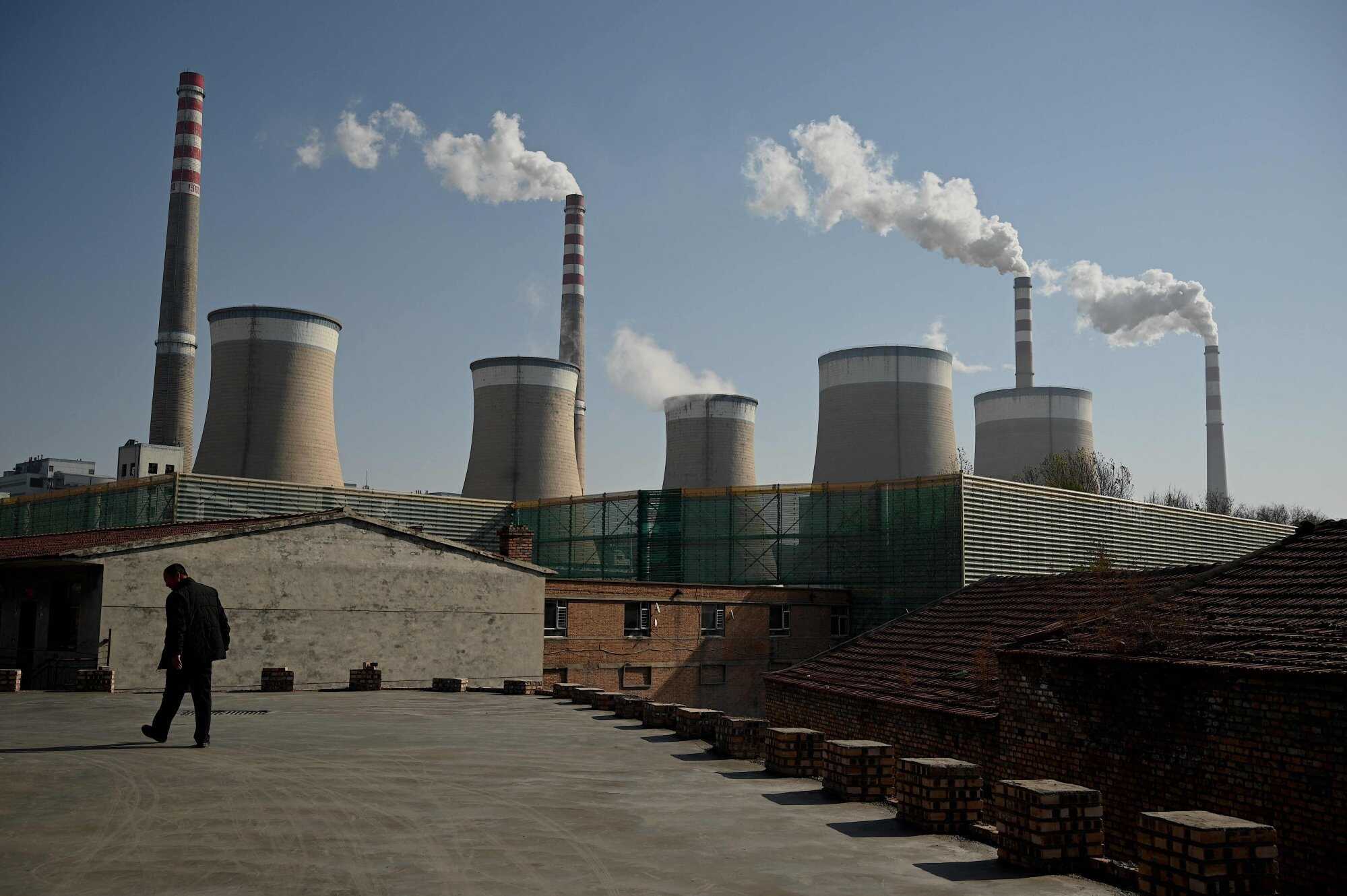
Illustration
Question prompts
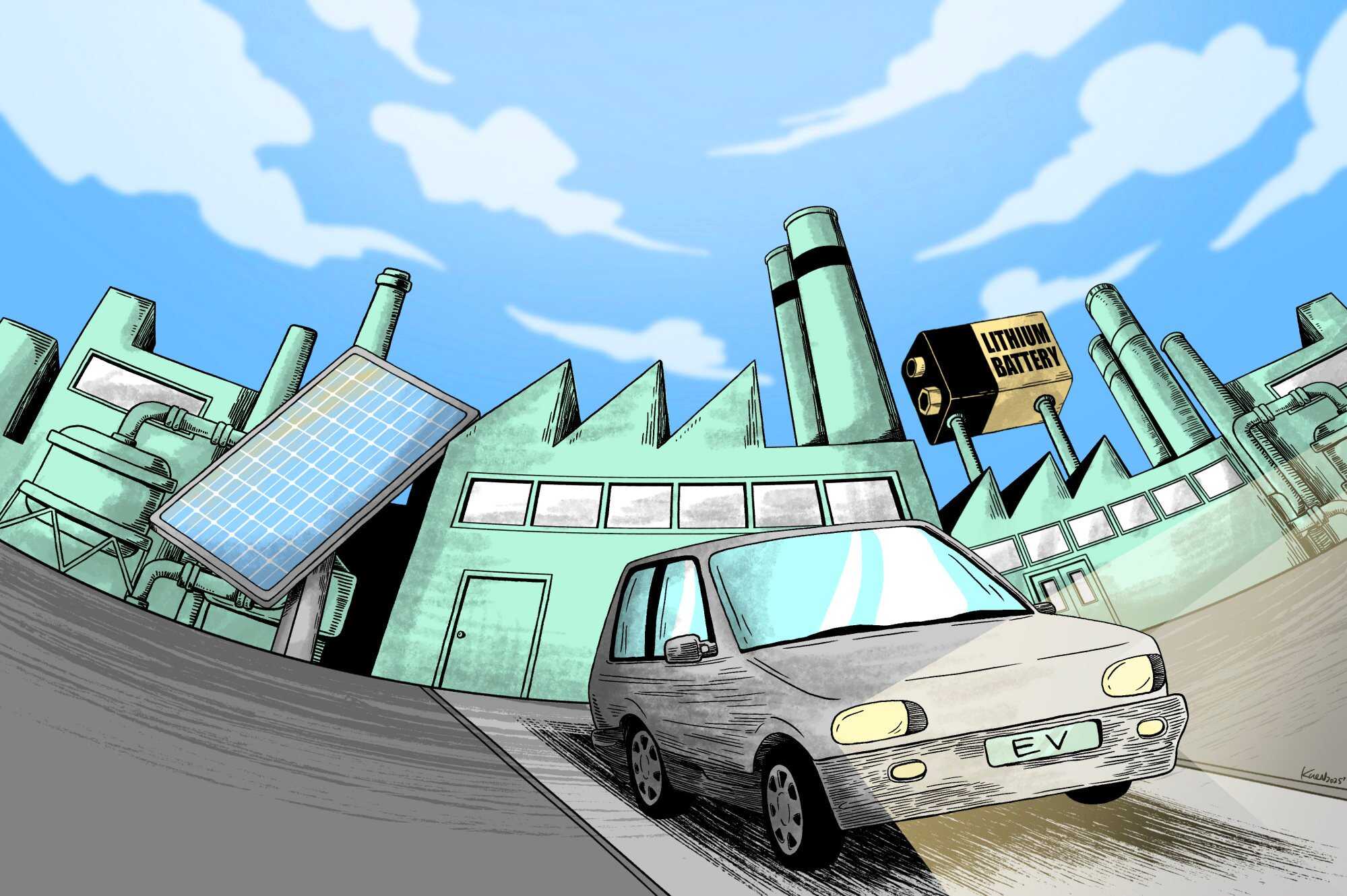
1. Describe what you see in this illustration.
2. How does this illustration relate to the information you learned in News?
Issue: China’s solution to problematic pollution
-
China’s rapid industrialisation led to increased air pollution alongside other environmental issues
-
Efforts to improve the air include close monitoring of corporate emissions and increased renewable energy
China’s rapid industrialisation came with consequences. That included an environmental crisis that once posed major threats to the health and livelihoods of the population. But the country has made great strides since.
China began monitoring air quality comprehensively in 2013. Ma Jun said that Beijing’s annual average PM2.5 concentration was 89.5 micrograms per cubic metre that year.
PM2.5 concentration is the number of particles in the air that measure less than 2.5 micrometres. It is a key indicator of air pollution. The World Health Organization (WHO) sets the ideal target for protecting public health at below 10.
Ma is the founder of the non-profit environmental research organisation Institute of Public and Environmental Affairs. He has also been an environmental researcher for nearly two decades.
In 2013, China launched its Action Plan on Prevention and Control of Air Pollution. It was an effort to address the serious air pollution problem. By 2022, the capital city’s PM2.5 levels fell to 30 mcg per cubic metre. Heavy pollution days decreased from 58 days to three.
This time period saw rapid economic development and intense industrial emissions. Official data shows that China’s gross domestic product grew by around 70 per cent between 2013 and 2022.
And alongside this growth, China had effectively launched a “war on pollution”, according to Tamma Carleton. Carleton is an assistant professor at the Bren School of Environmental Science and Management at the University of California, Santa Barbara.
Last year, she said it was very clear that China’s efforts had led to “unprecedented declines in pollution at a speed that we really haven’t seen anywhere else”.
Much work has been done to strengthen pollutant management in China. China became the first country globally to implement large-scale, real-time public disclosure of corporate emissions monitoring. This required companies to publish their emissions data hourly for public scrutiny. The move has been described as a “global best practice”.
In 2020, President Xi Jinping announced China’s dual goals: reaching peak carbon emissions by 2030 and becoming carbon neutral by 2060. To deal with environmental issues, it became necessary to transform energy, industrial and transport structures.
China has since embarked on an enormous green energy transition.
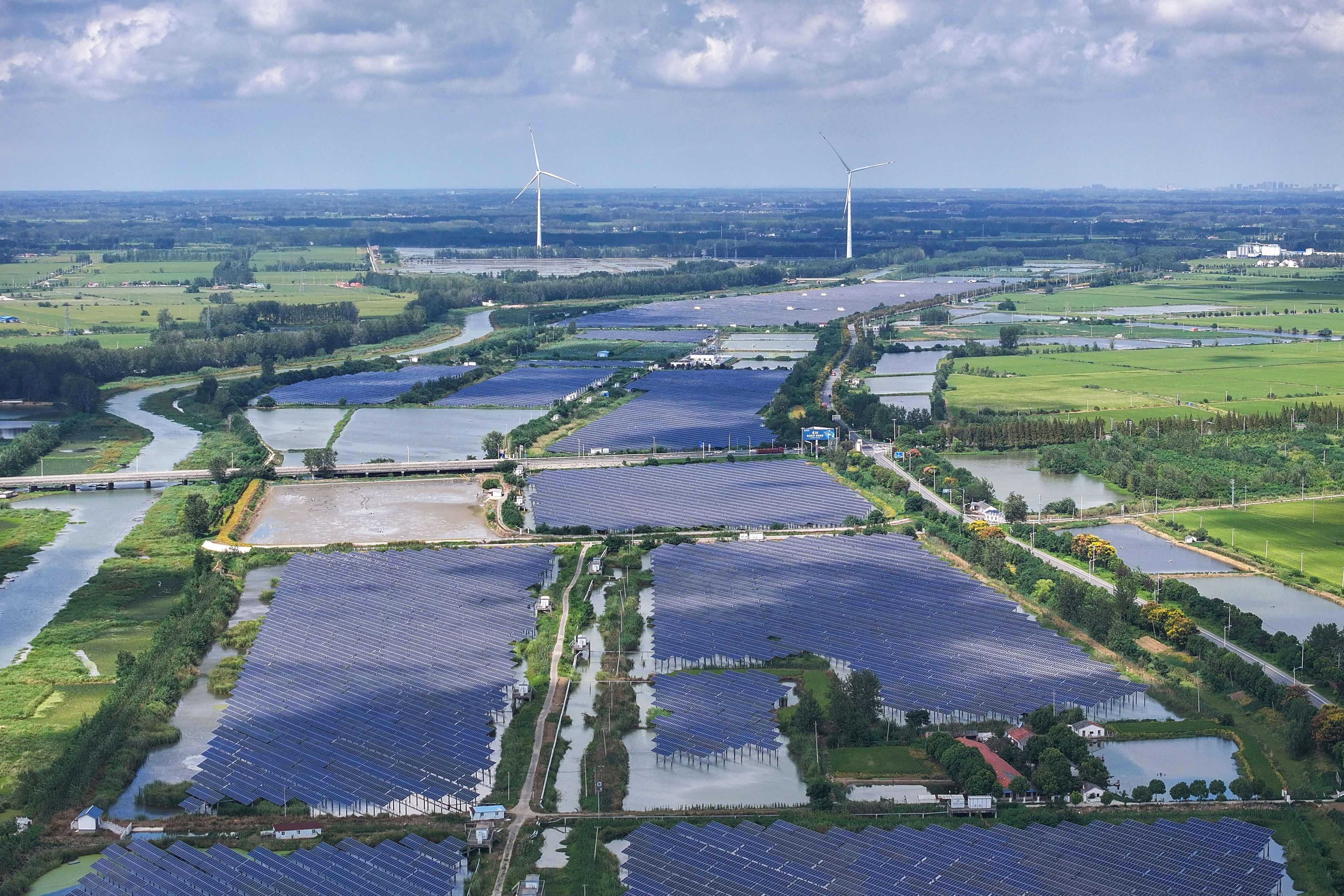
According to data released by the International Renewable Energy Agency in March, renewable capacity accounted for over 92.5 per cent of power expansion worldwide in 2024. China contributed almost 64 per cent of the world’s new capacity.
China set a target for non-fossil fuel energy to account for 20 per cent of total energy consumption by the end of 2025. Progress has advanced faster than anticipated.
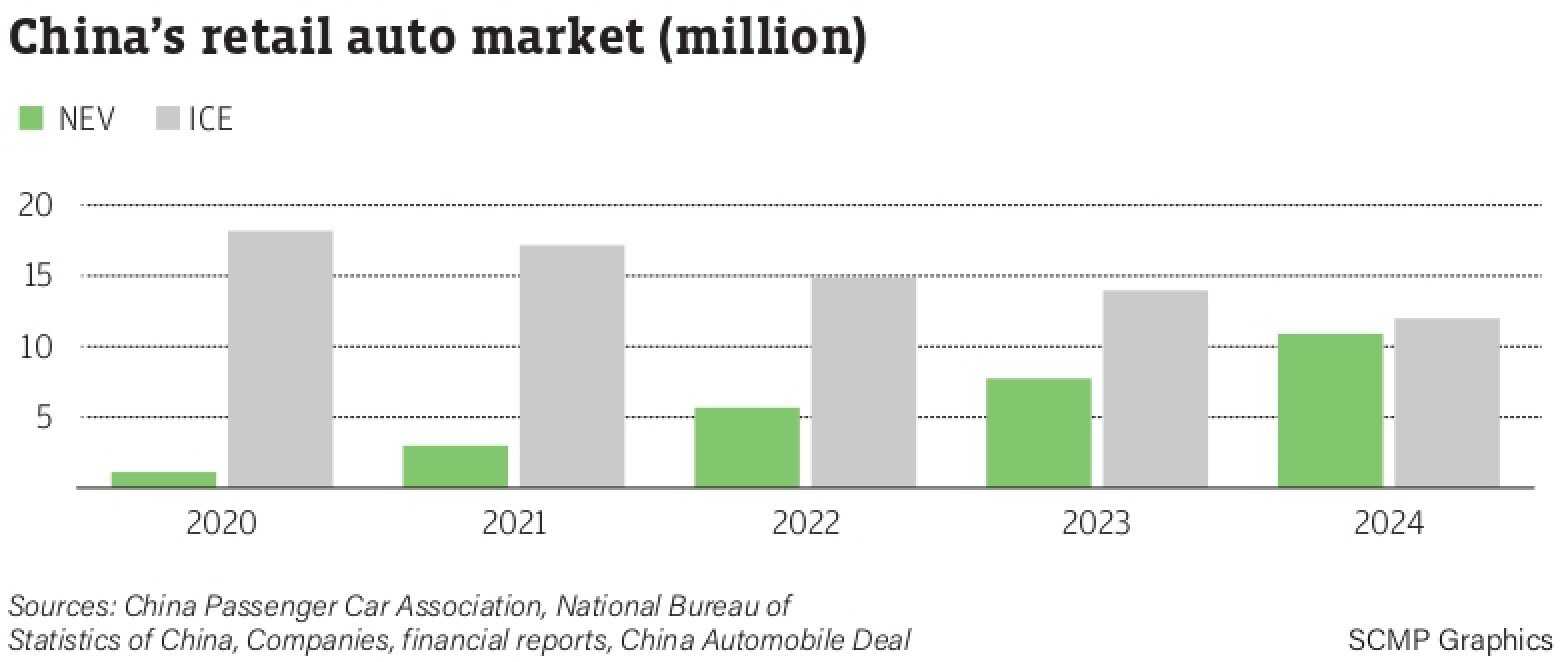
China also accounts for over 11 million electric vehicles sold annually. That is more than half of the global sales. A report released by the International Council on Clean Transportation showed that Chinese carmakers had established a strong presence in the zero-emission vehicle market. They occupy the top five positions in the sector.
Staff writer
Question prompts
1. Which of the following statements is true, according to the information in Issue?
(1) In 2022, Beijing’s PM2.5 levels were around 30 mcg per cubic metre.
(2) China hopes to reach peak carbon emissions by 2060.
(3) China aims to have non-fossil fuel energy account for 20 per cent of the country’s total energy consumption by the end of this year.
(4) China accounts for less than half of the world’s sales of electric vehicles.
A. (1), (2) only
B. (2), (3) only
C. (1), (3) only
D. (2), (4) only
2. List TWO statistics that illustrate China’s pollutant management.
3. How is China dealing with environmental issues? Explain using Issue and Glossary.
Graph
Question prompts
1. What is being shown in the graph, and what can you infer from it?
2. How does this graph relate to the information you learned in News and Issue?
Glossary
deindustrialisation: a process of socio-economic change caused by the reduction of industrial capacity or activity in a country or region, usually heavy or manufacturing industry. Many developed nations have done this by offshoring and outsourcing, designing in their country and moving their manufacturing elsewhere, often in Asia.
decarbonisation: effectively decreasing greenhouse gas emissions by reducing or changing the human activity that creates carbon emissions
supply chain: a name for the process of making something that is supplied to someone. For example, in manufacturing, a supply chain is made up of interconnected parts that add up to a finished product. This process could include sourcing material, transporting it, transforming material into a product and then selling it in a retail setting.
environmental crisis: in China, this included air pollution, water scarcity and soil contamination, all of which posed major threats to the health and livelihoods of the population
peak carbon emissions: the stage where a country or region’s carbon emissions will enter a plateau with some fluctuation before steadily declining
carbon neutral: the stage where a country or region has balanced emitting carbon and absorbing carbon. A country can reduce the carbon it emits by switching to renewable energy and absorb carbon by removing greenhouse gases from the atmosphere through methods such as reforestation.
Sample answers
News
-
B
-
Some developed countries have “deindustrialised” by relocating or outsourcing their global industries. According to Zang Jiyuan, Western countries have progressively relocated environmentally burdensome and labour-intensive industries to Asian nations over the past few decades. China has taken over the manufacturing of a wide range of products, including electronics and textiles. It has evolved into a “world factory”. (accept all similar answers)
-
Rapid industrialisation has contributed to the environmental crisis, especially carbon emissions, air pollution, water scarcity and soil contamination. In addition, China has become a world factory despite its need to provide for its own people. Energy, food and the supply chain must be prioritised. The nation has to produce consumer goods and build housing for its 1.4 billion people. (accept all reasonable answers)
Illustration
-
This illustration shows a solar panel, an electric vehicle and a lithium battery. We could assume the buildings in the back are factories that produce these items. These are key consumer goods that China manufactures that help its economy grow. (accept all similar answers)
-
These three goods or industries are fuelling China’s economic growth. They are also part of the country’s sustainability push, as they are environmentally friendly and do not contribute to carbon emissions. This industrialisation is different from other countries that are scaling back production to reverse environmental degradation. (accept all reasonable answers)
Issue
-
C
-
In 2013, Beijing’s annual average PM2.5 concentration was 89.5 micrograms per cubic metre, which is far above the ideal target of 10 micrograms per cubic metre to protect public health. But the capital city’s PM2.5 levels fell to 30 mcg per cubic metre in under 10 years, a massive difference. China also contributed almost 64 per cent of the world’s new renewable capacity for over 92.5 per cent of power expansion worldwide in 2024. (accept all similar answers)
-
China has implemented a large-scale, real-time public disclosure of corporate emissions monitoring. This requires companies to publish their emissions data hourly for public scrutiny, a move considered “global best practice”. The country has also increased its renewable capacity and contributes almost 64 per cent of the world’s new capacity. The country also hopes that non-fossil fuels will account for 20 per cent of total energy consumption by the end of this year, and progress is faster than anticipated. Finally, China accounts for more than half of the world’s sales of electric vehicles, and its companies have a strong presence in the zero-emission vehicle market, occupying the top five positions. To sum up, the country is monitoring carbon emissions, increasing its use of non-fossil fuel energy consumption and renewable power capacity, and is leading the way to replace petrol with zero-emission electricity. (accept all reasonable answers)
Graph
-
This graph shows China’s “retail auto market”, the country’s automotive vehicle industry. The graph shows the sales of new electric vehicles, cars powered by a motor from stored electricity, and internal combustion engine vehicles that burn fossil fuels to drive and move in millions across five years. We can see there has been an increase in the sales of electric vehicles by nearly 10 million in four years, while the sales of fossil fuel-powered cars have decreased. In 2024, the sales of both types of vehicles were nearly the same. (accept all similar answers)
-
This graph emphasises China’s green revolution efforts, especially in improving its air quality by decreasing carbon emissions. The decrease in sales of fossil fuel-powered cars will decrease carbon in the air. The increase in sales of electricity-powered vehicles will also help China reach its non-fossil fuel energy consumption target. (accept all reasonable answers)