Deep Dive delves into hot issues in Hong Kong and mainland China. Our easy-to-read articles provide context to grasp what’s happening, while our questions help you craft informed responses. Check sample answers at the end of the page.
News: Hong Kong sees drastic increase in number of hot days
-
Hong Kong has seen record numbers of hot days and hot nights in recent years
-
The city’s developed areas have little to no greenery to combat trapped heat
In Sham Shui Po, a densely populated urban area in Kowloon, some residents’ only options for beating the heat are to use wet towels, turn on a small fan or sip a cold drink.
Very hot days – and almost as many hot nights – have become increasingly frequent in Hong Kong. Experts have urged authorities to review their strategies to increase the city’s green coverage to mitigate urban heat more effectively.
But how can Hong Kong’s “concrete jungle” really maximise the benefits of greenery-filled city areas?
Between 2021 and 2024, the city’s weather forecaster, the Hong Kong Observatory, reported between 52 and 54 “very hot” days each year, the most since records began in 1884.
“Very hot” days are periods when temperatures reach at least 33 degrees Celsius (91.4 Fahrenheit).
Between 2020 and 2024, Hong Kong recorded at least 50 “hot nights” – evenings and nights with a temperature of at least 28 degrees – each year. The observatory recorded a high of 61 hot nights in 2021.
Ren Chao is an urban climate expert and a professor at the University of Hong Kong’s faculty of architecture. She said the effects of the city’s hot nights were concentrated in developed areas. She also noted that the situation was more alarming due to the number of hot nights on an annual basis increasing faster than the number of hot days.
The annual average number of hot nights between 1992 and 2021 was 25, which is 42 times higher than the 0.6 nights recorded between 1885 and 1914.
In terms of very hot days, the annual average between 1992 and 2021 was 18.9 – a ninefold increase from the average between 1885 and 1914.
Ren said the city also had an increasing number of areas suffering from hours of daytime temperatures of at least 33 degrees and nighttime temperatures of at least 28 degrees.
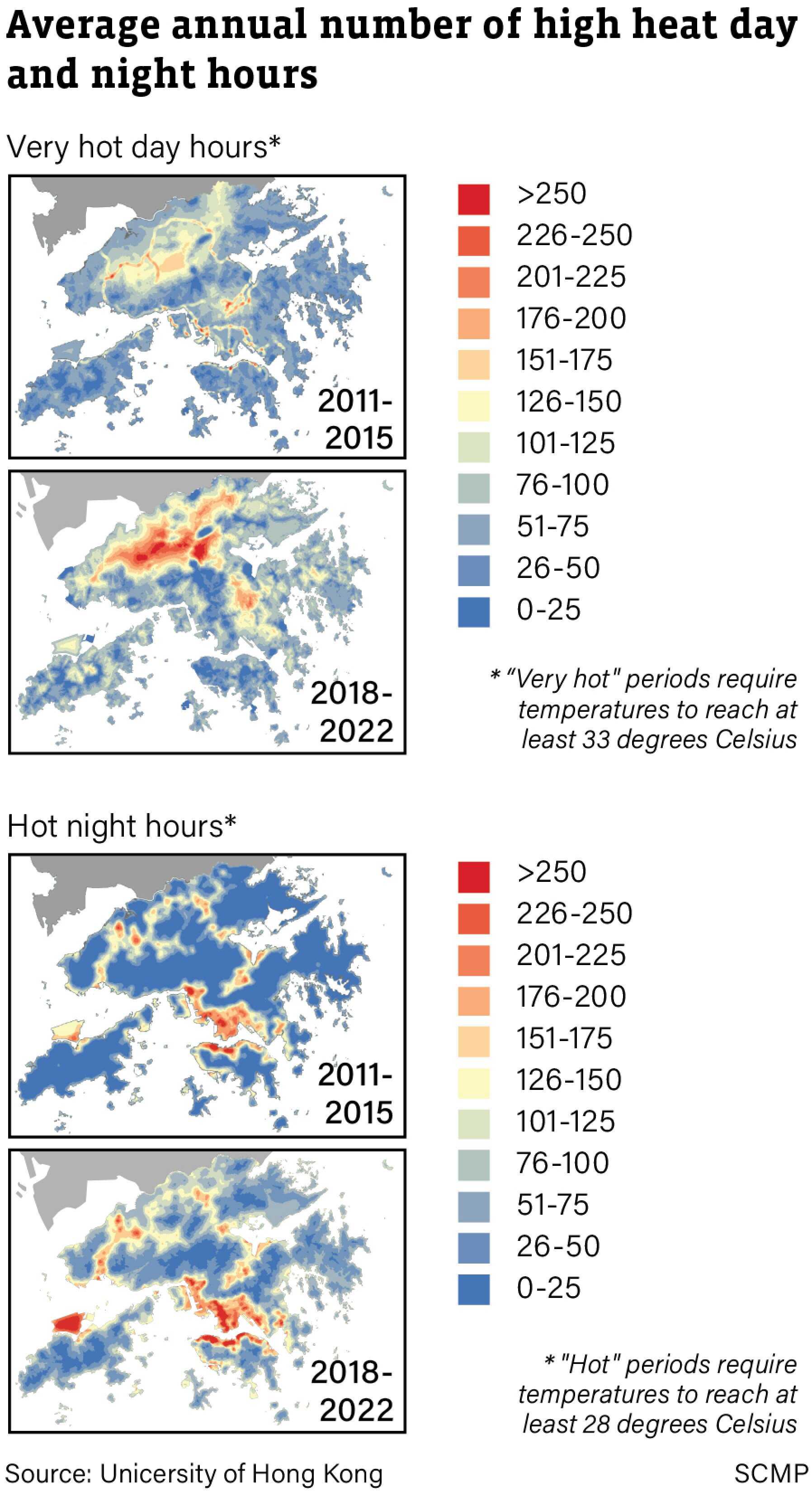
Ren cited heat maps from 2011 to 2015 and 2018 to 2022. The densely populated neighbourhoods of Tsim Sha Tsui, Yau Ma Tei, Mong Kok, Kwun Tong and Causeway Bay all had areas suffering from more than 800 hot night hours. Tuen Mun has recently joined the list.
To mitigate urban heat, Ren said it was essential to increase pedestrian-level ventilation and greenery. As concrete structures trap and slowly release heat, well-connected greenery could spill a cooling effect over to surrounding developed areas.
The academic noted that much of the existing urban greenery, such as parks, was “isolated” and “surrounded by concrete jungles,” making little impact.
While the latest publicly available government data, issued in 2018, shows that 76 per cent of Hong Kong’s land is vegetated, the city’s developed spaces have only 7.6 per cent greenery coverage.
Staff writer
Question prompts
1. Which of the following is true, according to the information in News?
(1) A “very hot” day is when temperatures hit at least 33 degrees Celsius.
(2) The annual average of hot days between 1992 and 2021 was 25.
(3) Temperature records in Hong Kong began in 1894.
(4) Between 2021 and 2024, there were at least 50 “very hot” days each year.
A. (1), (3) only
B. (2), (3) only
C. (1), (4) only
D. (2), (4) only
2. What does Ren Chao suggest to mitigate the heat?
3. Based on the information in News, which areas bear the brunt of the heat and why?
Illustration
Question prompts
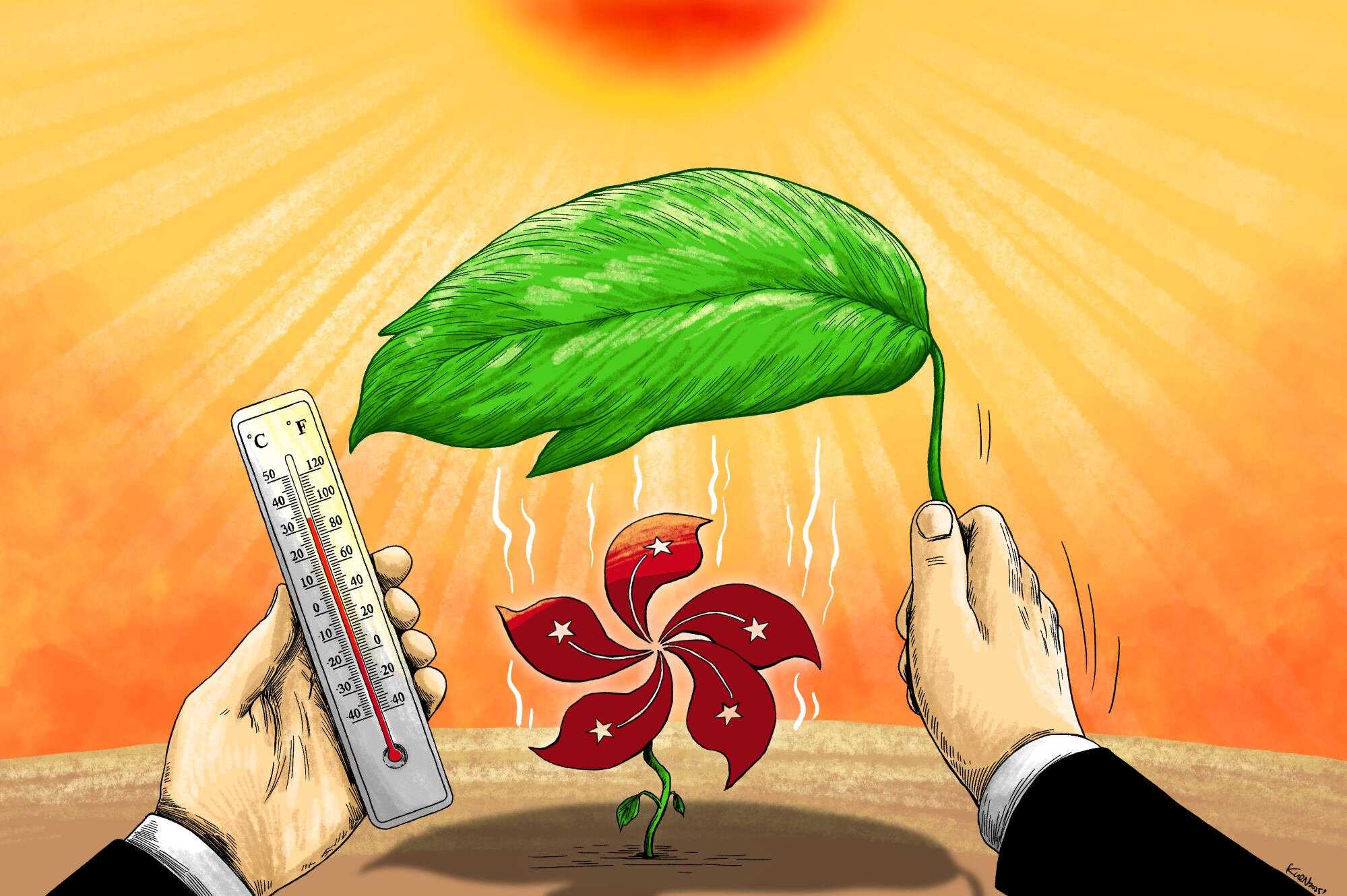
1. Describe what you see in this illustration and how it relates to News.
2. Use News and your own knowledge to explain why an increasing number of hot days is a problem.
Issue: Where is urban greenery going wrong?
-
Greenery in urban areas, especially densely packed places with concrete, provides a cooling effect that can help alleviate the heat in Hong Kong
-
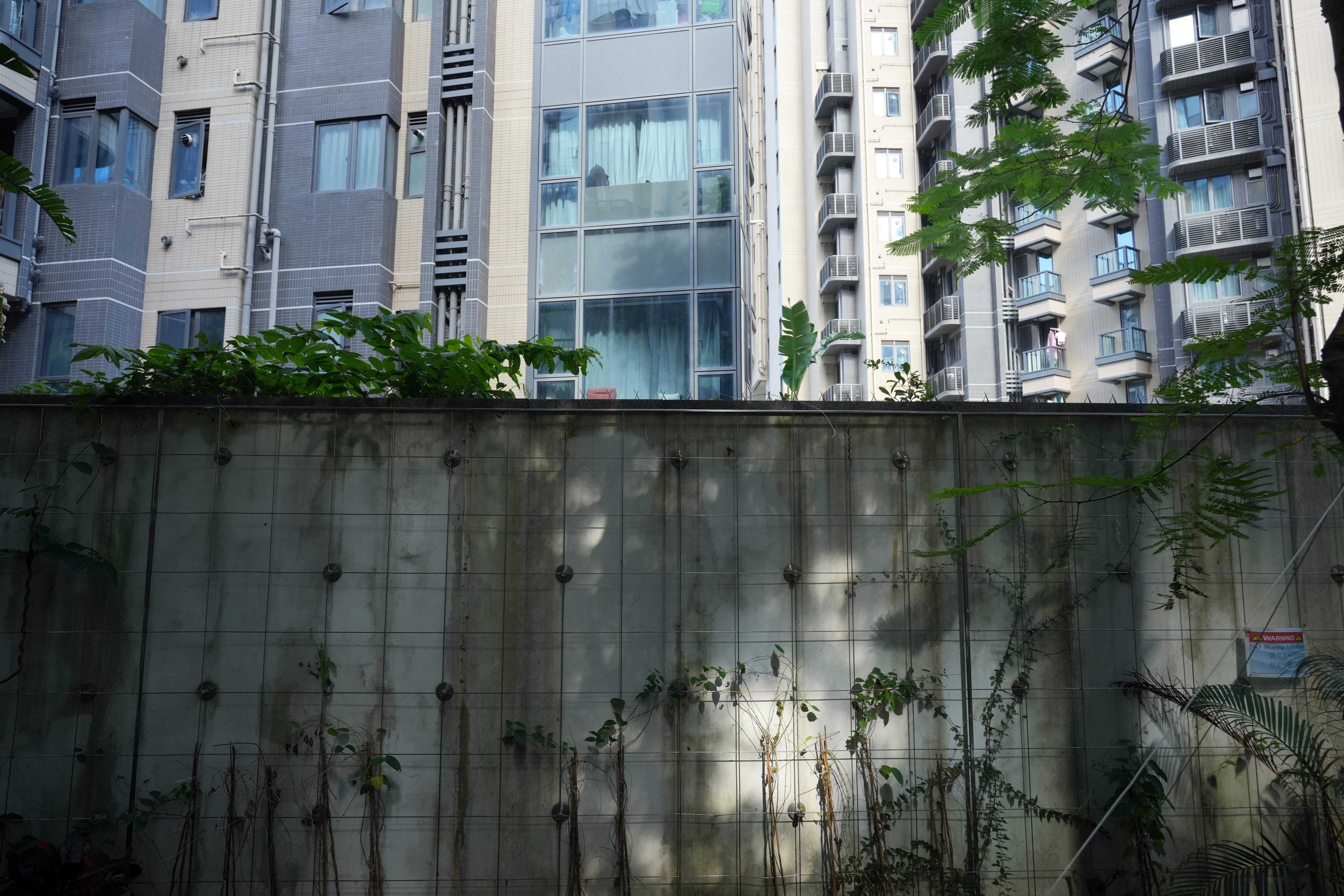
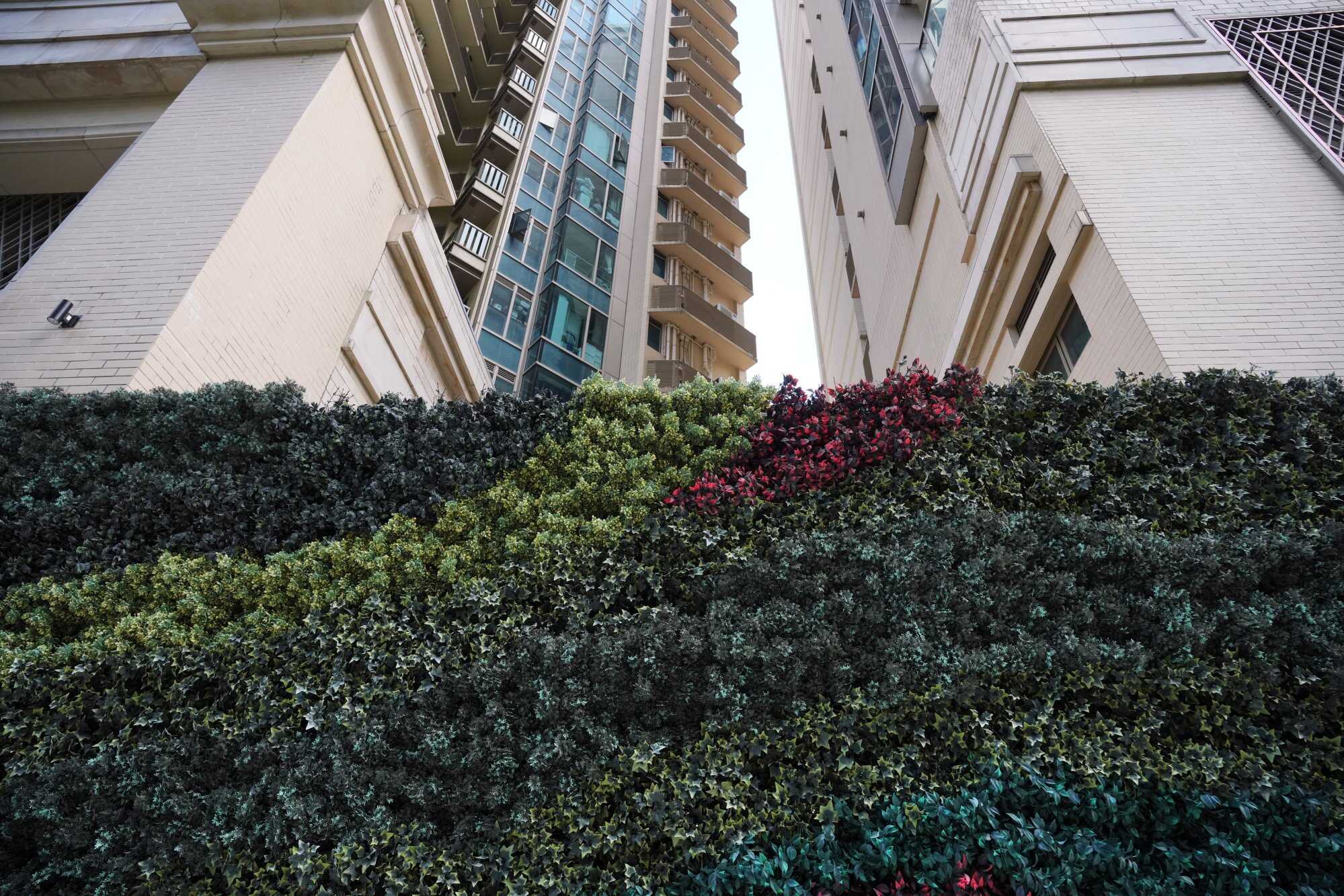
Developers often opt to have skyrise or vertical greenery to avoid losing profit-making areas and may not maintain the greenery well
“Skyrise greening”, including sky gardens and green walls, is a greenery option that is not new to Hong Kong.
It has long been a green coverage option for developments and has been part of the government’s sustainable building design guidelines since 2011.
But developers often struggle to meet the requirements of having half of their site’s greenery in primary zones.
Paul Chan Yuen-king is the president of the Hong Kong Institute of Landscape Architects. He said private projects tended to install vertical greening, podiums and rooftop gardens to fulfil the site coverage requirements.
Vertical greening, he said, did not take up any space and avoided competing with profit-making floor areas.
Still, some buildings’ skyrise greenery has shown signs of being poorly maintained. Out of 11 building projects visited by the NGO Liber Research Community in June, eight were found to have withered plants, disappeared planters and even plastic items.
Chan noted that vertical greening was not the best option in highly dense urban areas.
He explained that plants surrounded by skyscrapers were unlikely to receive much sunlight and would be affected by vehicle emissions. He added that while greenery features were not costly, maintenance could be, placing a financial burden on individual owners.
“The greenage coverage requirement has been in force for over a decade. It is time for a review, as it currently focuses on quantity and [not] quality,” he said.
Chan also said that more could be given to designs that offered canopy coverage and greater ecological value, such as prioritising the growth of trees.
Chan added that the authorities could also consider relaxing the greenery coverage rule in primary zones to ease the design burden on developers.
He added that it should still require them to compensate with other green features on other levels, such as urban farms that serve the community.
Chiky Wong is an arborist who has worked in tree management for about two decades. He said skyrise greenery often failed as owners and property management companies might lack maintenance knowledge.
Wong said the maintenance costs could be high, as planters installed on walls needed frequent pruning that required the use of elevated platforms. It also costs money to replace decayed plants, he said.
Wong noted that podium and rooftop gardens were relatively accessible, but there were still issues.
Trees might need to be removed if they become too large and damage pipes, he said, and building occupants might be unwilling to spend money on replanting trees.
“Replanting struggling plants can be a waste of resources. The most effective way to care for the greenery is through proper pruning … There should be a maintenance manual,” he said.
Staff writer
Question prompts
1. Which of the following statements is true, according to the information in Issue?
(1) Chiky Wong wants to see more plants and greenery on rooftops.
(2) Vertical greening is the only solution for Hong Kong’s heat.
(3) Vehicle emissions and lack of sunlight are issues for plants on rooftops and walls.
(4) The current greenage coverage requirement in Hong Kong has been around for more than 10 years.
A. (1), (2) only
B. (1), (2) only
C. (3), (4) only
D. (1), (4) only
2. List TWO problems with skyrise and vertical greenery. Explain using Issue and Glossary.
3. What does Paul Chan suggest should be done to encourage greenery in urban areas?
Map
Question prompts
1. Compare the average number of very hot day hours between 2011 and 2015 to the hours between 2018 to 2022. What do you notice?
2. What differences can you see between the 2018-2022 very hot day hours map and the 2018-2022 hot night hours map?
Glossary
urban climate expert: someone who specialises in the relationship between urban environments and the climate. They study how urbanisation affects weather patterns, climate change and more. They use this information to raise public awareness and inform policy development. Areas of focus include heat, air quality and green infrastructure.
concrete jungles: a phrase that describes an urban area that has a high density of large, modern, concrete buildings, often perceived as an unpleasant living environment
vertical greening: gardening or planting of greenery that spreads over a building facade and up walls. It can maximise green areas in urban cities, improve air quality, provide insulation, reduce noise by absorbing sound and promote biodiversity.
ecological value: the level of benefits a space provides to support life and the environment around it
urban farms: plots of land or areas within cities designed specifically for growing vegetables and fruits, and sometimes raising smaller animals
arborist: an individual trained in the art and science of planting, caring for and maintaining individual trees. These professionals know how to prune trees, remove and plant them, conduct health assessments and improve soil conditions.
Sample answers
News
-
C
-
To mitigate urban heat, Ren Chao said it was essential to increase pedestrian-level ventilation and greenery. Concrete structures trap and slowly release heat, but well-connected greenery could spill a cooling effect over to its surrounding developed areas.
-
The effects of the city’s hot nights were concentrated in developed areas. Citing heat maps, the densely populated neighbourhoods of Tsim Sha Tsui, Yau Ma Tei, Mong Kok, Kwun Tong and Causeway Bay all had areas suffering from more than 800 hot night hours. Tuen Mun has recently joined the list. As these areas are developed, the concrete structures trap and slowly release heat. Existing urban green spaces, such as parks, are often too isolated to provide relief. The latest public data from the government confirms that the city’s developed spaces have only 7.6 per cent greenery coverage.
Illustration
-
This illustration depicts a strong, hot sun and a hand holding a thermometer with a temperature reading of 33 degrees Celsius and around 92 degrees Fahrenheit, making it a “very hot” day. Hong Kong has seen an increase in very hot days. Hong Kong is represented by a red bauhinia, the flower on the city’s flag, and stars to resemble the flag. The flower is directly under the sun and burning up, struggling to survive – just as the city’s people are suffering in the extreme heat. The person’s other hand holds a single green leaf and is trying to shade the flower – Hong Kong – from the sun. This represents how greenery can mitigate the heat, but we have too little of it in the city. (accept all similar answers)
-
Heat is an environmental and health hazard. High heat can lead to people overusing air conditioning, fans and refrigerators, consuming more energy and harming the environment. Heat is detrimental to crops and Hong Kong’s natural ecosystems, posing a threat to our wildlife. Heat also harms humans, causing the body stress and heatstroke and increasing the effects of other illnesses. (accept all reasonable answers)
Issue
-
C
-
There are many reasons vertical greenery is not the best option for highly dense urban areas. Plants surrounded by skyscrapers are unlikely to receive much sunlight and are affected by vehicle emissions. Greenery maintenance can be costly, especially as planters on walls require frequent upkeep that needs the use of elevated platforms. It is also costly to replace plants that have decayed. (accept all similar answers)
-
Paul Chan says the greenage coverage requirement should be reviewed and focus more on quality. He also suggests motivating builders and developers by offering more incentives for designs that provide canopy coverage and greater ecological value. Chan says in particular, trees should be prioritised. Chan also suggests Hong Kong should consider relaxing its greenage coverage rule to ease the burden on developers and have them compensate with other green features on other levels, such as urban farms that serve the community. (accept all similar answers)
Map
-
Between 2011 and 2015, there were fewer very hot days, and they were confined to only a few areas. There were nearly no areas that went over 250 hours. The more recent map, which shows very hot period hours between 2018 and 2022, shows a marked difference, particularly in the New Territories. Huge areas experience very hot temperatures of at least 33 degrees Celsius for over 250 hours.
-
The highest number of very hot day hours is largely concentrated in the New Territories. The highest number of hours for hot nights, in contrast, is spread out between urban and densely populated areas including Kowloon – especially Yau Tsim Mong areas like Sham Shui Po, Mong Kok and Tsim Sha Tsui – the airport, South Horizons on Ap Lei Chau, and Sai Wan to Chai Wan on Hong Kong Island, especially Central, Wan Chai and Causeway Bay.