Deep Dive delves into hot issues in Hong Kong and mainland China. Our easy-to-read articles provide context to grasp what’s happening, while our questions help you craft informed responses. Check sample answers at the end of the page.
News: Is the Urban Renewal Authority strapped for cash?
-
Experts call on the government body to review its existing compensation scheme
-
Department has recorded a budget deficit for three consecutive years
Beatrice Mok, whose name has been changed at her request, and her husband have mixed feelings about moving out of their old tenement building in To Kwa Wan. The couple, both in their sixties, have lived in this district in Kowloon for around four decades.
Bidding farewell to the quiet waterfront neighbourhood, dubbed the “five streets”, has been difficult. But walking up the stairs in their eight-storey building and dealing with falling concrete and water leakage in their flat has been exhausting for them.
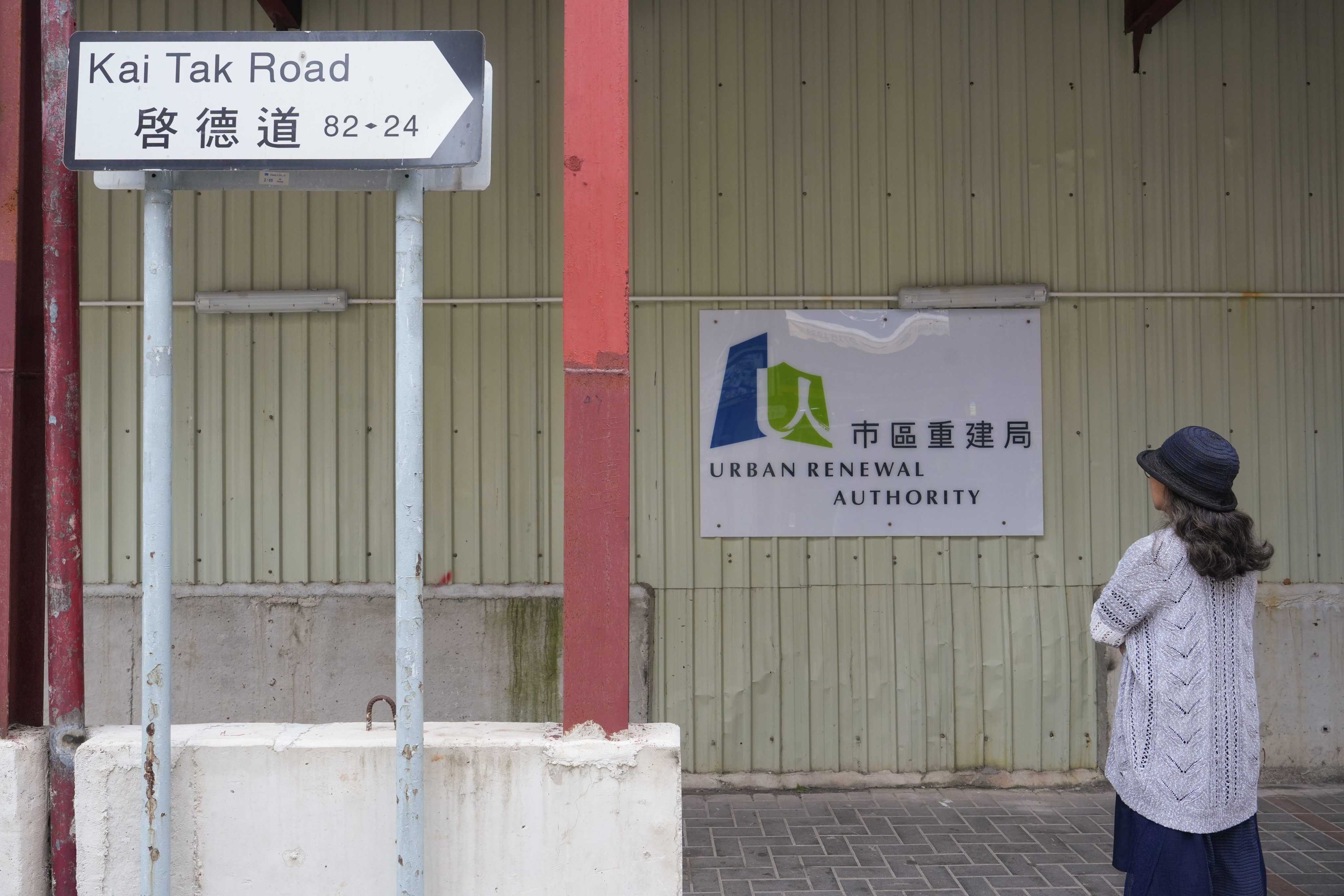
Mok said it was a relief when the Urban Renewal Authority (URA) announced plans in 2022 to redevelop the neighbourhood. The area is old, with dozens of residential buildings from the 1960s and two industrial blocks built around 1980 on the opposite side.
Three years on, the couple are set to receive around HK$6.5 million for their 470 sq ft flat, an amount equivalent to the market price of a comparable seven-year-old home in the district. They intend to use the money for travel and to rent a flat as their new home.
After receiving compensation, owner-occupiers can also choose the flat-for-flat scheme. But only 67, or 2 per cent of those receiving compensation, have bought replacement homes in the past 14 years.
Mok and her husband are likely to be among the last batches of owner-occupiers receiving compensation under the “seven-year rule”. The cash-strapped URA is reviewing such payouts, deeming them “very generous” compared with the market value of old buildings.
The Planning Department has predicted that more extensive long-term redevelopment efforts would be required. It expects to handle an average of nearly 14,000 private flats per year from 2031 to 2048, compared with only 4,000 per year from 2021 to 2030.
Over the past five years, the URA has spent HK$30 billion to acquire old buildings for redevelopment projects, with 45 per cent, or HK$13.5 billion, of that paid to residential owner-occupiers. The government body expects to spend another HK$23.5 billion on its six ongoing projects in the next few years.
The URA has warned that the more it acquires, the more it loses. It has recorded a budget deficit for three consecutive years, with the latest at HK$2.7 billion in the last financial year.
This has pushed urban renewal experts to call on the authorities to review the URA’s acquisition and redevelopment policy as well as other schemes.
Staff writers
Question prompts
1. Which of the following is false, according to the information in News?
(1) The more old flats the URA acquires, the more it loses money.
(2) Beatrice Mok and her husband did not receive compensation from the URA.
(3) Some experts believe that the URA’s existing policies need to be amended.
(4) The only compensation for owner-occupiers is getting a flat at the redeveloped site.
A. (1), (2) only
B. (2), (3) only
C. (2), (4) only
D. (1), (4) only
2. List ONE reason experts are calling for a review of the URA’s acquisition and redevelopment policy.
3. In Beatrice Mok’s case, do you think the compensation is “too generous”? Explain using News, Glossary and your own knowledge.
Illustration
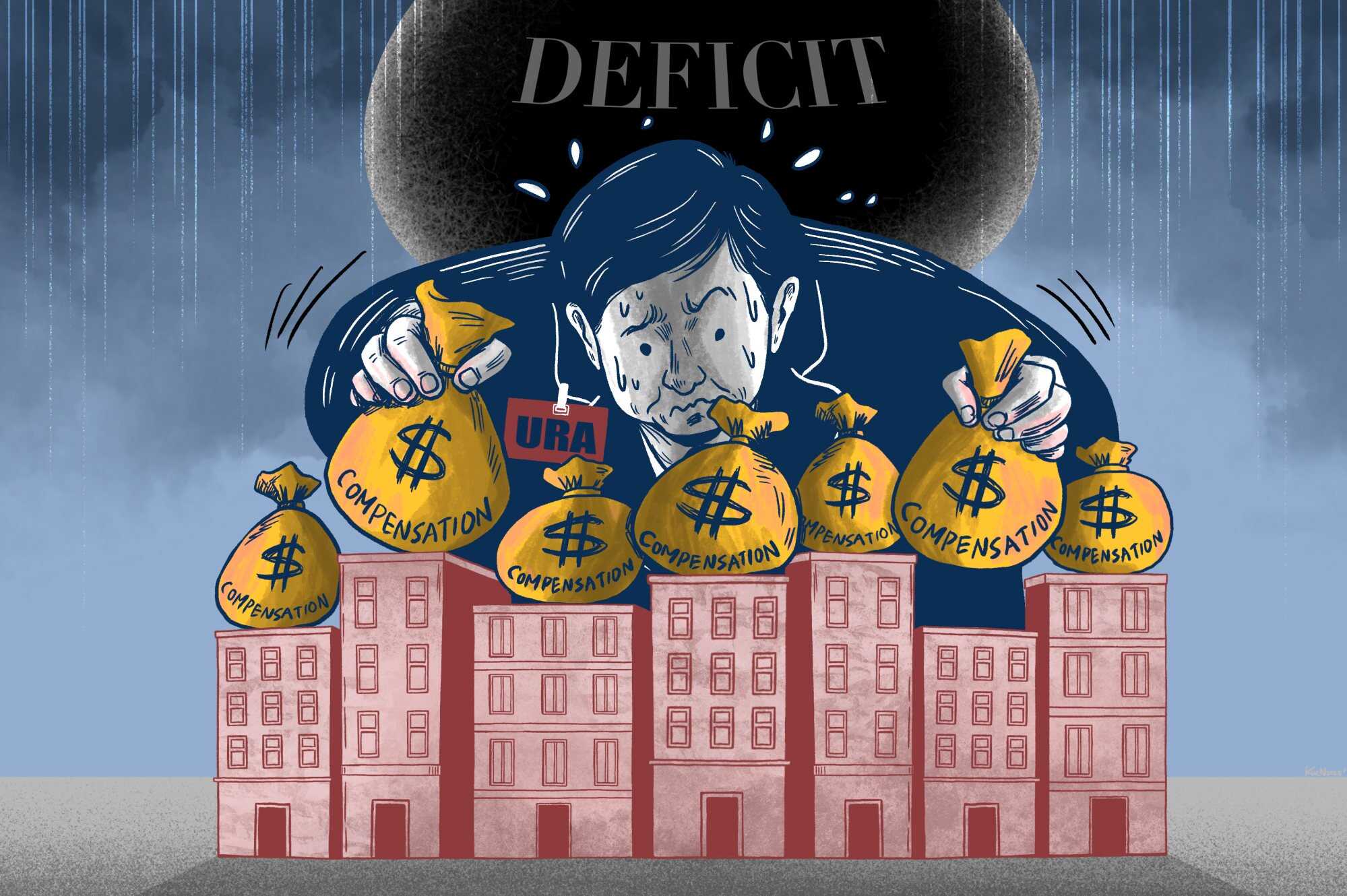
Question prompts
1. Describe what you see in this illustration and explain how it relates to News.
2. How likely is it that the URA’s financial issues will persist? Explain your opinion using News, Glossary and your own knowledge.
Issue: Problems with URA’s compensation schemes and potential solutions
-
Local researchers and experts shed light on the government body’s financial problems
-
Suggestions include adjusting its role as a developer and prioritising buildings in danger instead of “grand plans in prime locations”
Hong Kong’s Urban Renewal Authority (URA) has applied the “seven-year rule” for compensating residential owner-occupiers since 2001, when the authority was established.
There is little information on how it will be reviewed, but Abraham Razack – who led the Land Development Corporation (LDC), the URA’s predecessor, for 13 years – stressed safeguarding owners’ rights.
Razack, a former lawmaker, said that the compensation principle protected the rights of those who sacrificed their living environment for the betterment of society.
“Urban renewal must be driven by compassion and guided by a people-first approach,” he said.
The government had initially suggested setting the compensation rule between eight and 10 years. But it backed down after backlash.
Razack said the current compensation mechanism relied on soaring property prices to profit. In the past, when the property market thrived, the authority and co-developers could sell flats in redeveloped projects at a price higher than the acquisition cost.
This no longer works.
Chan Kim-ching is the founder of the Liber Research Community, an NGO focusing on development issues.
He argued that the URA’s financial problems stemmed from its planning, not the seven-year rule, adding that the government body had launched too many large projects, such as the “five streets” scheme.
“It suffers when the property market downturn sustains,” he said.
Chan suggested that the URA focus more on planning and building maintenance to help it survive economic challenges. Pointing to Singapore, Chan said the island state’s Urban Redevelopment Authority only formulated redevelopment plans and left the government responsible for the costly task of land acquisition.
Professor Yau Yung, an urban renewal expert at Lingnan University, suggested prioritising the redevelopment of buildings at imminent risk rather than grand plans in prime locations.
He said the government could also pair the authority with other bodies, such as public housing providers, to share the costs of redevelopment. The professor added that the government could buy back URA projects as subsidised flats to secure the URA’s income when the property market is gloomy.
He also proposed shifting the URA’s role from developer to facilitator, encouraging the private sector to partner with homeowners in redevelopment. In particular, Yau pointed to Lai Sing Court in Tai Hang, where developer Hongkong Land offered owners a flat in the new project and cash compensation. This took five years in the 2000s.
“A middleman … can help facilitate and mediate possible conflict. The URA no longer needs to invest in projects,” Yau said.
But developers had more reservations about redevelopment projects as acquisitions took years and involved high costs, he added.
Staff writers
Question prompts
1. According to Chan Kim-ching, what caused the URA’s financial problems?
2. List TWO suggestions made by Chan and Yau Yung to help the authority manage the URA’s financial issues.
3. To what extent do you agree with the suggestions in Issue? What else can be done to strike a balance between compensating owners-occupiers and financial stability?
Chart

Question prompts
1. Based on the chart, explain ONE trend regarding the URA’s financial returns.
2. Should the URA change its seven-year rule? Explain using Issue, Glossary and your own knowledge.
Glossary
flat-for-flat scheme: a compensation alternative that allows owner-occupiers to buy a home on the lower floors of the redeveloped site or in designated URA projects
seven-year rule: a compensation policy where owner-occupiers affected by the Urban Renewal Authority (URA)’s projects receive a cash payout equivalent to the market price of a comparable seven-year-old flat in the same district
“five streets” scheme: the planning and redevelopment project involving Ming Lun Street, Chung Sun Street, Hing Yin Street, Hing Yan Street and Ma Tau Kok Road in To Kwa Wan. It affected about 930 property interests, 1,410 households and 90 industrial building users.
subsidised flats: government-assisted public housing estate flats sold at a below-market price to those eligible
Sample answers
News
-
C
-
Experts are calling for a review of the URA’s acquisition and redevelopment policy because the URA has been recording financial losses, and many believe its “high” and “unsustainable” compensation payouts are to blame.
-
The compensation Beatrice Mok receives could be seen as “too generous” because under the seven-year rule, she gets a payout equal to the price of a much newer flat, even though her building is very old. This generous policy has resulted in high costs and deficits for the URA, prompting calls for a review. However, it also helps elderly owners like her secure better living conditions, so some might see it as adequate support. (accept all reasonable answers)
Illustration
-
The illustration shows a worried-looking man wearing a “URA” badge, holding large bags of money labelled “compensation” over old buildings. Above them, the word “deficit” looms like a dark cloud. This represents the Urban Renewal Authority (URA) spending heavily on compensation for redevelopment projects, leading to significant financial losses and budget deficits.
-
It is quite likely that the URA’s financial problems will continue. The URA has already suffered budget deficits for three years, and it still plans to spend billions more on ongoing projects. The generous “seven-year rule” means high payouts to owners, which the URA calls unsustainable. Unless the policy is reviewed or government support increases, the URA’s financial challenges are expected to persist. (accept all reasonable answers)
Issue
-
According to Chan Kim-ching, the URA’s financial problems were caused by poor planning, not the seven-year rule. He said the URA launched too many large projects and suffered losses when the property market went down.
-
Chan suggested that the URA should focus more on planning and building maintenance, and that the government should handle land acquisition costs, similar to Singapore’s approach. Yau Yung suggested prioritising the redevelopment of buildings at risk, partnering with public housing bodies to share costs and shifting the URA’s role from developer to facilitator so private developers can work directly with homeowners.
-
I partly agree with these suggestions because focusing on safer buildings and sharing costs could help balance social responsibility with financial stability. However, the URA still needs to protect owner-occupiers’ rights. The government could also provide more funding or flexible compensation options, such as allowing owners to choose between cash, new flats or partial ownership to reduce financial pressure while ensuring fairness. (accept all reasonable answers)
Chart
-
The chart shows that the URA’s financial returns have dropped sharply over time. While it recorded large surpluses around 2017–18 and 2021–22, it has faced continuous deficits since 2022–23. This trend suggests the URA’s financial position has weakened due to high redevelopment costs and a downturn in the property market. (accept all similar answers)
-
The URA should consider adjusting, but not completely removing, the seven-year rule. The rule protects owner-occupiers’ rights and ensures fairness for those affected by urban renewal. However, as property prices have stopped rising, the same compensation level has become costly and unsustainable. A revised system could maintain the people-first spirit while supporting long-term financial stability. For example, this could be done by linking compensation more closely to current market conditions or by offering more “flat-for-flat” options rather than large cash payouts. This way, both fairness and financial health can be maintained. (accept all reasonable answers)