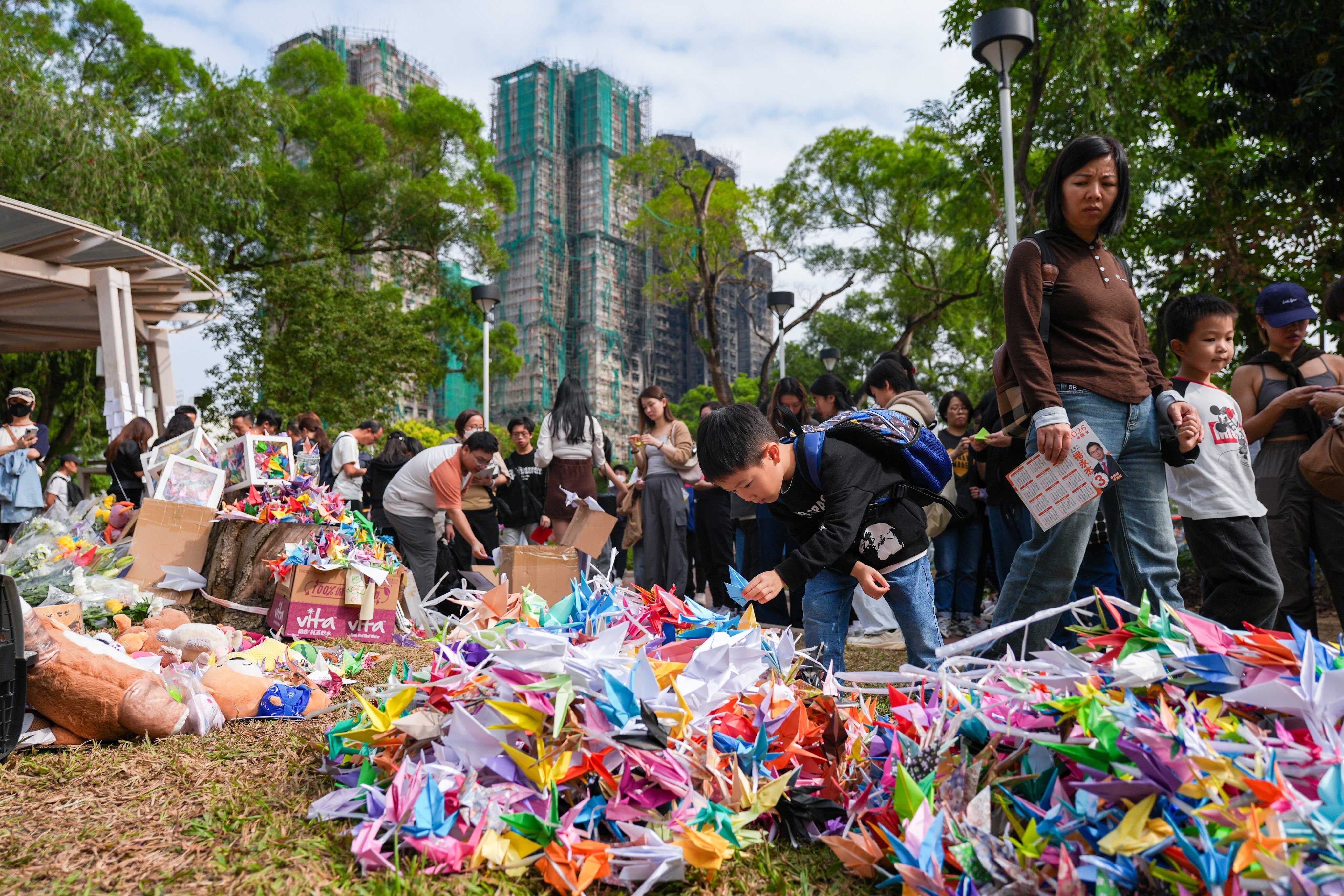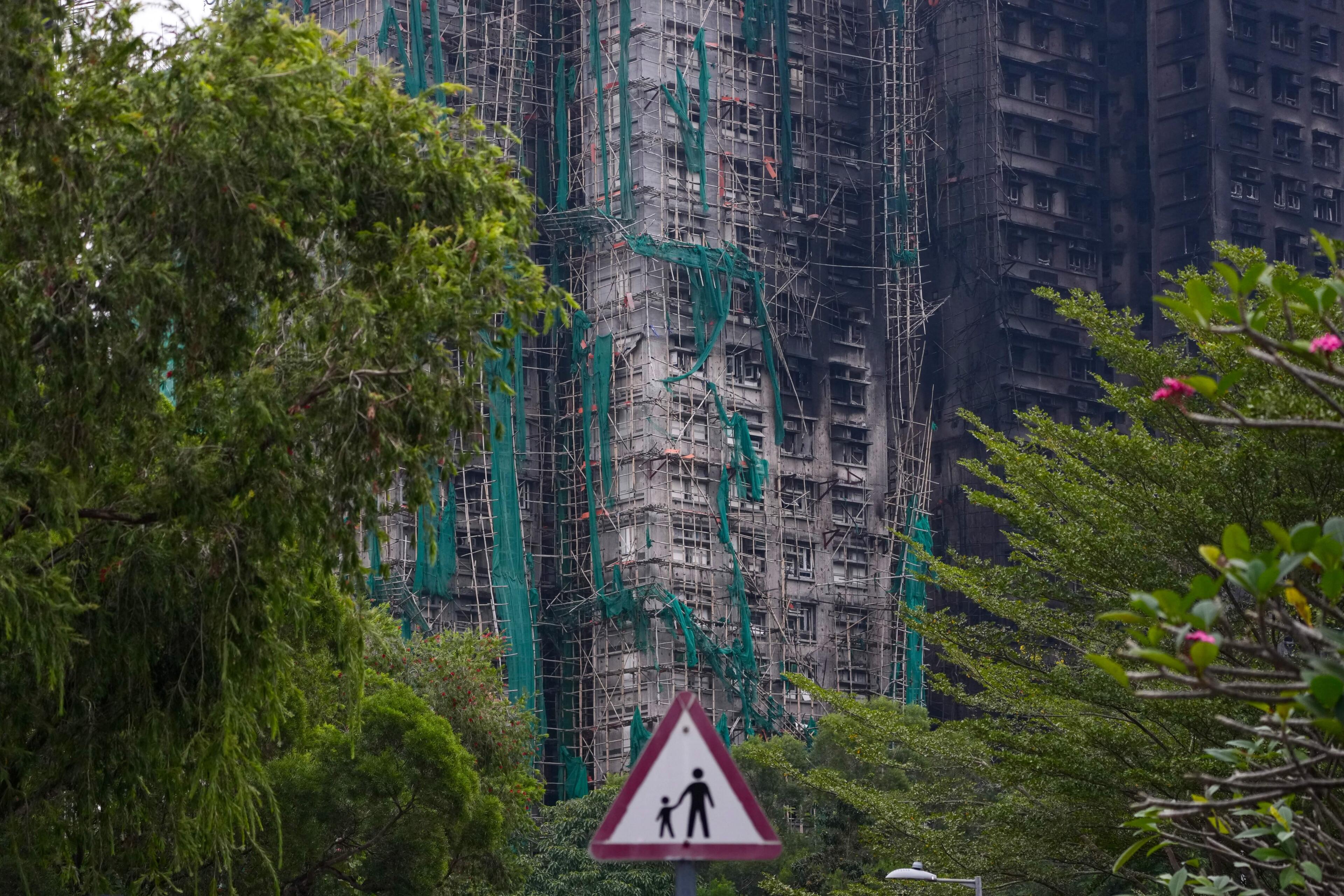
Deep Dive delves into hot issues in Hong Kong and mainland China. Our easy-to-read articles provide context to grasp what’s happening, while our questions help you craft informed responses. Check sample answers at the end of the page.
News: Hong Kong’s deadliest fire in decades
-
A devastating blaze broke out in Wang Fuk Court in Tai Po last month, killing at least 160 people
-
Initial investigation shows the fire started on the lower floors of Wang Cheong House
On November 26, a fire broke out at Wang Fuk Court, engulfing seven residential blocks at the housing estate in Tai Po.
The inferno burned for more than 40 hours, killing at least 160 people, including one firefighter, and destroying the homes and belongings of thousands. It is Hong Kong’s deadliest fire in 77 years.
The blaze tore through buildings, burning through green mesh netting and around bamboo scaffolding that had covered the 31-storey towers during renovations.
Just three hours after being reported, it was quickly classified as a top-level No 5 alarm. In Hong Kong, fires are rated on a scale of one to five, with higher numbers indicating greater severity.
All eight towers at Wang Fuk Court had been under renovation since July of last year. The fire’s rapid spread is largely thought to have been due to a mixture of flammable material and alarms that failed to sound.
The government had ordered a compulsory renovation at Wang Fuk Court. Residents were billed more than HK$300 million, with each unit paying between HK$160,000 and HK$180,000. Many objected, but the project went ahead, beginning in January 2024, with plans to be completed by mid-2026.
Initial investigation found that some of the scaffolding netting used in the renovation work failed fire-retardant tests.
Residents also said that their windows had been sealed with highly flammable polystyrene foam and that they had not heard a fire alarm. Some speculated that construction workers seen smoking on site had left unextinguished cigarette butts.
Preliminary investigations by Hong Kong fire services suggest that the November blaze may have started on scaffolding between the first and second floors of Wang Cheong House.
“We will continue to conduct an in-depth investigation,” Andy Yeung Yan-kin, the city’s fire services director, said. “This will include the use of computer simulations and creating a one-to-one scale model to simulate the fire to see whether it was really the fire’s starting point.”
As of December 9, scaffold nets have been removed from the external walls of 230 private buildings in Hong Kong in response to an order from authorities. The removal order was issued as part of follow-up measures and after fake safety certificates were found on some sites.
The Social Welfare Department has also been in contact with the more than 1,970 affected households. Some 4,900 residents have registered for the “one social worker per household” follow-up service.
Staff writers
Question prompts
1. Which of the following is false, according to the information in News?
(1) On November 26, many residents heard a fire alarm and left their homes.
(2) Wang Fuk Court had been undergoing a costly compulsory renovation.
(3) Mesh netting and polystyrene foam used for renovation caught fire easily.
(4) The Tai Po fire had no casualties.
A. (1), (2) only
B. (1), (4) only
C. (2), (3) only
D. (2), (4) only
2. Explain what Hong Kong’s fire services plan to do to determine the cause of the blaze.
3. Why were many Wang Fuk Court residents unaware of the fire when it broke out? Explain using News, Glossary and your own knowledge.
Visual
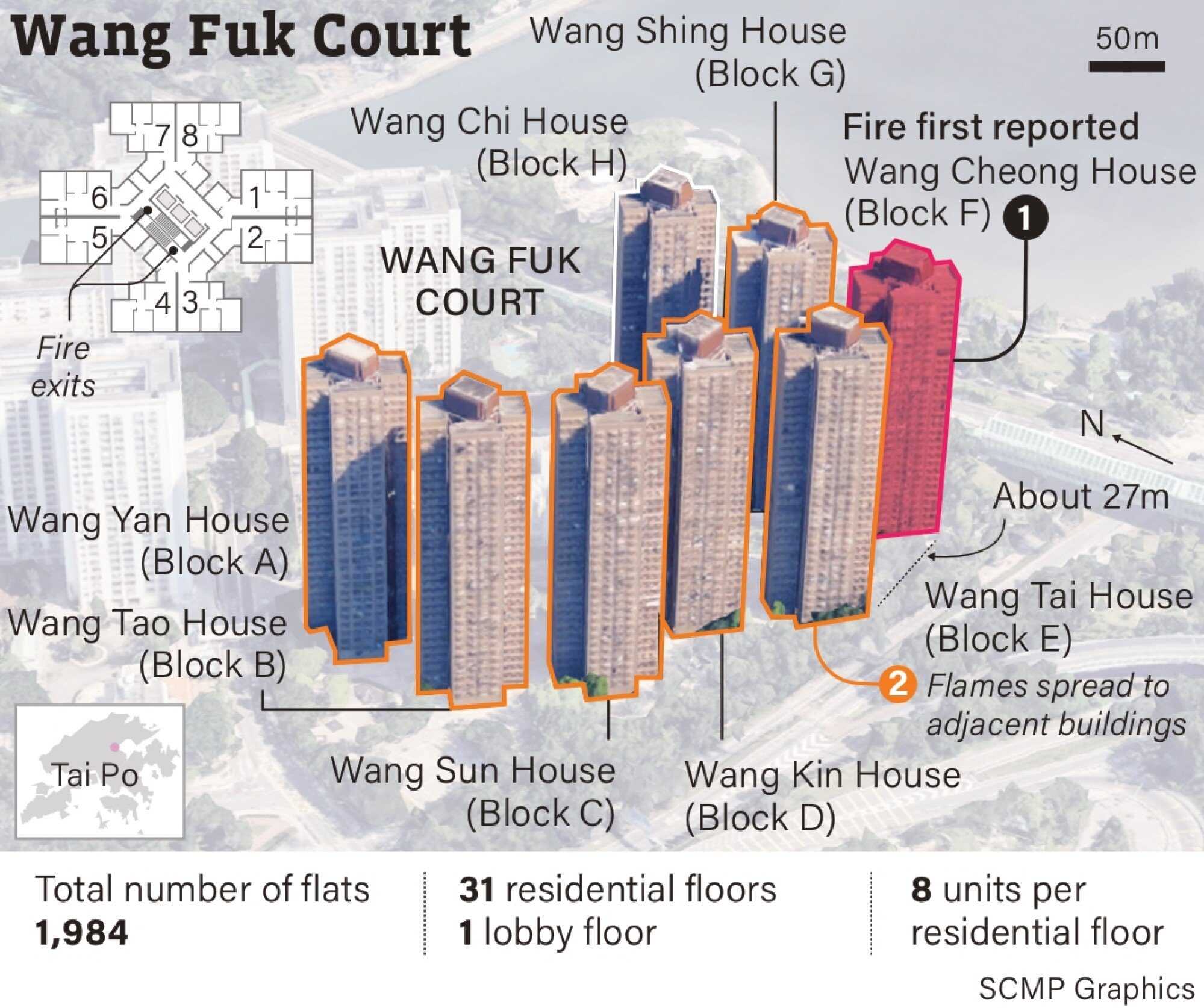
Question prompts
1. Based on this visual, which residential blocks were hit by the fire?
2. How disastrous was the Wang Fuk Court blaze? Explain using News, Glossary and your own knowledge.
Issue: A tragedy made by greedy men?
-
Unethical building contractors see Hong Kong as a gold mine for profit
-
Experts urge authorities to set up a statutory body to stamp out bid-rigging
Hong Kong’s worst blaze in decades has exposed an ugly open secret: the city’s murky building renovation business is plagued by bid-rigging and skyrocketing costs.
While the government had announced the set-up of an independent committee to investigate the cause of the deadly fire at Wang Fuk Court in Tai Po, experts made a collective call for an overhaul of the industry.
They pointed to Hong Kong as a gold mine for certain corrupt syndicates, given the city’s many ageing high-rise buildings ripe for renovation.
Like many older buildings, Wang Fuk Court’s renovation came via an official order issued under a mandatory building inspection scheme in 2016. Each year, authorities require around 600 properties aged at least 30 years to be professionally inspected and repaired.
Internal documents reveal the renovation budget of Wang Fuk Court ballooned, from a preliminary tender analysis of HK$152 million in September 2023 to a final HK$336 million last year. The estate had adopted the most expensive renovation option, including the complete removal and repaving of external wall mosaics – rather than patch repairs – and millions in added costs for drainage and fire safety upgrades.
Chiu Yan-loy is the founder of the Property Owners’ Anti Bid-Rigging Alliance. He said expensive renovations tended to include extra unnecessary work and the use of costly techniques. Syndicates could also profit by using cheaper materials.
He added that property management companies and corporations often played a role in these collusive set-ups as they were responsible for communicating with the consultants and contractors.
Chau Lin-kin is the chairman of the Hong Kong Renovation Practitioners Union.
He warned that property management tenders had become obsessed with “lowest bid wins”. This had created a race to the bottom that compromised safety and quality, with property management companies who “bid cheap, then add costs here and there,” Chau said.
He urged the government to step up regulation and public education to help owners identify red flags in pricing. Experts have also called for higher penalties.
Veteran surveyor Vincent Ho Kui-yip is the president of the Hong Kong Institute of Building Safety.
He suggested that the government establish a statutory body to manage mandatory inspections and the scope and progress of maintenance projects, as many owners lacked professional knowledge.
He also said the statutory body could offer renovation projects only to a list of endorsed consultants and contractors. This would require the industry to meet performance standards, which could be reviewed regularly. The body could also provide the public with data on maintenance costs for easy reference.
Staff writers
Question prompts
1. List ONE common malpractice plaguing Hong Kong’s building renovation industry.
2. According to experts, why is Hong Kong an easy place for contractors to exploit?
3. Following the Tai Po fire, what measures should the city’s building renovation industry introduce to prevent similar incidents from happening again? Explain using Issue, Glossary and your own knowledge.
Photo
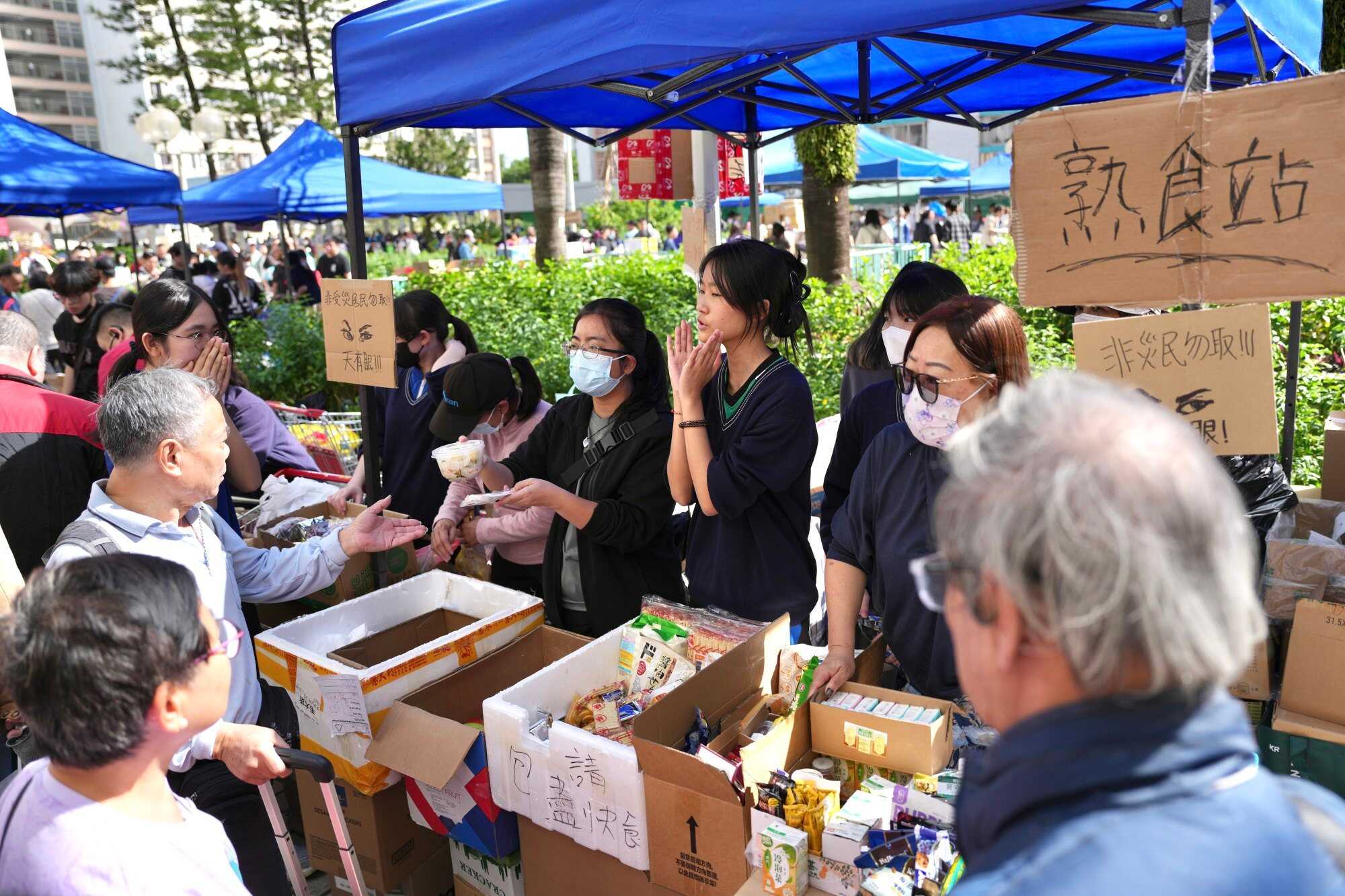
Question prompts
1. Based on what you can see in this photo, why were these young people in Tai Po following the fire?
2. Was this a man-made tragedy? Who should take responsibility? Explain your opinion using News, Issue, Glossary and your own knowledge.
Glossary
mesh netting: a protective netting used during building work to prevent debris from falling into public spaces
bamboo scaffolding: a flexible framework of lashed bamboo poles to provide working platforms, famously used in Hong Kong for building, repairing or demolishing structures
bid-rigging: a common malpractice where a consultant company secures a contract at a low price and then works with a related contractor to win the renovation project at a price significantly higher than the actual cost
patch repairs: targeted repair works that cover generally smaller areas as opposed to complete overhaul or renovation works

Sample answers
News
-
B
-
Hong Kong’s fire services plan to carry out an in-depth investigation to determine the cause of the Wang Fuk Court blaze. According to Fire Services Department Director Andy Yeung Yan-kin, this will involve computer simulations and the creation of a one-to-one-scale model of the affected area to simulate the fire.
-
Many Wang Fuk Court residents were unaware of the fire because the fire alarms failed to sound. This meant they did not receive any immediate warning when the blaze started. Additionally, their windows had been sealed with highly flammable polystyrene foam used during renovation works. This could have blocked smoke or heat from entering flats at first, delaying people’s realisation that a fire was spreading. The bamboo scaffolding and mesh netting used during renovation may have also contributed; both can create a sort of outer barrier that traps smoke and flames outside initially, preventing residents from noticing the danger until it was too late. In short, the combination of faulty alarms, sealed windows and renovation materials made it difficult for residents to detect the fire promptly.
Visual
-
Based on the visual, fire tore through seven residential blocks except Wang Chi House in Wang Fuk Court.
-
The inferno burned for more than 48 hours, killing at least 160 people, including one firefighter, and destroying the homes and belongings of thousands. It is Hong Kong’s deadliest fire in 77 years. Three hours after being reported, it was classified as a top-level No 5 alarm.
Issue
-
Bid-rigging
-
Experts say Hong Kong is an easy place for contractors to exploit because the city has many old high-rise buildings that are required by law to undergo inspections and renovations under the government’s mandatory building inspection scheme. This creates a steady supply of renovation projects that corrupt syndicates can target for profit.
-
Following the Tai Po fire, experts believe Hong Kong’s building renovation industry must adopt stronger regulation, oversight and transparency to prevent such incidents from happening again. According to Issue, one key measure would be the establishment of a statutory body to oversee mandatory building inspections and renovations. This body would ensure contractors and consultants meet performance and safety standards, manage the scope of maintenance projects and provide the public with transparent cost data for easy reference. At the same time, the government should strengthen regulation and impose higher penalties on those involved in bid-rigging or collusive practices, which have long driven up costs and compromised safety. Public education is also crucial, as many homeowners lack the professional knowledge to identify red flags in pricing or poor-quality renovations. Educating residents about their rights and how to spot corruption could reduce exploitation. From a safety perspective, the industry should also adopt stricter quality control on renovation materials and methods. Using fire-retardant scaffolding, properly maintained mesh netting and approved construction materials would help lower fire risks. By combining improved governance, accountability and safety standards, Hong Kong can create a more transparent and secure renovation system that protects both residents and workers.
Photo
-
They were volunteering in a citywide fire relief drive to provide essential supplies to victims who lost their homes.
-
Yes, the Wang Fuk Court fire was largely a man-made tragedy, and responsibility should be shared among several parties involved in the renovation process and its oversight. The fire spread rapidly because of flammable materials, such as non-fire-retardant mesh netting and polystyrene foam used to seal windows, as well as faulty fire alarms that failed to alert residents. These were not natural causes but direct results of poor safety standards and negligence during renovation. The continuing investigations by Hong Kong’s Fire Services Department, including computer simulations and scale models, suggest that the blaze began on construction scaffolding, where work practices may have been careless, such as workers smoking on site. Deep-rooted problems in the city’s building renovation industry, including bid-rigging, corruption, and cost-cutting that compromise safety. Contractors and property management companies often choose the cheapest bids, then increase costs later while using inferior materials. Consultants and management firms that allowed such practices to continue should bear significant responsibility, as should the government, for failing to enforce stricter oversight on renovation materials and safety standards, despite Hong Kong’s long-standing issues with old high-rise buildings. It is clear that unsafe practices, like using combustible bamboo scaffolding and mesh netting, require strong regulation. Yet these risks were ignored until tragedy struck. Therefore, responsibility lies not with chance, but with human negligence, corruption, and weak enforcement. The fire could have been prevented through stricter supervision, honest tendering and the use of certified fire-safe materials. In conclusion, this was undeniably a man-made disaster caused by systemic neglect. Contractors, property management companies and government regulators all share responsibility for allowing unsafe practices to persist, ultimately resulting in Hong Kong’s deadliest fire in decades.