Deep Dive delves into hot issues in Hong Kong and mainland China. Our easy-to-read articles provide context to grasp what’s happening, while our questions help you craft informed responses. Check sample answers at the end of the page.
News: ESF among 8 international school operators in Hong Kong that failed to meet non-local student targets
-
Non-local enrolment at some schools dropped to as low as 39 per cent
-
Required targets are between 50 to 98 per cent
Eight international school operators in Hong Kong, including the largest group, did not admit enough non-local students this academic year, in violation of their commitments to the government.
The Education Bureau told the South China Morning Post that the proportion of non-local students at some of the schools had fallen to as low as 39 per cent this academic year.
The threshold for non-local students at international schools ranges from 50 to 98 per cent of the total student numbers.
Seven international schools and the English Schools Foundation (ESF) failed to meet government admission requirements this year. Last year, five schools did not meet the threshold.
The ESF said it had been increasing the proportion of non-local passport holders since the end of the Covid-19 pandemic.
During that period, international schools were allowed to admit more local students. But the ESF noted it might take several years to return to mandated levels.
The ESF runs 12 primary schools and eight secondary schools in Hong Kong.
According to official data from the bureau, 44,745 students are enrolled in international schools for the 2025-26 academic year.
Among them are a record 15,142 local pupils, accounting for 34 per cent of the total and nearly double the 7,713 local pupils recorded in 2016-17, when they made up 20 per cent of the student body.
The current proportion of local students is the fourth-highest in the past decade.
The peak of 34.9 per cent occurred in 2023-24, reflecting admission cycles that began a year earlier while the pandemic was still affecting the city.
Conversely, the number of non-local students has declined slightly over the past decade, from 30,044 in 2016-17 to 29,603 in 2025-26.
During this period, their share of the student body fell from 80 per cent to 66 per cent.
International schools are required to cater to demand from non-local families living in Hong Kong or relocating to the city for work or investment.
Many of these institutions are bound by service agreements with the government that set out rules for their student mix.
Staff writers
Question prompts
1. Which of the following statements about Hong Kong’s international schools is false, according to the information in News?
(1) The number of non-local students saw a slight decrease over the last decade.
(2) Local student enrolment has nearly doubled since the 2018-19 school year.
(3) Eight operators fell short of their targets for local students.
(4) The highest proportion of local students in international schools occurred in 2023-24.
A. (1), (2) only
B. (1), (3) only
C. (2), (3) only
D. (3), (4) only
2. Why do you think the government allowed international schools to admit more local students during the pandemic? Explain using News and your own knowledge.
3. Why did the ESF fail to meet its mandated non-local student targets after the pandemic? Explain using News and Glossary.
Chart
Question prompts
1. Based on the chart, how has the percentage of local students in Hong Kong’s international schools changed from the 2016-17 academic year to the 2025-26 academic year?
2. If international schools could admit more local students during the pandemic, why would it be challenging to restore their proportions to pre-2020 levels?
Issue: School land could be reclaimed after quota failure
-
Education authorities say breaches would be considered when assessing contract renewals
-
The ESF said local students admitted during the pandemic will delay a full rebalancing of numbers
International schools must prioritise non-local families to enhance Hong Kong’s appeal for foreign talent and investment, the Education Bureau has said. Failing to meet these terms could be a breach of contract.
In 2023, education authorities disclosed that four schools in 2021-22 and five in 2022-23, as well as the English Schools Foundation (ESF), failed to meet the required mix of local and non-local students.
This year, seven international schools and the ESF fell short of government admission requirements.
“In the 2025-26 academic year, international schools bound by service agreements are required to maintain a non-local student ratio between 50 and 98 per cent,” a bureau spokeswoman said.
“Seven schools failed to meet these requirements and fell below the Hong Kong average, with non-local students accounting for only 39 to 64 per cent of their total enrolments.”
She added: “The ESF must ensure that at least 70 per cent of its total student population is non-local. In the 2024-25 and 2025-26 academic years, the proportion of non-local students at the foundation was 65.1 per cent and 66.1 per cent, respectively.”
The spokeswoman said the bureau had written to the relevant schools, reminding them to comply with admission ratios in the coming year.
“The bureau will follow up on any breaches and reserves the right to terminate or decline to renew service contracts, or even reclaim school premises and land,” she said.
Lawmakers previously criticised the “warning letters”, saying they carried little weight if schools faced no real consequences. But Secretary for Education Christine Choi Yuk-lin maintained that such breaches would be considered when assessing contract renewals.
During the Covid-19 pandemic, the bureau exercised its discretion to relax non-local admission requirements, as many expats returned to their home countries. The arrangement has since ended.
“The discretionary arrangement remained in place until the 2024-25 academic year and no longer applies in 2025-26,” the bureau said.
An ESF spokesman said it would take a few years to reach the required admission level but noted that measures already in place had led to a one percentage point increase from last year.
“We are absolutely committed to meeting our obligations to the Education Bureau and the wider government,” he said.
“We have been increasing the proportion of non-local passport holders since the end of the pandemic, and the systems and processes we have in place will ensure we return to the required level as quickly as possible.”
According to the ESF, applications from non-local passport holders are now given priority and processed first. However, as local students admitted during the pandemic will remain in the system for several years, it will take time to fully rebalance the numbers.
Staff writers
Question prompts
1. How does the ESF’s target for non-local student enrolment compare to the standards set for other international schools?
2. According to Issue, what penalties could the Education Bureau impose on schools that continue to violate their service agreements?
3. To what extent do you believe the Education Bureau’s threatened penalties are justified? Could they effectively increase non-local student numbers? Explain using News, Issue and Glossary.
Photo
Question prompts
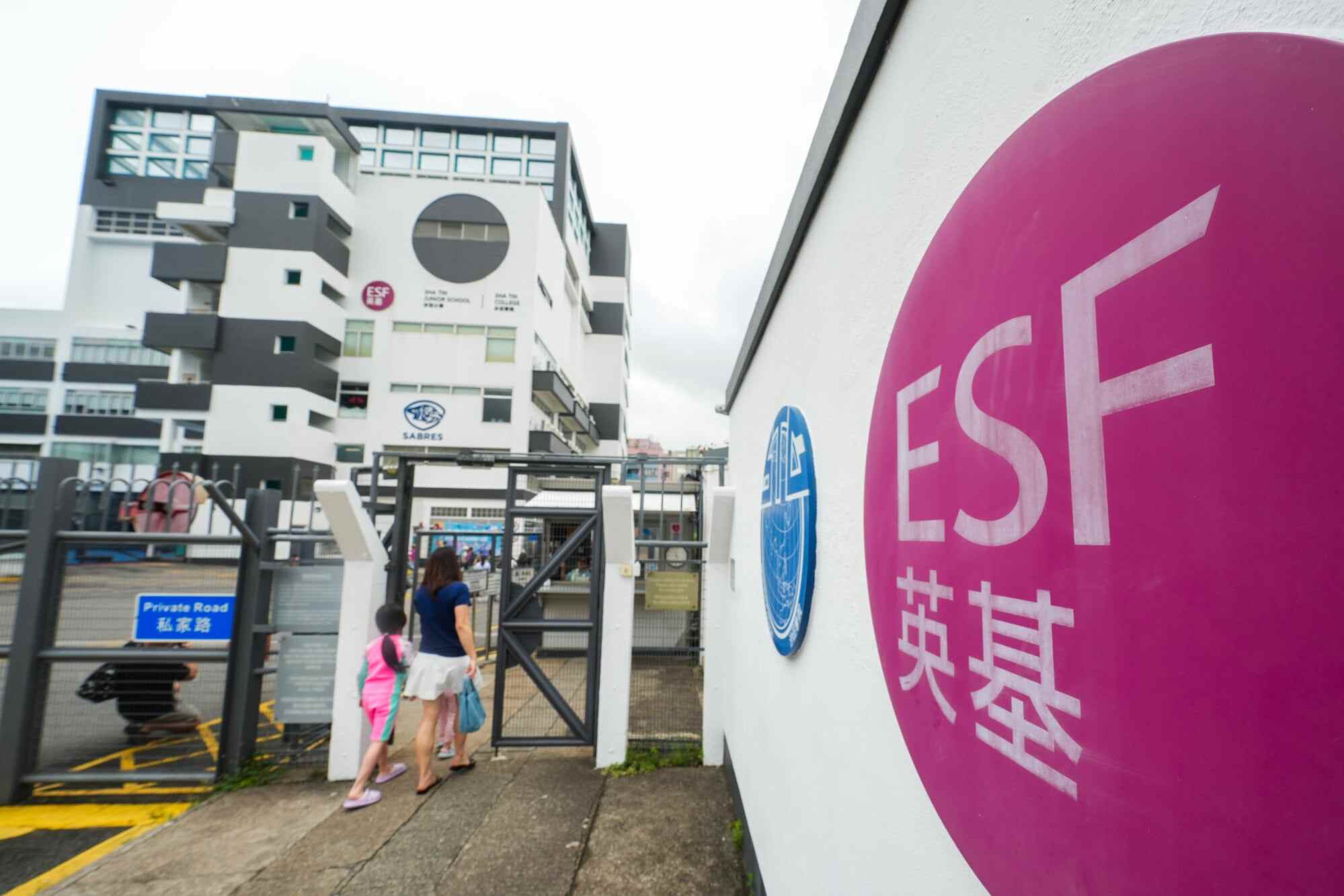
1. Why is the school group in this photo under pressure from the Education Bureau? What does it need to do?
2. How could the threat of penalties for international schools with low non-local numbers impact the willingness of operators to invest in Hong Kong’s education sector?
Glossary
English Schools Foundation: the largest provider of English-medium international education in Hong Kong, operating 22 schools. Established in 1967, the group follows the International Baccalaureate curriculum.
non-local passport holders: students who hold a foreign passport or have the right of abode in a place other than China or Hong Kong.
rules for their student mix: requirements designed to ensure there are enough spaces for expatriate families in Hong Kong’s international schools. In 2007, the rule mandated that international schools enrol at least 50 per cent non-local students. This was revised in 2009 to 70 per cent. However, the government has permitted certain international schools to enrol 50 per cent non-local students under specific previous arrangements.
discretionary: describes the power of an authority, such as the Education Bureau, to adjust rules based on specific circumstances, rather than maintaining consistency at all times
Sample answers
News:
1. C
2. During the pandemic, it was challenging for non-locals to travel to Hong Kong due to various restrictions and quarantine requirements. Many non-locals also chose to leave the city to be closer to their families abroad. (accept all reasonable answers)
3. The English Schools Foundation did not meet its mandated targets mainly due to the ongoing effects of pandemic-era policies that permitted a higher intake of local students.
Chart:
1. Between the 2016-17 and 2025-26 academic years, the proportion of local students in Hong Kong’s international schools rose from 20 per cent to 34 per cent. This marks a significant 14-percentage-point increase in the share of local students in total enrolment over the decade. This trend reflects the growing preference among local families for international curricula.
2. The shift in student demographics has complicated compliance with government mandates, creating a long-term “bottleneck” in the school system. During the pandemic, schools were permitted to admit more local students to fill vacancies left by departing expatriates. However, since these local students remain in the system for their entire primary or secondary education, schools cannot quickly replace them with non-local applicants. This structural lag, combined with a slight decline in the overall number of non-local students in the city, makes it mathematically challenging for school operators to meet high non-local enrolment targets, even when they prioritise international applications. (accept all reasonable answers)
Issue:
1. The ESF must ensure that at least 70 per cent of its total student population consists of non-local passport holders. Other international schools are required to adhere to their service agreements with the government, which stipulate that they maintain a non-local student ratio ranging from 50 to 98 per cent.
2. The Education Bureau has significant administrative and legal powers to ensure compliance with admission ratios. In addition to issuing warning letters, the Bureau can terminate or refuse to renew service contracts. In the most serious cases, it has the authority to reclaim school premises and the land on which the institutions are built.
3. The justification for such harsh penalties is a topic of significant debate, as it involves a clash between government priorities and operational realities. From the Education Bureau’s perspective, these penalties are necessary to ensure that international schools fulfil their primary purpose of attracting global talent to Hong Kong, especially now that pandemic-related relaxations have officially ended. However, schools argue that these penalties may be disproportionate, as the current situation was legally permitted during the pandemic. Since students admitted during that time will remain in the system for several years, schools could face a delay in addressing these requirements, making immediate compliance physically impossible without displacing current students. This suggests that a more gradual enforcement timeline might be fairer than the immediate threat of land reclamation.
Photo:
1. The ESF is facing pressure to raise its ratio of non-local students. Currently, 66.1 per cent of its students are non-local during the 2025-26 academic year, but it is contractually required to reach a minimum of 70 per cent.
2. The threat of reclaiming school land could significantly weaken the long-term confidence of international operators by introducing substantial regulatory risks. If schools believe that the security of their land is tied to enrolment ratios – which can be heavily influenced by factors beyond their control, such as a global pandemic or changes in expatriate migration – they may become reluctant to make significant capital investments or pursue long-term campus development. This climate of uncertainty could ultimately diminish Hong Kong’s competitive edge as an international education hub, leading operators to prioritise regions with more stable and predictable land-use agreements.