Deep Dive delves into hot issues in Hong Kong and mainland China. Our easy-to-read articles provide context to grasp what’s happening, while our questions help you craft informed responses. Check sample answers at the end of the page.
News: China’s new offshore tax policy
-
Beijing has launched a slew of measures over the past few months to prevent tax avoidance
-
Recent rule aims to close loopholes that benefit the wealthy and better control money crossing the border
Beijing has begun tightening controls on the flow of money leaving mainland China. The government wants to stop people from avoiding taxes and reduce the amount of money leaving the country.
Major companies have been punished for helping mainland investors illegally buy overseas stocks. Banks in Hong Kong have also become tougher on mainland customers applying to set up accounts.
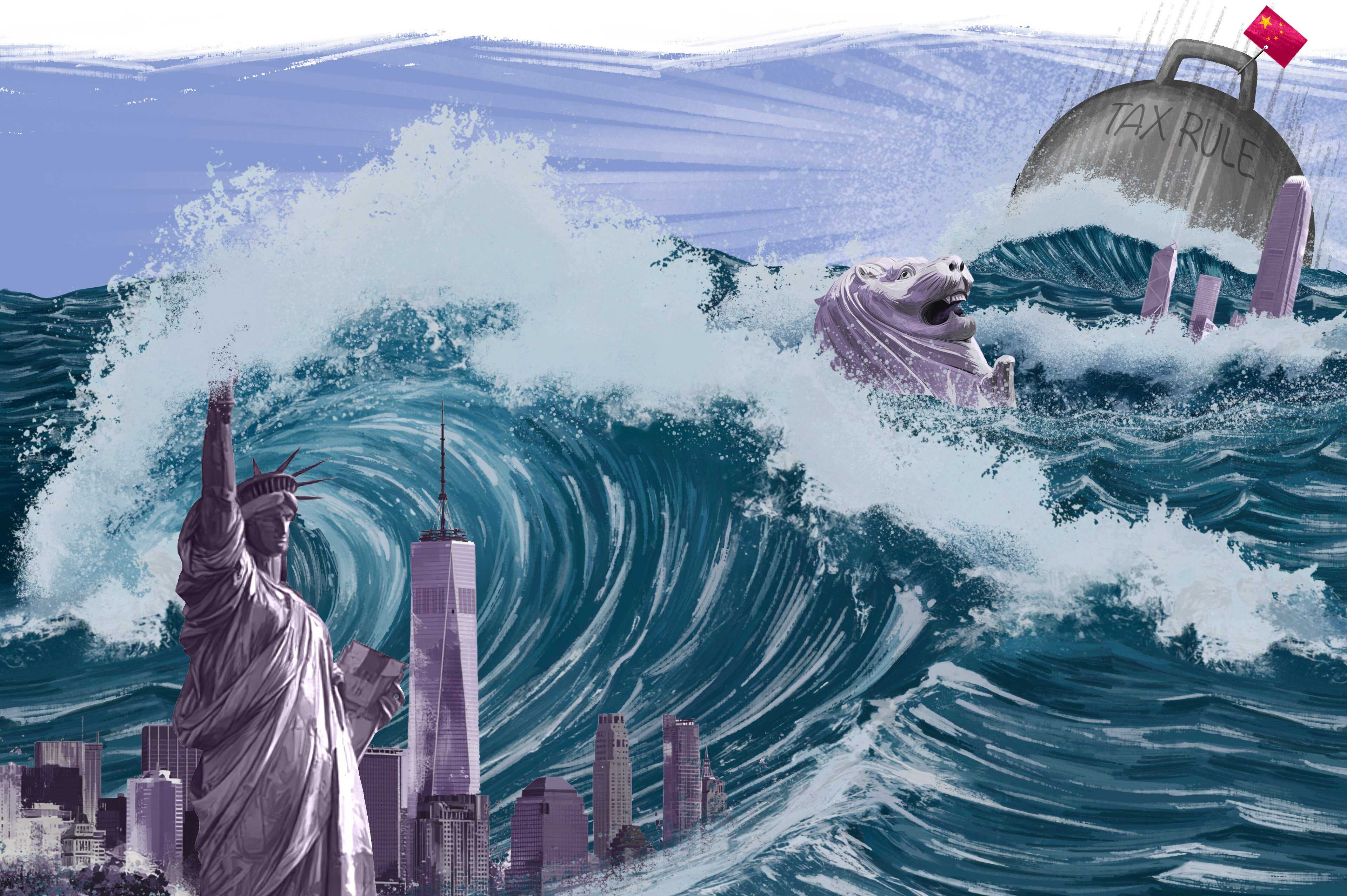
In late July, Beijing announced that offshore trusts would now be subject to China’s personal income tax. This closed a loophole that had allowed wealthy Chinese families to protect large amounts of money from taxation.
Offshore trusts are also a way for Chinese entrepreneurs to transfer wealth to the next generation. The new tax rule could complicate this process.
The policy charges a 20 per cent tax on the gains from offshore trusts that have mainland Chinese beneficiaries or that hold assets from the mainland.
The rule will apply when a trust is set up or closed.
The tax will also apply whenever any income from the trust is given out. It will affect any gains dating back to as early as January 1, 2023.
Beijing has offered a 90-day grace period for people to declare if they put mainland Chinese assets in offshore trusts between 2023 and 2025.
The issue has become a hot topic in China. Children of the late Zong Qinghou – the billionaire founder of drinks company Wahaha Group – launched a legal battle for control over offshore trusts. The trusts had assets worth about US$2 billion (HK$15.68 billion).
For Beijing, offshore trusts are a serious issue, as they have allowed the country’s wealthiest families to avoid paying tax on large amounts of assets.
The Chinese government is strugglinlog to earn income because property values have been dropping. This is one reason Beijing needs more money from taxes.
Last year, Chinese authorities collected 1.62 trillion yuan (HK$1.89 trillion) in income tax revenue, an 11.5 per cent increase from 2024. The increase can be attributed to officials ensuring that more people follow new rules, as well as the closing of tax loopholes.
The new policy for offshore trusts could seriously damage China’s billionaires. A large amount of their overseas income is connected to offshore trusts.
The new rules have also raised concerns in Hong Kong. The city has long been a place for rich Chinese investors to set up offshore trusts. They are drawn in by Hong Kong’s low tax rate and strong privacy protections. It is also the world’s biggest cross-border wealth hub.
Staff writers
Question prompts
1. Which of the following statements are false, according to News?
(1) China’s new policies aim to stop Chinese entrepreneurs from avoiding corporate tax.
(2) The policy sets a 20 per cent tax on gains from offshore trusts with mainland links at every stage, including set up, income movement and closing.
(3) The rules could make it easier for Chinese people to share their wealth with the next generation who are in other countries.
(4) Beijing is cracking down on tax avoidance because the government needs funding as property values fall.
A. (1), (2) only
B. (1), (3) only
C. (2), (4) only
D. (3), (4) only
2. In regard to the new tax rules, how has Beijing encouraged individuals to voluntarily share if they have transferred domestic assets into offshore trusts?
3. According to News, why might the new offshore trust policy worry wealthy Chinese people?
Chart
Question prompts
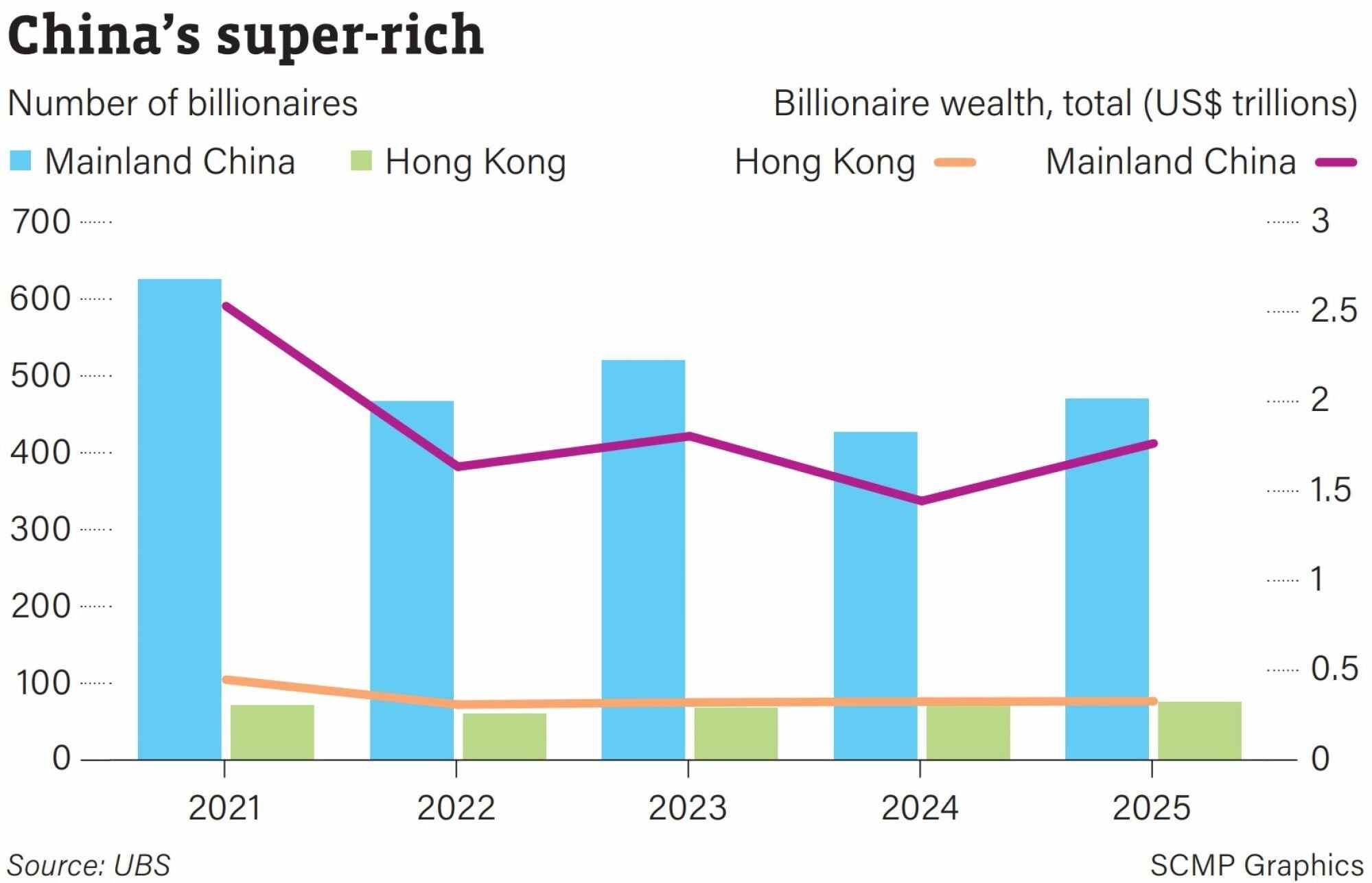
1. Note TWO observations about the total wealth held by Chinese billionaires in mainland China and in Hong Kong.
2. Why do many wealthy Chinese people choose to put their money in offshore trusts in Hong Kong? Explain using News.
Issue: What the rules mean for Hong Kong
-
China’s offshore trust tax policy is a sharp escalation on the mainland, but should not threaten Hong Kong
-
Experts suggest Hong Kong strengthen its AI sector to protect its status as a global wealth hub
For decades, Hong Kong has been a magnet for the rich: wealthy Chinese set up family trusts and millionaires migrate to the city from across Southeast Asia. All of them were drawn in by the city’s promise of free capital flows, a trustworthy legal system and extensive financial expertise.
It is a winning combination for Hong Kong. Last year, it overtook Switzerland as the world’s biggest cross-border wealth hub, riding a wave of blockbuster listings by Chinese technology companies. But some worry Beijing’s tax clampdown on offshore trusts poses a threat.
Analysts, however, stressed that the new mainland policy was in line with international practices.
“[It] will only eliminate non-compliant ‘grey-area’ practices, without undermining Hong Kong’s status as a global wealth centre,” said Tian Xuan, dean of Peking University’s Guanghua School of Management in Beijing.
Tian, who also serves as a Chinese government adviser and a deputy to the National People’s Congress, said Hong Kong would prosper under Beijing’s new rules as long as the city ensured its local offshore trust businesses complied with the policy.
Meanwhile, the city should reduce cross-border tax costs for executives at artificial intelligence (AI) firms, Tian added. That would help attract start-ups to set up related funds in Hong Kong, allowing the city to continue riding China’s tech boom.
Hong Kong’s ability to serve China’s growing class of billionaire tech entrepreneurs will be key for the future of the city’s wealth management industry, analysts said.
In early 2025, the emergence of AI start-up DeepSeek reignited global investor interest in the Chinese tech sector. Since then, more than 200 companies have gone public in Hong Kong, raising nearly HK$500 billion between them, according to data from Hong Kong Exchanges and Clearing.
The wave of blockbuster listings is being driven primarily by mainland start-ups, which are increasingly choosing to launch publicly in Hong Kong rather than other markets like New York amid rising geopolitical tensions between China and the US.
These initial public offerings (IPOs), in turn, are minting an entirely new generation of super-rich tech founders.
Liu Jing, director of the investment research department at the Cheung Kong Graduate School of Business in Beijing, said Hong Kong is well placed to continue benefiting from the Chinese AI boom. It will bring more talent and capital into the city even as Beijing presses ahead with tighter offshore tax rules.
“As cross-border tax reporting has become inevitable, compliance might help Hong Kong gain more support from Beijing,” Liu explained.
The mainland is also continuing to support and build Hong Kong to strengthen the city as an international asset and wealth management centre.
In China’s latest five-year plan, Beijing set out expectations for Hong Kong to enhance its role as an international finance hub.
Hong Kong’s Private Wealth Management Association (PWMA) said the enhanced cross-border policies, coupled with accelerating wealth creation driven by the AI boom, would “inject fresh energy and momentum” into cross-boundary wealth management.
This would reinforce “Hong Kong’s position as a leading global wealth management hub”, it said.
Staff writers
Question prompts
1. How could Beijing’s new offshore trust tax policy improve the reputation and reliability of Hong Kong’s trust industry?
2. List TWO actions Tian Xuan suggests Hong Kong should take to prosper under China’s new tax rules.
3. According to Issue, how have emerging Chinese tech start-ups affected Hong Kong? What advantages does Hong Kong offer to mainland companies looking to go public?
Illustration
Question prompts
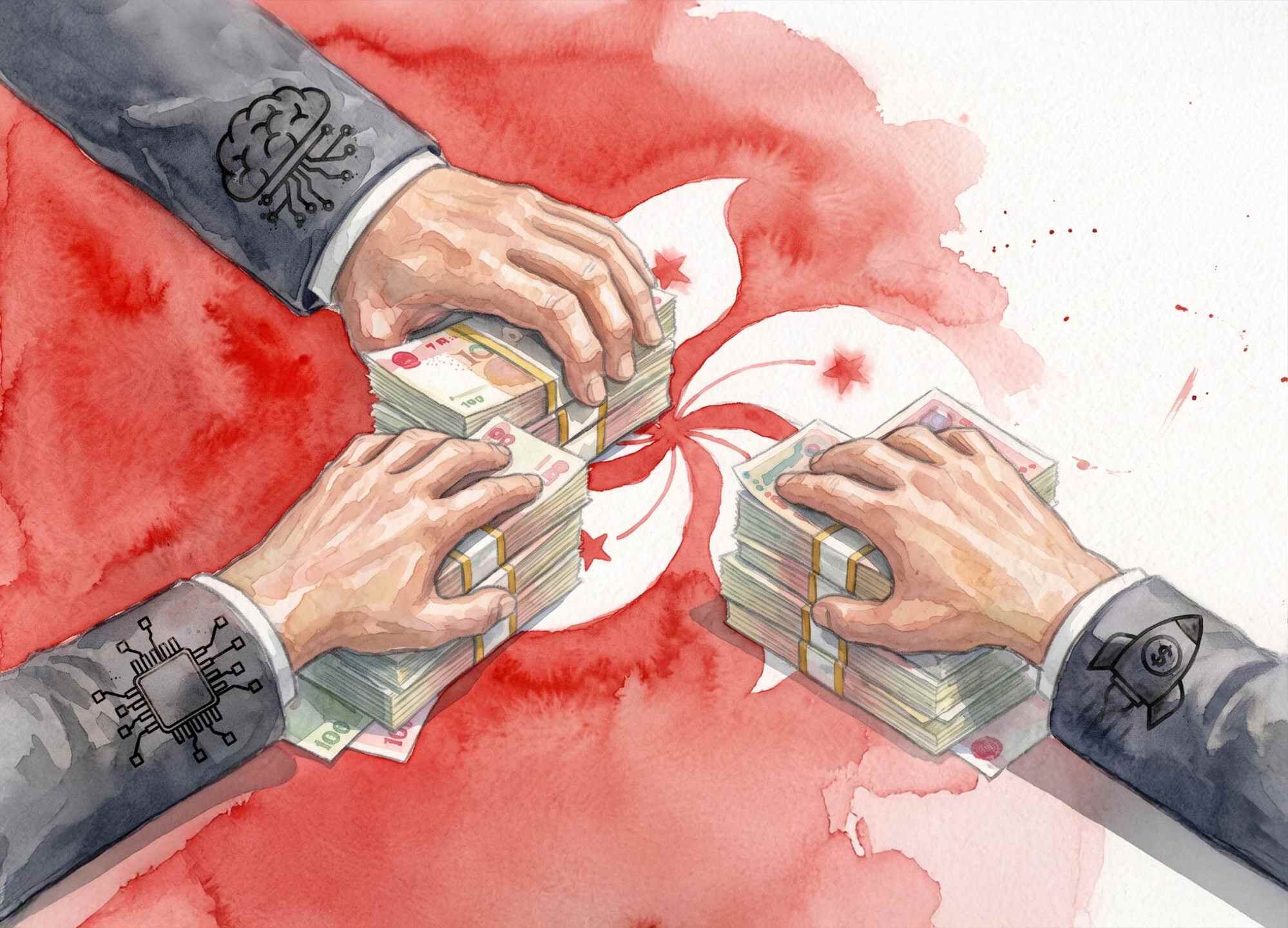
1. What is being shown in the illustration, and how does it relate to the information in Issue?
2. To what extent will China’s new offshore trust tax policy benefit Hong Kong’s long-term growth? Explain using News, Issue and your own knowledge.
Glossary
offshore trusts: a legal arrangement in which someone transfers ownership of certain assets to a manager in a different place. This is often a way for wealthy people to avoid paying taxes or to transfer their assets to their heirs.
personal income tax: a direct government tax on an individual or a household’s net earnings, wages, investment gains and other income
beneficiaries: an individual or group designated by the person who creates a trust to receive benefits from its assets and income
blockbuster listings: high-profile, large-scale initial public offerings that raise money and generate market interest
cross-boundary wealth management: financial services enabling individuals to invest, transfer, and manage wealth across the regulatory border between mainland China and Hong Kong

Sample answers
News
-
B
-
The government has offered a 90-day grace period for people to declare if they put mainland Chinese assets in offshore trusts between 2023 and 2025. This measure should encourage individuals to voluntarily self-report before the tax rules tighten.
-
The new offshore trust policy worries wealthy Chinese families because they routinely use offshore trusts to protect their assets from tax and to easily transfer assets to their heirs. Under the new tax rule, these people face higher tax burdens and can no longer use this “loophole” to protect their wealth.
Chart
-
Since 2021, billionaire wealth in mainland China has declined gradually, with a small rebound in 2025. Since 2022, billionaire wealth in Hong Kong has held steady at under US$500 billion. (accept all reasonable answers)
-
Many wealthy Chinese people choose to put their money in offshore trusts in Hong Kong because of the city’s low taxes and strong privacy protections, which can help them save more money and make it simpler to transfer wealth to the next generation.
Issue
-
Beijing’s new offshore trust tax policy eliminates non-compliant “grey-area” practices that mainland Chinese people took advantage of in Hong Kong. If Hong Kong’s trust industry creates rules and structures that help mainland Chinese wealthy people abide by Beijing’s rules, these customers will trust that their wealth in Hong Kong will be managed well and stay in line with expectations from Beijing. This will improve the reputation and reliability of Hong Kong’s trust industry.
-
Hong Kong should proactively drive the transition of the local offshore trust business towards greater compliance / The city should allay mainland clients’ compliance concerns / Hong Kong should optimise its tax rules to reduce cross-border tax costs for executives at artificial intelligence (AI) firms (any two)
-
In 2025, the emergence of AI start-up DeepSeek reignited global investor interest in the Chinese tech sector. Since then, there have been more than 200 companies going public in Hong Kong, which raised nearly HK$500 billion between them. This shows that the Chinese AI boom has brought advantages like talent and capital to Hong Kong, making the city a good place for mainland start-ups to go public amid US-China geopolitical frictions.
Illustration
-
The illustration shows three figures in business suits placing stacks of money on top of a backdrop of the Hong Kong flag. The arms seem to symbolise mainland China’s entrepreneurs – in technology, AI and startups – bringing their wealth to Hong Kong.
-
China’s new offshore trust tax policy can benefit Hong Kong’s long-term growth by enhancing Hong Kong’s long-term credibility as a destination for wealthy Chinese. Under Beijing’s 15th five-year plan, Hong Kong plays an important role as an international asset and wealth management centre. Beijing’s new tax rule gives Hong Kong the chance to prove its value to wealthy billionaires and entrepreneurs from mainland China who want a compliant place to store their assets. Hong Kong can show global institutions that the city offers a “clean” tax jurisdiction – not just a shelter for tax avoidance. If Hong Kong can make itself a hub for cross-border wealth management, it can attract more wealth from mainland Chinese companies and international institutions to reinforce the city’s lead as an international asset management centre. The Hong Kong government needs to ensure that the growth in the city’s assets leads to more jobs and opportunities for everyday people as well.