Deep Dive delves into hot issues in Hong Kong and mainland China. Our easy-to-read articles provide context to grasp what’s happening, while our questions help you craft informed responses. Check sample answers at the end of the page.
News: Hongkong Post’s financial woes
-
For eight years, the city’s postal service has been losing money, with only a few branches turning a profit
-
The post offices are enacting cost-saving measures
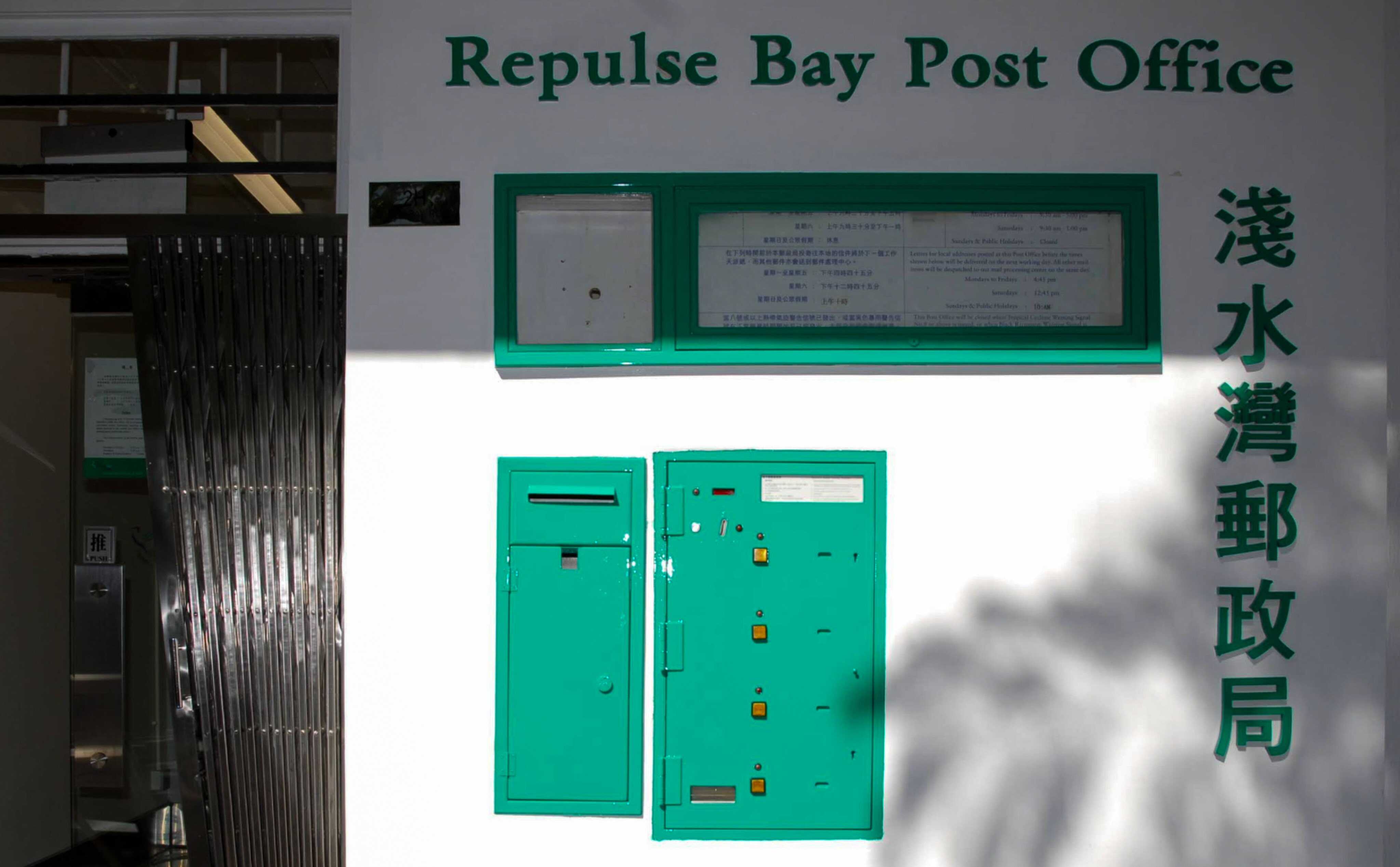
On a weekday morning in August, the Repulse Bay post office was almost empty. This branch of the government’s postal services department stands in one of Hong Kong’s wealthiest neighbourhoods.
But in an hour, only five customers had walked through the door.
Dicky Lo sent a parcel to Europe. He said the post office was reasonably priced compared with private couriers.
“I come here two to three times a month, mostly to collect online shopping packages,” the 43-year-old freelancer said. “Not many residents use this branch, which is exactly why I like it.”
The Repulse Bay resident said that closing the post office would be inconvenient for him. He would have to travel 7km to Aberdeen for postal services.
“Post offices are still necessary. Besides sending parcels, residents can pay electricity, water and tax bills here … They are different from private courier services,” Lo said. “Not every government service is profit-making, as they have to satisfy residents’ needs. We cannot judge them merely by profit and loss.”
The Repulse Bay branch was one of five post offices that recorded a productivity index below 50 per cent.
The quiet counters reflected a broader picture.
Since 1995, the government department has financed itself. In 1997-98, it saw its peak profit of HK$1.23 billion. But for the past eight years, it has only recorded deficits.
In 2024-25, the financially strapped Hongkong Post had a record deficit of HK$821 million. The city’s post offices only made HK$277 million in revenue while spending HK$522 million. This resulted in a loss of HK$245 million.
The loss was 8 per cent higher than in 2020-21.
The city’s Legislative Council has approved a rescue plan to give HK$4.6 billion to support Hongkong Post’s operations for the next three years. The government has also pledged to propose a road map for reform by 2028.
To save money, Hongkong Post said it would stop giving permanent civil service positions to new employees. Instead, it would offer them two-year contracts, a move criticised by public servants.
As a band-aid measure, observers have called for a review of the city’s post office network. The latest figures revealed that 98 per cent of post offices in Hong Kong had been losing money.
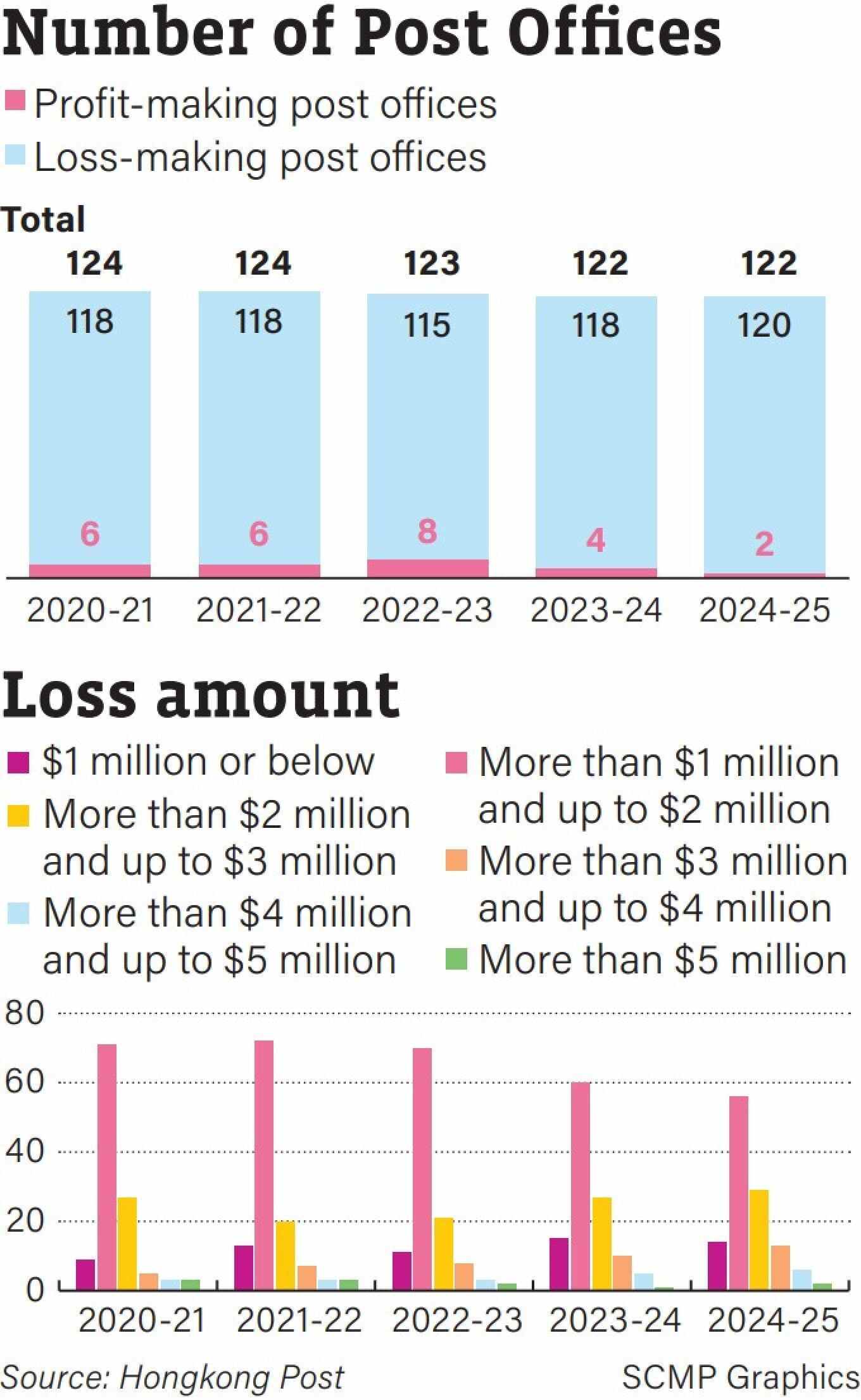
In 2024-25, the number of loss-making post offices rose to 120, or 98 per cent of all branches. This is up from 118, or 95 per cent, five years earlier. In comparison, 10 years ago, 103 post offices were loss-making, or 81 per cent of all branches.
Staff writers
Question prompts
1. Which of the following statements are false, according to the information in News?
(1) Many people in Hong Kong find Hongkong Post services too expensive.
(2) A review of the city’s post offices is being called for due to budget deficits.
(3) Most post offices in Hong Kong cannot make ends meet.
(4) The Repulse Bay post office is one of Hong Kong’s most profitable branches.
A. (1), (2) only
B. (1), (4) only
C. (2), (4) only
D. (3), (4) only
2. Apart from sending letters, what other services are offered at Hong Kong’s post offices? Why do you think people are not using these services as much as they did in the past?
3. How has Hongkong Post responded to this financial crisis, and what are the benefits and consequences of its response?
Chart 1
Question prompts
1. How many post offices made profits in the year 2024-25, and how does this compare to the number of profit-making post offices in 2020-21?
2. Is the post office in Repulse Bay a profit-making branch? Explain using News and Glossary.
Issue: Calls for postal network review
-
Hongkong Post’s deficits reveal structural problems
-
Could splitting postal services be the way forward?
The expansion of e-commerce, rise of private delivery firms and decline in traditional mail have all contributed to Hongkong Post’s dismal financial situation. The city’s postal service handled 611 million mail items in 2024-25, a 38 per cent fall from 978 million in 2020-21.
A spokesman said that the department’s primary duty was to establish a convenient postal network rather than to generate profits.
Former postmaster general Tam Wing-pong highlighted the intense competition from private couriers, which operate on a large, global scale to drive down delivery costs, making it difficult for Hongkong Post to compete.
Hong Kong Postal Workers Union chairman Cheung Wai-kuen attributed the heavy losses to high rent costs.
In 2023-24, the department spent HK$92 million renting 63 premises from private property owners, an average of HK$1.46 million per site. It reduced this to HK$79 million in 2025-26, bringing the average cost down to HK$1.3 million.
Economist Simon Lee Siu-po urged Hongkong Post to consider closing some of its branches, arguing that it was unreasonable to use public money to subsidise services for a few residents.
Cheung proposed adjusting post offices’ opening hours to cover the evening peak. While most post offices currently close by 5.30pm on weekdays, he suggested opening later and extending evening hours.
“Our union conducted a review and found that there were very few customers between 9am and 10am in most post offices,” Cheung said.
He said the change could reduce administrative expenses and allow branches to handle more items, such as e-commerce parcels.
Another cause of Hongkong Post’s financial burden could be its staff costs. In 2024-25, staff costs stood at HK$2.1 billion, down from HK$2.3 billion in 2020-21.
The struggles of public postal services have been a global issue. Some countries are separating public services from their more profitable delivery operations.
The United Kingdom has consistently reformed its government postal system, including a 2012 move to split the network of branches for public services from its delivery arm, Royal Mail. This paved the way for the privatisation of Royal Mail.
Post offices in Britain continue to offer some Royal Mail services; however, this postal service and courier company is losing ground in the parcels market. Its market share dropped from 45 per cent in 2015 to 35 per cent in 2024.
Hong Kong lawmaker Lam Wai-kong said the government could continue to provide public services without requiring them to make a profit, while the commercial delivery side could operate under a different model.
He cautioned, however, against full privatisation.
Still, it remains uncertain how effective this split would be, as the department’s e-commerce revenue, which includes commercial delivery, fell from HK$1.01 billion in 2023-24 to HK$590 million in 2025-26.
Staff writers
Question prompts
1. Why are the city’s post offices struggling to generate revenue? Explain using News, Issue and Glossary.
2. Explain two of Hongkong Post’s major expenses mentioned in Issue. What is being done to try to lower these costs?
3. List the pros and cons of separating the public services of Hongkong Post from other operations. To what extent do you agree with this plan?
Chart 2
Question prompts
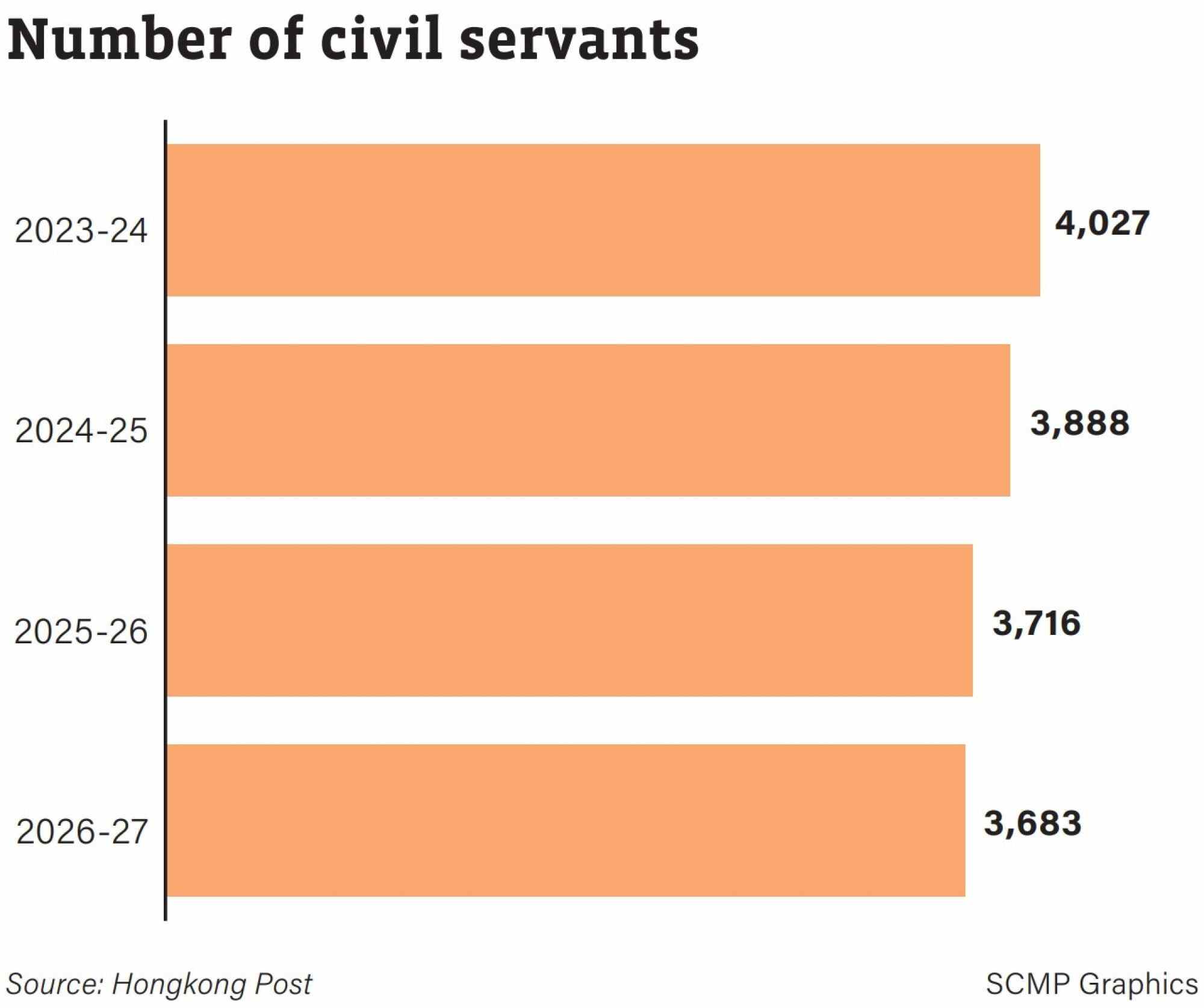
1. Describe how the number of civil servants has changed over the time shown in the chart. Using Issue, explain how costs have reduced during this time.
2. Do you think Hongkong Post’s move to stop offering permanent contracts is enough to address its deficits? Explain using News, Issue and your own knowledge.
Glossary
productivity index: a metric measuring the amount of mail handled per worker at each site over a period of time
deficits: amounts in which money spent or owed is more than money earned in a particular period of time
band-aid measure: a temporary, superficial fix that addresses a symptom rather than solving the underlying root problem
e-commerce: the process of buying and selling goods and services over the internet; popular e-commerce platforms in Hong Kong include Taobao, Pinduoduo and HKTVmall.
Royal Mail: the United Kingdom’s national postal service and courier company responsible for universal mail collection and delivery
Sample answers
News
-
B
-
You can also send and receive parcels and even pay government bills like your electricity, water and taxes. Today, many people use other delivery services and pay bills online through portals and websites. You can also send emails or message on social media instead of posting letters.
-
Hongkong Post will stop giving permanent civil service positions to new employees. Instead, it will offer them two-year contracts. The move has been criticised by public servants. A benefit of this measure is that it will save the government money and effort by avoiding the hiring of brand-new full-time employees. However, a consequence is that the postal service’s quality may be affected as the role could be filled easily by someone who is not committed and will leave for a permanent role elsewhere.
Chart 1
-
Only two post offices made profits in 2024-25, which is four fewer than in 2020-21.
-
The Repulse Bay post office cannot be one of the two profit-making branches, as its productivity index – which measures the amount of mail and the manpower at an individual site – was among the five post offices with a productivity index below 50 per cent.
Issue
-
The expansion of e-commerce, the rise of private delivery firms and decline in traditional mail have all contributed to Hongkong Post’s financial situation.
-
Two major expenses are staff costs, which totalled HK$2.1 billion in 2024-25, and high rent costs for branch premises, which reached HK$79 million in 2025-26. To lower staff expenses, Hongkong Post has stopped offering permanent civil service positions to new hires, replacing them with two-year contracts to reduce long-term benefit liabilities. To cut rental expenses, the department has renegotiated lease terms and streamlined leased sites, bringing total rental costs down from HK$92 million in 2023-24.
-
Separating commercial delivery from public postal operations allows the commercial arm to adopt flexible, market-driven strategies to compete with private couriers, while ensuring essential public services remain affordable and accessible. However, the downside is that commercial delivery may still fail to achieve profitability given falling e-commerce revenues, while the government remains burdened with funding loss-making public branches without commercial cross-subsidies. I agree with this plan to a moderate extent, as structural separation protects core civic access, but it must be paired with branch closures and adjusted operating hours to meaningfully eliminate the deficit. (accept all reasonable answers)
Chart 2
-
The number of staff declined by 9 per cent from 4,027 in 2023-24 to 3,683 in 2026-27.
-
I do not think Hongkong Post’s move to stop offering permanent contracts is enough to address its deficits. While switching new hires to two-year contract terms offers greater workforce flexibility and helps manage long-term civil service pension liabilities, it remains a short-term, superficial fix that fails to solve the causes of the department’s financial crisis. Hongkong Post faces a severe structural deficit, suffering a record loss of HK$821 million in 2024-25 with 98 per cent of its branches operating at a loss. Staff costs, while significant at HK$2.1 billion, are only one part of the problem. The deficit is fundamentally driven by a 38 per cent drop in traditional mail volume, fierce competition from global private couriers, falling e-commerce revenue and exorbitant property rental costs. Ceasing permanent hires does not reverse the decline in demand for physical post, nor does it restore lost e-commerce revenue. Also, relying heavily on contract staff could cause issues by reducing job security, increasing staff turnover, and harming frontline morale, ultimately impairing service quality. To achieve true financial sustainability, Hongkong Post must combine staffing flexibility with far broader structural reforms, including restructuring underutilised post offices, adjusting counter opening hours, or thinking of new ways to compete with private couriers. (accept all reasonable answers)