Deep Dive delves into hot issues in Hong Kong and mainland China. Our easy-to-read articles provide context to grasp what’s happening, while our questions help you craft informed responses. Check sample answers at the end of the page.
News: Diagnosing Hong Kong’s cancer rates
-
In 1982, Hong Kong’s cancer death rate was 136.7 per 100,000 people; by 2023, it fell to 71.1
-
Despite the city’s low mortality rates, experts urge early prevention to help people live longer
When Hong Kong began modern cancer tracking in 1983, it recorded 15,000 new cases. The disease’s death rate was also far higher than it is today. After 40 years, the number of cases has risen to nearly 38,000 – yet the risk of dying from the disease has nearly halved.
In 1983, the city’s age-standardised cancer death rate was 136.7 per 100,000 people. By 2023, it had fallen to 71.1. But according to the latest official data, cancer was still the city’s top killer in 2023, taking nearly 15,000 lives.
Still, Hong Kong’s death rate is one of the lowest in developed economies. The average cancer mortality rates in Organisation for Economic Cooperation and Development (OECD) member countries were 191 deaths per 100,000 people. According to the latest data, Japan had a rate of 174, and South Korea’s rate was 150.
Experts said Hong Kong’s low death rate is thanks to the city’s access to some of the best treatments and drugs. But they said the city must invest more in early prevention and screening to truly lead in the battle with cancer. They said Hong Kong’s next step should be “stage migration”. This involves finding cancer earlier to give people a better chance at survival. It would also reduce healthcare costs.
Professor Tony Mok Shu-kam is the chairman of the clinical oncology department at the Chinese University of Hong Kong.
“When you are not dying from war or tuberculosis and when cardiovascular events are prevented, the only thing you’re going to get is cancer,” he said. “When our median age for females reaches 88, and that for males 82, we will inevitably see more cancer cases ... so it is not as worrying as some suggest.”
Hong Kong issued its first Cancer Strategy in 2019. It aimed to improve patients’ quality of life and reduce the local burden and mortality by 2025. Key areas include improving cancer screening and reducing tobacco and alcohol use. Officials said they would evaluate the strategy’s success using data from the 2025-26 population health survey, to be conducted by the end of this year.
Mok said global survival rates improved because of advances in treatments, which the city’s patients could access. Thus, diagnosing at a late stage is not always hopeless for patients.
He added that by finding specific markers in patients’ genes, doctors could use special therapies to help them live longer. For example, some lung cancer patients have the epidermal growth factor receptor (EGFR) mutation. They now have a median survival of almost four years. Those with the Anaplastic Lymphoma Kinase (ALK) marker can live nearly seven years with targeted therapies.
Staff writers
Question prompts
1. Which of the following statements is false, according to the information in News?
(1) Compared with the 1980s, the number of cancer cases and deaths in Hong Kong has doubled in recent years.
(2) The cancer mortality rates of Japan and South Korea are lower than the average among OECD nations.
(3) The Hong Kong Cancer Strategy, launched in 2019 by the government, only focused on enhancing cancer screening and lowering tobacco and alcohol use.
(4) The city’s cancer survival rate can be improved when doctors examine patients’ genetic markers.
A. (1), (2) only
B. (1), (3) only
C. (2), (4) only
D. (3), (4) only
2. Why is Tony Mok not too concerned about the rise in Hong Kong’s cancer cases?
3. How does Hong Kong’s cancer mortality rate compare to other places? Identify the factors that explain this data.
Graph 1
Question prompts
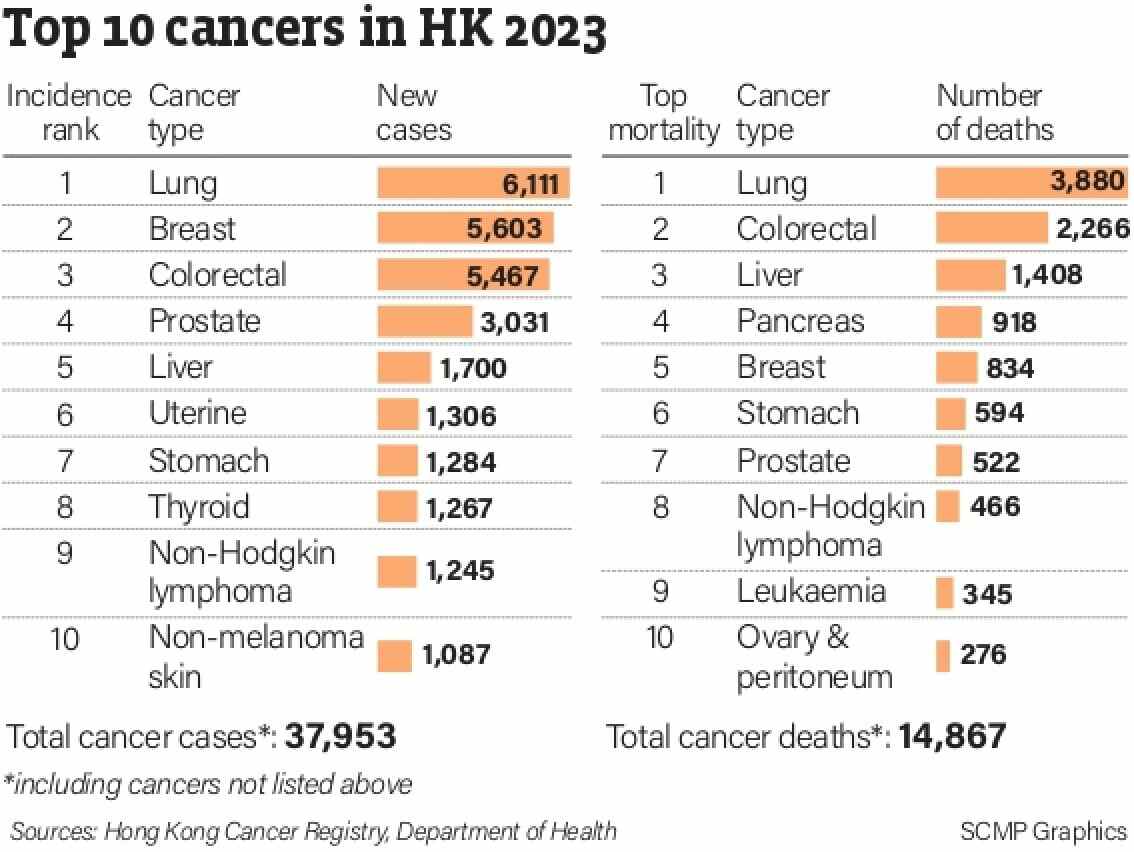
1. Using the chart, note TWO observations about the number of cancer cases and deaths.
2. What is the type of cancer that is most common in Hong Kong? Using information in News and Glossary, explain ONE way that Hong Kong is addressing this.
Issue: Expansion of cancer screening
-
When cancer cases are diagnosed at an early stage, tumours can be removed through surgery
-
Experts urge the government to improve access to screening for the most deadly and common cancers
For lung cancer, the most common and deadliest type in the city, more than half of the new cases in 2023 were already at stage 4.
Professor Tony Mok Shu-kam, chairman of the clinical oncology department at the Chinese University of Hong Kong, said it would be ideal if most new cases were diagnosed at an early stage, when tumours could be removed through surgery. To achieve that, Hong Kong needed to step up its cancer screening efforts, he added.
“The next frontier for Hong Kong is stage migration, finding cancer patients at an early stage,” Mok said.
He is leading a government-funded lung cancer screening pilot programme targeting people who never smoked but have a family history of the disease. It found that 1.5 to 2 per cent of participants needed intervention.
Professor Yuen Man-fung, chair of gastroenterology and hepatology at the University of Hong Kong, warned that liver cancer was often overlooked because it tended to remain asymptomatic until an advanced stage.
“If you carry the [hepatitis B] virus, you need regular screening, even in your twenties or thirties, and may require treatment to reduce the risk of cirrhosis and liver cancer,” Yuen said. He added that the screening programme should eventually be expanded to cover all unvaccinated individuals to ensure no one was left behind.
Another emerging high-risk group, he said, was people with fatty liver disease, which affects 30 to 50 per cent of Hongkongers, particularly those with high blood pressure, elevated blood lipids, or high blood sugar.
Dicky Chow Ka-chun, assistant research director at think tank Our Hong Kong Foundation, said the city lagged in prevention, screening and primary care integration. To better motivate screening, Chow suggested age-based screening timetables.
He also urged the government to leverage primary healthcare networks and private partnerships to ease screening and treatment caseloads. He noted that authorities must also ensure that voluntary health insurance would adequately cover such services.
Samuel Mak Ka-yan, convenor of the Cancer Strategy Concern Group, said it was time for Hong Kong to introduce universal screening for more prevalent and deadly types of the disease, such as lung, breast and liver cancers, instead of simply covering the high-risk groups.
“People often have the misconception that if they are not eligible for existing screening programmes, they are not at risk,” Mak said. “Could the government offer more incentives, such as tax benefits for those who undergo regular screening?”
Staff writers
Question prompts
1. What is stage migration, and why does Tony Mok say this is the next “frontier” for Hong Kong?
2. Go to the first graph and compare liver cancer’s incidence and mortality ranks. How does the information in Issue explain that data?
3. To what extent do you agree that the government should introduce universal screening for certain cancers? Explain.
Graph 2
Question prompts
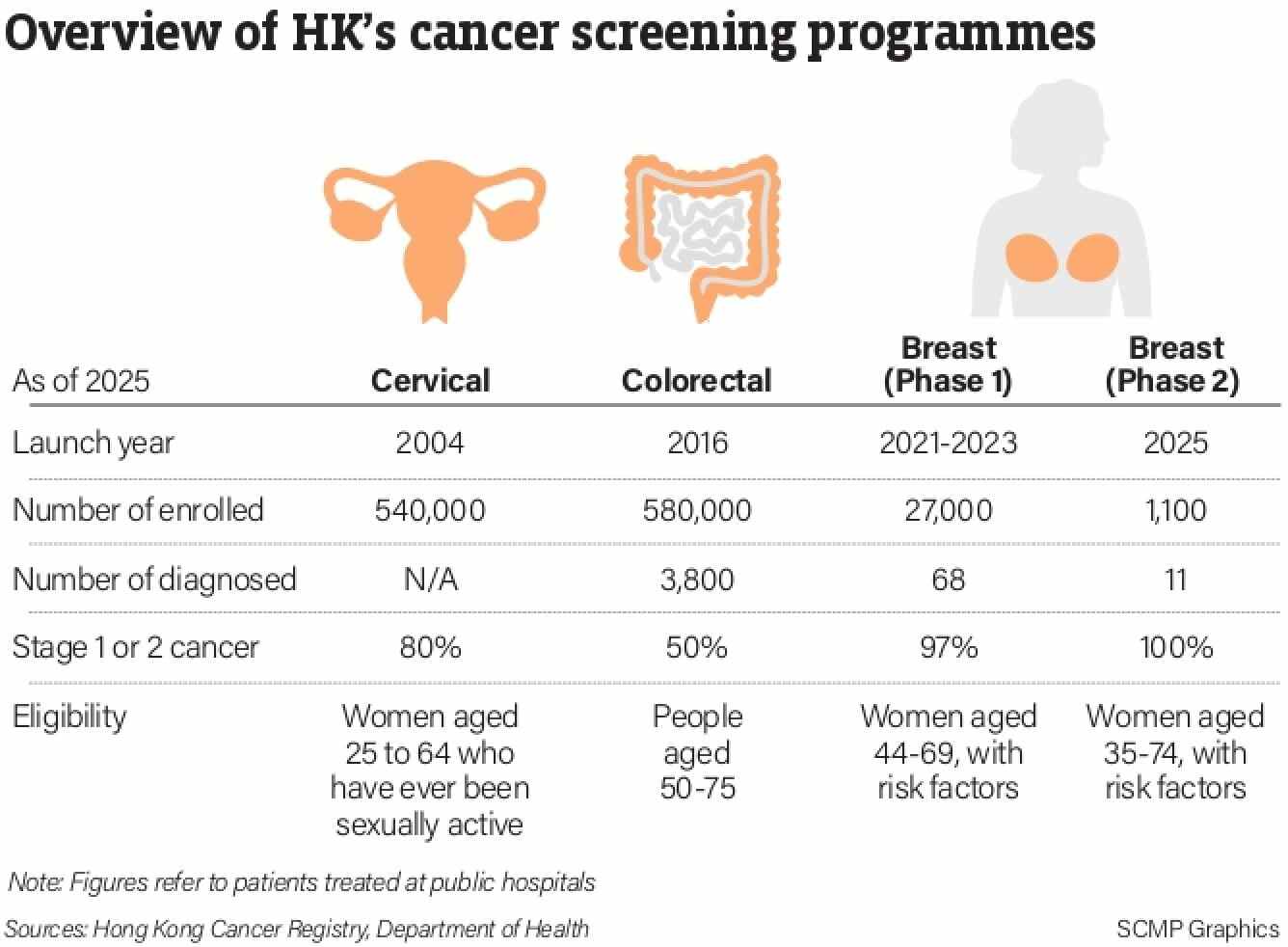
1. Looking at the two oldest cancer screening programmes, identify the respective age range eligibility and the percentage of those diagnosed who were in an early stage of cancer. What does this show about the role of screenings in cancer prevention?
2. Using information from News, Issue and both charts, explain two suggestions for improving the government’s cancer prevention strategy.
Glossary
-
age-standardised: adjusting data, such as the actual cancer death rate, in one place or time so that it can be compared with another place or time that does not have the same proportions of people in different age groups. This is because age can be a key risk factor for cancer and many other diseases.
-
Cancer Strategy: Hong Kong’s first holistic plan in 2019 to reduce the local cancer burden. It created goals for prevention, early diagnosis, population-level screening, advanced treatment and support for survivors.
-
tobacco and alcohol use: tobacco use accounts for 25 per cent of all cancer deaths around the world and is a main cause of lung cancer, while alcohol causes at least seven types of cancer, including bowel cancer and breast cancer
-
median survival: the time when half of the patients are still alive, and half have died
-
stage migration: a change in the proportion of patients in different stages of cancer. Doctors use stages to identify how much cancer has spread in a patient.
-
universal screening: a public health strategy where an entire population group is tested for a specific disease or condition, regardless of whether individuals have any symptoms, risk factors or family history
Sample answers
News
-
B
-
It is because he said that it would be expected when people live longer because they will be dying of war, tuberculosis or cardiovascular events.
-
Hong Kong has a low cancer mortality rate compared to other countries. Specifically, Hong Kong’s age-standardised cancer death rate stood at 71.1 per 100,000 people in 2023, while Japan and South Korea recorded rates of 174 and 150, respectively. Multiple factors contribute to Hong Kong’s low cancer mortality rate, including widespread access to healthcare, world-class drugs and treatments, as well as structured cancer screenings. In the Cancer Strategy framework issued by the government in 2019, it targeted improved screening to reduce mortality. In addition, Hong Kong hospitals provide access to targeted therapy, allowing doctors to use these advanced treatments to extend survival chances. For example, News highlights that the median survival for Hong Kong lung cancer patients with the epidermal growth factor receptor (EGFR) mutation has been extended to almost four years, while those with the Anaplastic Lymphoma Kinase (ALK) marker can live for nearly seven years when treated with advanced targeted therapies.
Graph 1
-
Data shows that total cancer cases in Hong Kong reached 37,953 in 2023, while total cancer deaths recorded at that time stood at 14,867. Based on this, we can observe that cancer mortality rates do not always reflect cancer incidence rates. For example, breast cancer is the second most common type of cancer in Hong Kong with 5,603 cases, yet its mortality rate ranks fifth among all cancer types. (accept all reasonable answers)
-
Lung cancer is the most common type of cancer in Hong Kong. The city is targeting the prevention of lung cancer by reducing tobacco use, which was laid out in Hong Kong’s Cancer Strategy launched in 2019. According to Glossary, globally, tobacco use accounts for 25 per cent of all cancer deaths and serves as the leading cause of lung cancer. Minimising tobacco use can lower the prevalence of smoking and second-hand smoke exposure, ultimately helping to prevent lung cancer.
Issue
-
According to Glossary, stage migration in cancer refers to a change in the proportion of patients in different stages of cancer. Professor Tony Mok described stage migration as the next frontier because if a city can successfully identify cancer patients during the early stages of the disease, it can help them access life-saving interventions before the disease is much harder to fight.
-
The first graph shows that liver cancer is the fifth most common type of cancer in Hong Kong with 1,700 cases in 2023, yet its mortality rate ranks third among all cancer types, claiming the lives of 1,408 people. This contrast between the incidence rate and the mortality rate occurs because liver cancer tends to be asymptomatic until it reaches an advanced stage. By then, the disease becomes significantly more dangerous and difficult to treat.
-
I agree to a large extent that the government should introduce universal screening for certain cancers. Introducing population-wide screening could be highly effective for detecting prevalent and deadly types of the disease, such as lung, breast and liver cancers, rather than simply covering traditional high-risk groups. Specifically, universal screening encourages routine testing for asymptomatic conditions like liver and colorectal cancers, catching tumours before they become aggressive. This allows for early medical intervention, which potentially lowers mortality rates. Furthermore, Hong Kong’s current framework of risk-based and targeted screening programmes can inadvertently create a misconception that individuals who are outside the eligible high-risk groups have no risk of developing those cancers. Therefore, expanding the screening population would widen the safety net, allowing the medical system to intercept hidden health problems before it is too late. (accept all reasonable answers)
Graph 2
-
For Hong Kong’s cervical cancer screening programme, the eligibility is for women aged 25 to 64 years old who have ever been sexually active, and 80 per cent of those who were diagnosed were also in an early stage. For the colorectal cancer screening programme, it is for all people aged 50 to 75 years, and the percentage of those diagnosed who were in an early stage of cancer is 50 per cent. This could show that wider screening eligibility is better at finding cancer in its early stages.
-
First, the government can enhance its cancer prevention strategy by expanding the eligibility criteria for cancer screenings. For instance, to target asymptomatic cancers, the authorities could lower the age threshold to allow a younger demographic to access free universal screening. Consequently, a larger segment of the population can detect potential malignant cancer tumours early, increasing the opportunities for timely interventions that prevent the disease from progressing to a more advanced stage. Second, the government can raise public awareness regarding routine health check-ups through targeted education. Authorities should leverage a digital health app to deliver targeted educational materials based on user profiles. This could remind users about relevant screening programmes and cancer prevention knowledge, thus reducing the chances that individuals outside high-risk groups will mistakenly consider themselves safe and ignore their health. (accept all reasonable answers)