Deep Dive delves into hot issues in Hong Kong and mainland China. Our easy-to-read articles provide context to grasp what’s happening, while our questions help you craft informed responses. Check sample answers at the end of the page.
News: Is Hong Kong’s GDP growth helping everyday workers and small businesses?
-
City’s economy seems to be doing well when it comes to its gross domestic product
-
Still, many workers and small businesses are struggling
Molly Lam lives in a public housing flat in Tsuen Wan. She worries about losing her job. She earns HK$12,000 a month. This is just enough to cover living expenses.
Lam believes news about Hong Kong’s economic growth means little to working-class people like her.
“The administration focuses heavily on high-end IT industries, which offer no safety net for low-skilled labourers like me,” she said.
Celeste Yeung is the co-founder and chief operating officer of a restaurant. She fears the city’s food and retail sectors are doing worse now than during the pandemic.
“[Our] cash flow is severely strained by weakened domestic spending, soaring rents, and many residents heading to mainland China or overseas during holidays,” said Yeung, whose business, Time To Gold, also supports the elderly by employing them.
After Covid-19, the city may have a stronger economy, but frontline workers like Lam and small businesses like Yeung’s feel they have not been part of the growth.
Gross domestic product (GDP) growth points to success but masks some struggles, industry leaders say. They suggest that the city provide more immediate support to lower-income groups.
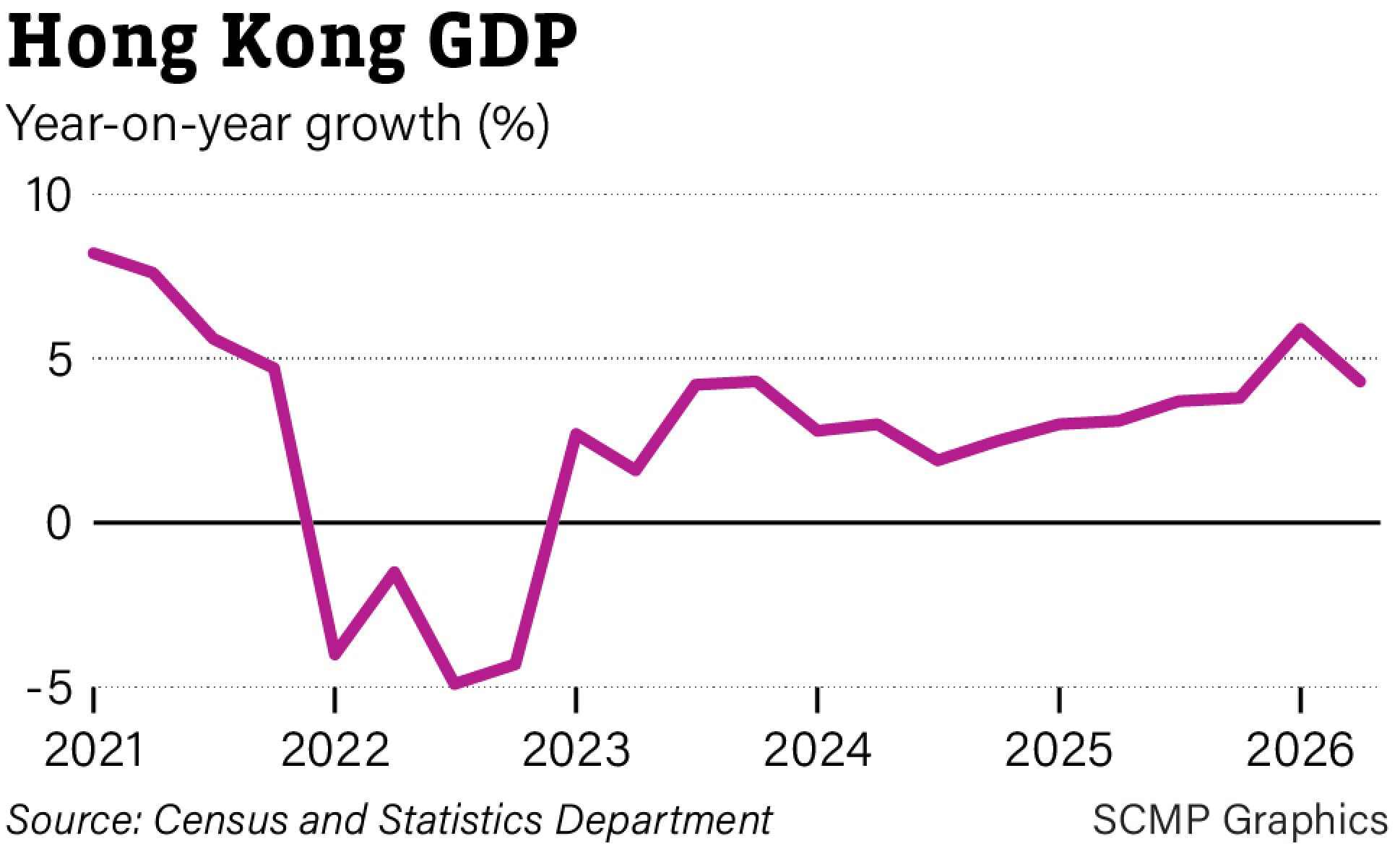
In the first quarter of this year, Hong Kong’s GDP saw its strongest quarterly growth in nearly five years. The growth was 5.9 per cent year on year.
“This macro-driven growth is expected to eventually stimulate local consumption, but the traditional retail and catering sectors are still facing severe hardships,” lawmaker Peter Shiu Ka-fai said.
Retail sales rose only slightly between 2023 and 2025.
Shiu added that bricks-and-mortar industries, such as retail and food and drink, were being squeezed by a shift towards cross-border shopping, both via e-commerce and travel to the mainland. They would need time to adapt.
Amid the backdrop of US-China tensions and the US-Israel war on Iran, Chief Executive John Lee Ka-chiu has been trying to create new sources of growth. He is pressing on with investments in technology and innovation, such as the Northern Metropolis megaproject.
Willian Chu, 65, is a logistics worker who lives in a subdivided flat in Sham Shui Po. He fears that the Northern Metropolis may lead to smaller social subsidies for low-income groups.
Terence Chong Tai-leung is the executive director of the Chinese University of Hong Kong’s Lau Chor Tak Institute of Global Economics and Finance. Chong said the Northern Metropolis had yet to deliver real benefits to low-income workers, as it was still in development.
Staff writers
Question prompts
1. Which of the following statements is false, according to the information in News?
(1) Hong Kong’s economy has become stronger after the pandemic.
(2) The geopolitical tension between China and the United States is the only international issue holding back Hong Kong’s economic recovery in recent years.
(3) This year, Hong Kong’s gross domestic product (GDP) had stronger growth than it did before 2021.
(4) Hongkongers are heading to mainland China for holidays and weekends, causing challenges for the city’s shops and restaurants.
A. (1), (2) only
B. (1), (3) only
C. (2), (3) only D. (3), (4) only
2. How do workers like Molly Lam and Willian Chu feel about the government’s plans to invest in innovation and technology? Why do they feel that way?
3. What are some challenges that bricks-and-mortar industries are facing? Suggest ONE way to address the problem.
Graph 1 (GDP growth)
Question prompts
1. Note TWO observations about the year-on-year growth of Hong Kong’s gross domestic product (GDP) from 2021 to 2026.
2. Do you think growth in the city’s GDP reflects how most people in Hong Kong are faring? Explain using examples from News.
Issue: Struggles of local businesses amid Hong Kong’s economic changes
-
Despite the city’s investments in innovation, a biotech start-up describes the hurdles they still face
-
Traditional companies are also turning to technology in hopes of reducing their losses
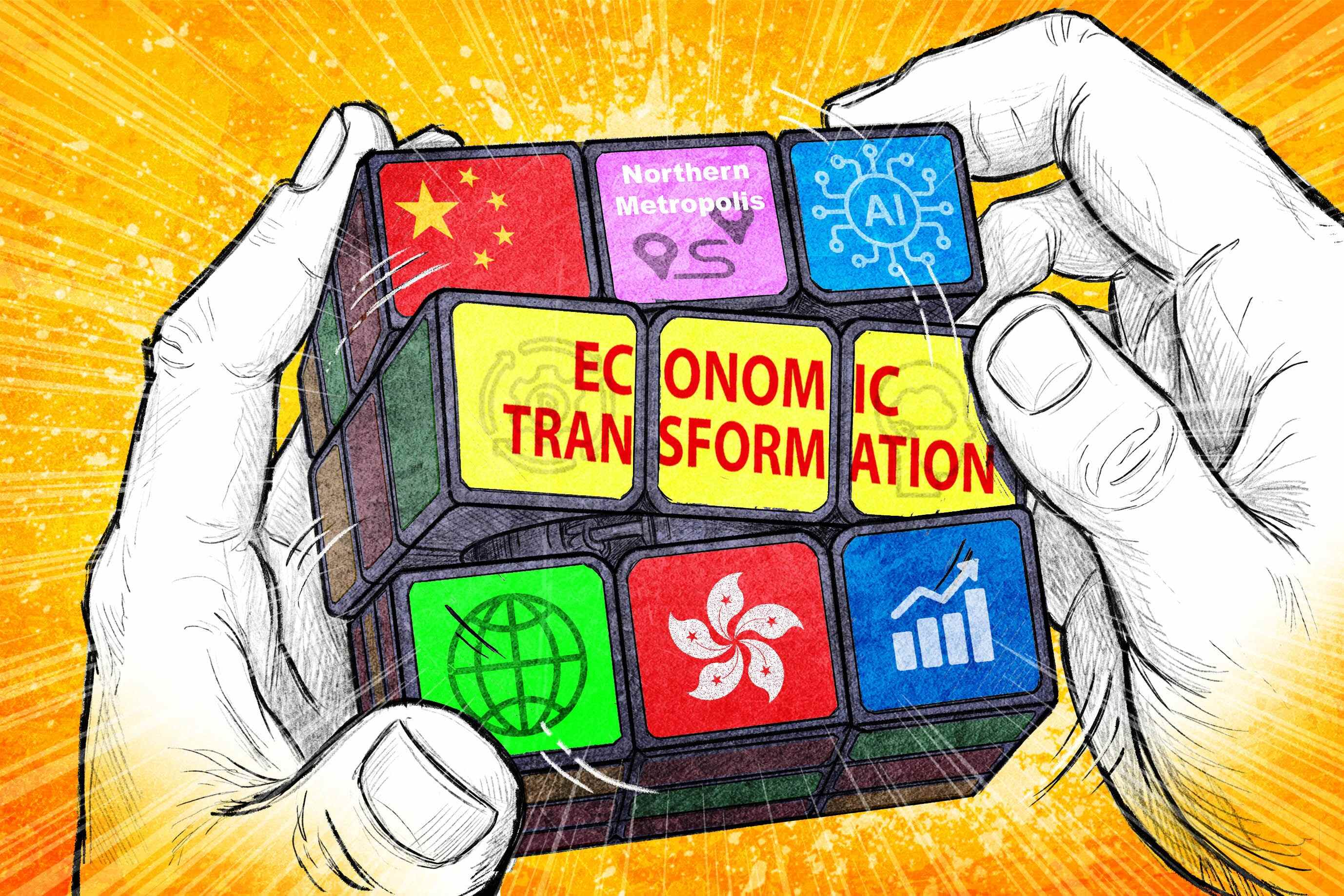
Hong Kong General Chamber of Commerce CEO Patrick Yeung Wai-tim said the city’s economic transformation would inevitably cause some pain during the process.
“Hong Kong is finding its direction of transformation, but success is not guaranteed, and everyone must work hard,” he said.
Sue Lam Wai-han is the chief operating officer of biotech start-up Pentide Therapeutics, based in Hong Kong’s Science Park. She felt the Northern Metropolis was strategically vital to the city’s development but said the emphasis was on attracting larger corporations and multinational pharmaceutical companies.
Lam, 49, said pharmaceutical start-ups such as Pentide needed clinical trial support, the capacity to manufacture their products to quality assurance standards and efficient regulatory and approval processes. The government has pledged to build an ecosystem for this.
“There are products and infrastructure, but there is a missing link in clinical trials,” she said. “We are desperate to start a clinical trial, which is crucial for a biotech start-up like us.”
Pentide focuses on developing innovative drug delivery methods, such as nasal sprays, to enhance treatment effectiveness.
To bridge funding gaps, they have tried to generate revenue by branching into health supplements while hoping the government will connect them with pharmaceutical factories.
“The road to success is very rough,” Lam said.
Sunny Lo Hoi-kwong, chairman of the fast-food chain operator Cafe de Coral Holdings, described last year as a period of restructuring to adapt to the city’s new spending patterns.
He said the group closed underperforming outlets, expanded into new residential areas and provided more discounts, offers and menu options. It also adopted digital tools and AI, improved efficiency and controlled overheads and rental expenses. Its workforce shrank by 8 per cent to 17,444 employees as of March 31, compared with a year earlier.
Lo said these measures helped Cafe de Coral recover some lost ground in the second half of 2025, but net profit still fell 29.4 per cent to HK$164.1 million in the financial year ending March 31.
“In tough times, a purely defensive strategy is not enough. After the setbacks of the first half [of 2025], we have regrouped and recovered – and are now ready to return to offence,” he said.
Kenny Shui Chi-wai, vice-president of Our Hong Kong Foundation think tank, said rapid AI transformation was opening new avenues for business survival. Rather than relying solely on top-line consumer growth, many firms were successfully deploying generative AI and automation to cut operating costs, optimise logistics and improve overall operational efficiency, he added.
Staff writers
Question prompts
1. According to Sue Lam, what do pharmaceutical start-ups need if they are to succeed alongside the Northern Metropolis project?
2. What has been Cafe de Coral’s strategy to adjust to Hongkongers’ reduced spending? How is this related to Kenny Shui’s comment?
3. Would Kenny Shui’s advice be helpful for the business and workers mentioned in News? Explain.
Graph 2 (Unemployment rate)
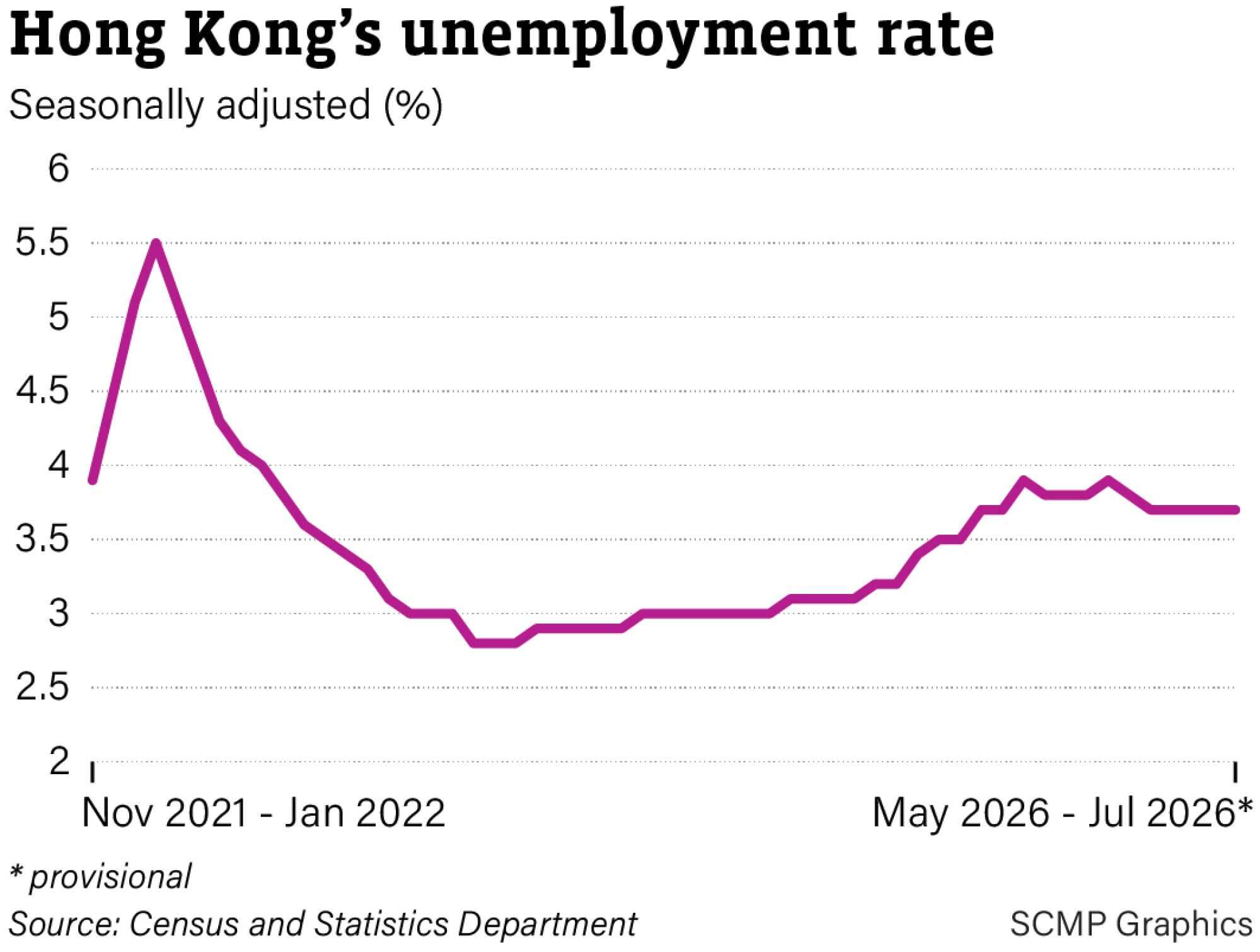
1. Note and describe TWO observations about Hong Kong’s unemployment rate.
2. What impacts could Hong Kong’s investment in innovation and technology – such as the Northern Metropolis – have on employment in different sectors? Explain using information from News, Issue and your own knowledge.
Glossary
-
domestic spending: refers to the overall spending by households, businesses and government entities on goods and services within a specific country or region. In Hong Kong, people are spending less money in the city because many are going to mainland China for dining and entertainment.
-
gross domestic product: the value of all goods and services produced by a place in a year
-
bricks-and-mortar industries: traditional businesses that operate out of physical shops, such as retail, hospitality, dining and entertainment
-
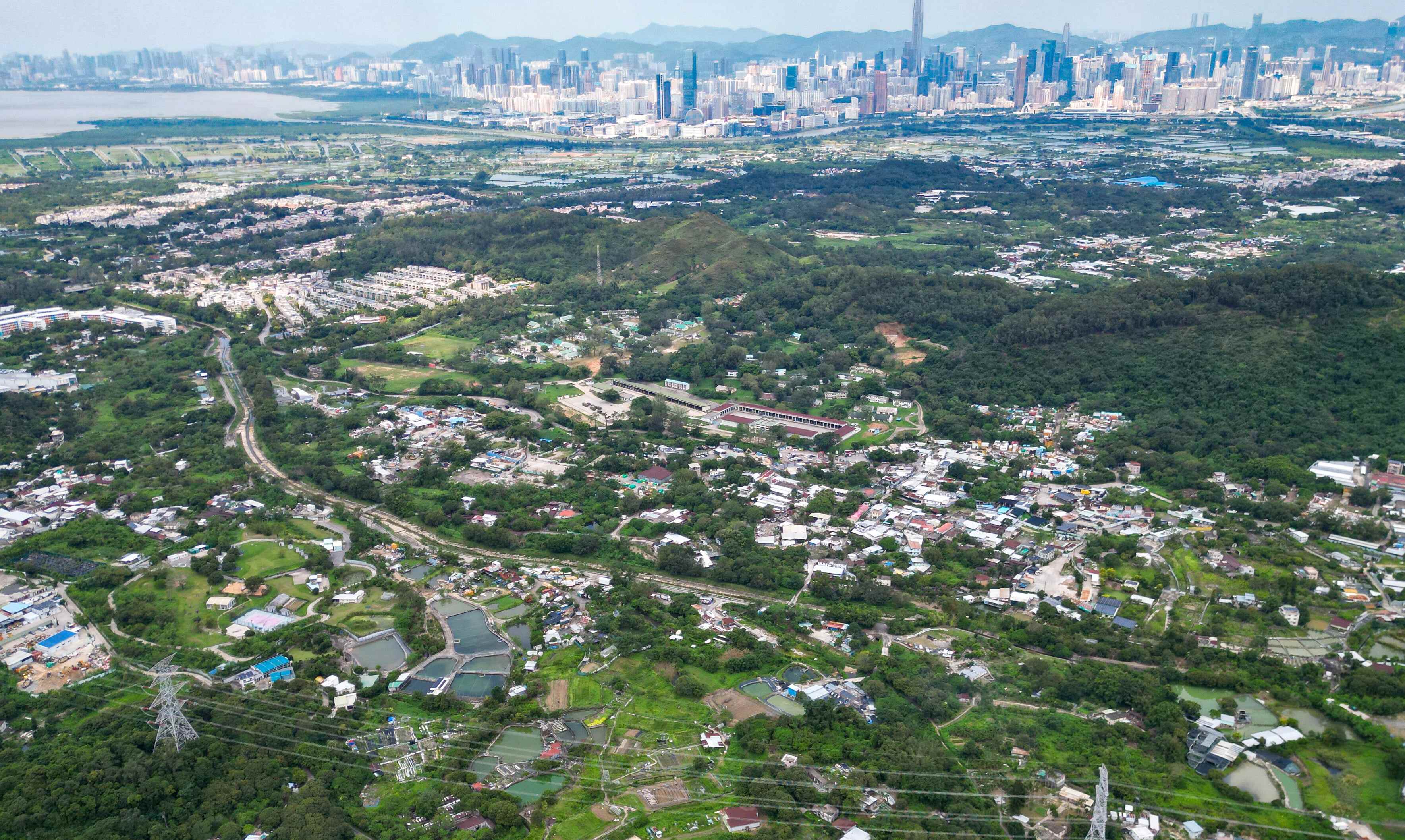
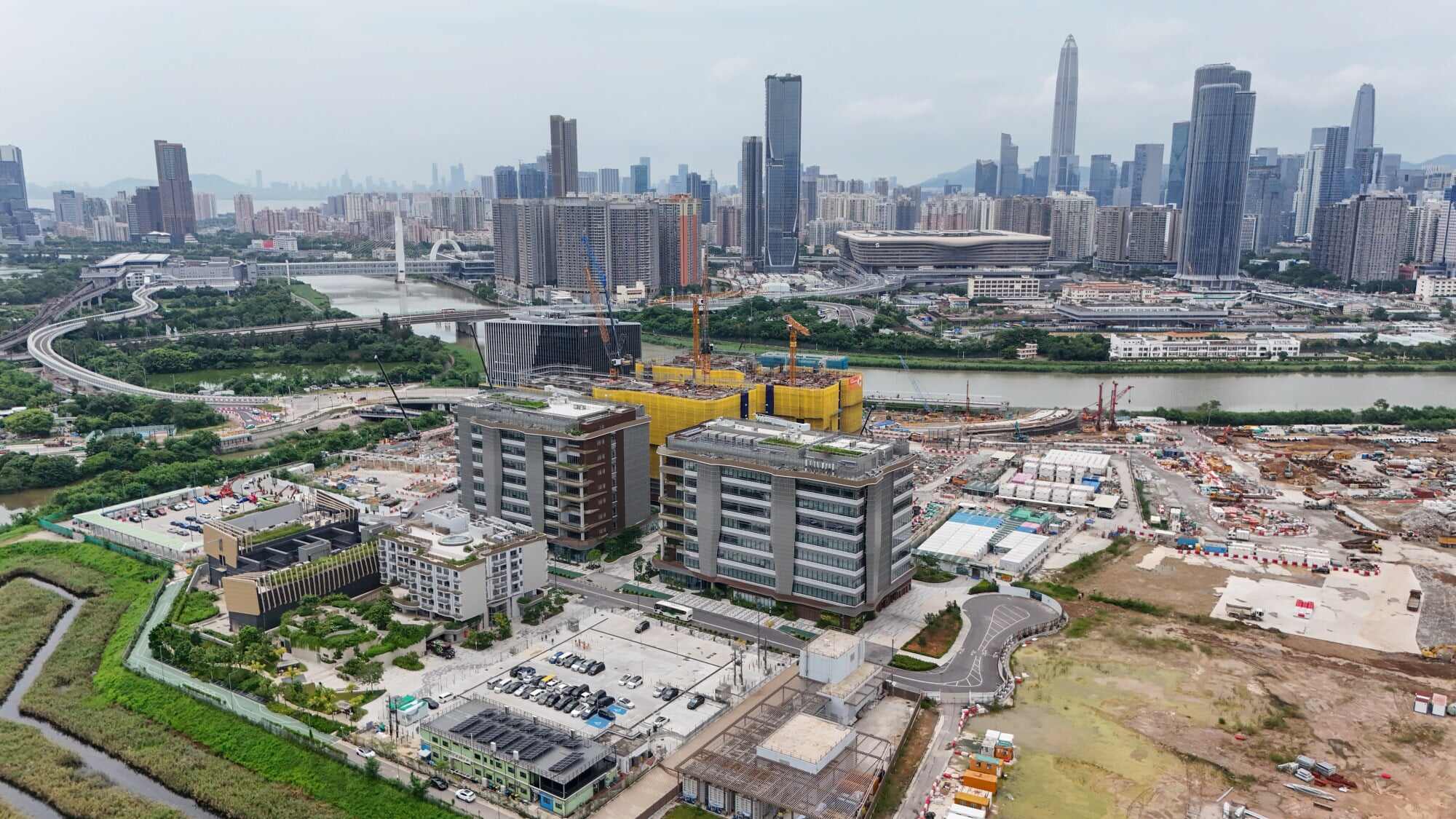
Northern Metropolis: a project that aims to transform 30,000 hectares of land along Hong Kong’s border with Shenzhen into a housing hub, a university town and an innovation-driven economic engine
-
ecosystem: a network of many different groups, services and resources that work together to support an industry
-
top-line consumer growth: growth in revenue from selling goods and services to consumers, before subtracting any operating expenses, taxes or discounts
Sample answers
News
-
C
-
They feel ambivalent or negatively about these plans because they think investment in innovation and technology will not have a positive impact on them and could even harm them by leading to a reduction in subsidies for low-income groups.
-
There has been a shift towards cross-border shopping, both via online e-commerce and travel to the mainland. The rent is also getting more expensive. The government can address this problem by capping rent increases for small and medium-sized businesses. This way, these businesses can have more room to offer deals that entice people to spend. (accept all reasonable answers)
Graph 1 (GDP)
-
The city’s GDP saw a severe downturn from 2021 to 2022 because of the Covid-19 pandemic. The economy has been recovering since 2023 but has not reached pre-pandemic levels. (accept all similar answers)
-
GDP only reflects the overall economy, but it can’t reflect how widely this growth is distributed among different industries and people with different income levels and jobs. For example, retail sales have only risen slightly while GDP has grown. Restaurants like Time To Gold are not getting enough customers. Many low-wage workers are still worried about having no safety nets. (accept all reasonable answers)
Issue
-
They need support for clinical trials, capacity to make their products following the quality assurance standard, and efficient regulatory and approval processes.
-
Closing underperforming outlets, expanding in new residential areas and adopting digital tools and AI to improve efficiency have been part of Cafe de Coral’s strategy. This last part is related to Kenny Shui’s comment because Cafe de Coral is no longer relying only on top-line consumer growth. Now, it is also cutting operating costs by improving efficiency with AI tools.
-
No, because his advice means that low-wage workers like Molly Lam and Willian Chu could lose their jobs. Time to Gold also aims to support the elderly by hiring them, so replacing them with AI would be against their mission. (accept all reasonable answers)
Graph 2 (unemployment rate)
-
Unemployment reached a peak around the beginning of 2022 during the height of the Covid-19 pandemic. More people were able to find jobs in 2022, but starting around 2024 and continuing into 2026, unemployment has been on the rise. (accept all similar answers)
-
These investments could boost employment in start-ups like Peptide, which will have more support and infrastructure to develop their technology. Investing in technology and AI could help companies like Cafe de Coral further streamline their business, but this could result in low-wage workers losing their jobs. At the same time, with the growth of new towns in the Northern Metropolis, Cafe de Coral could expand its restaurant outlets to new areas and hire more people to work there. (accept all reasonable answers)