Content provided by British Council
Read the following text and answer the quiz below.
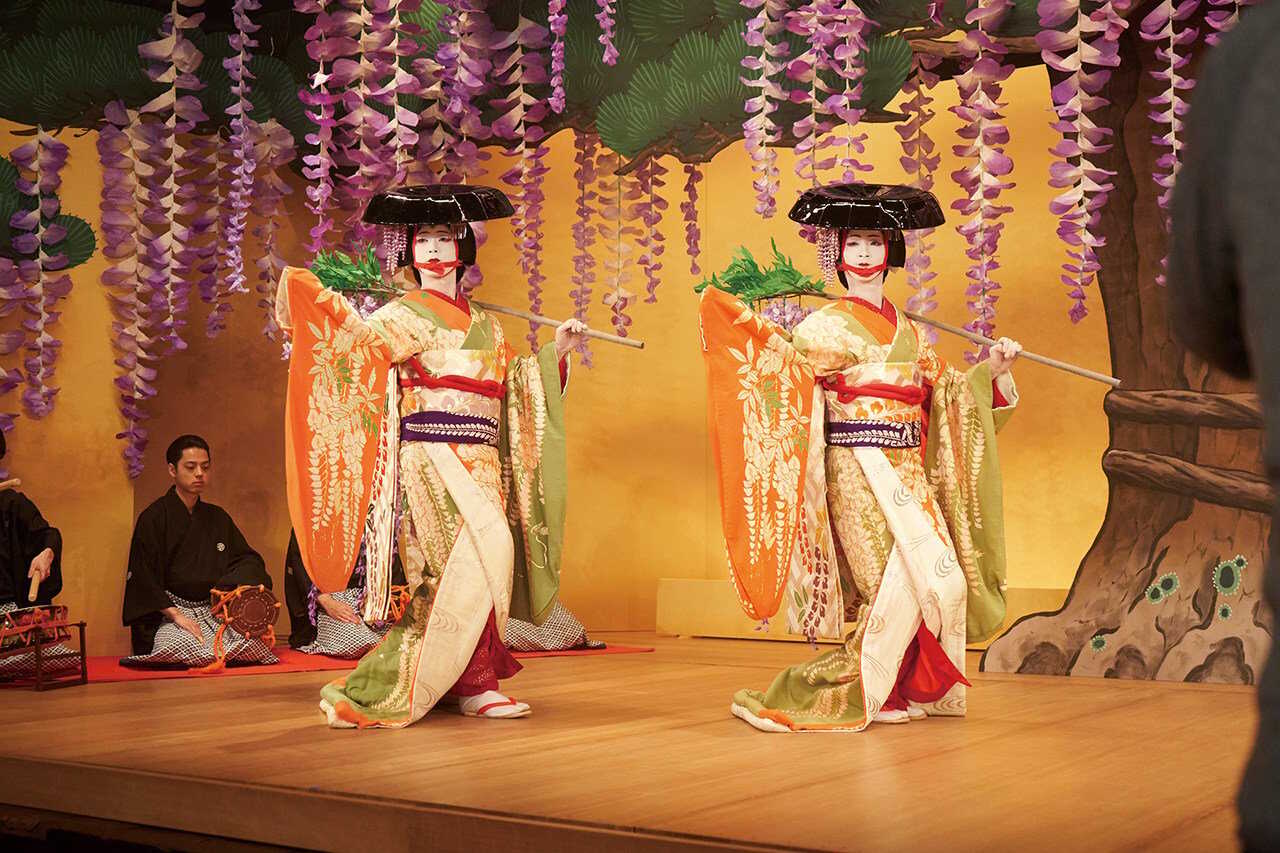
[1] Modern film has shown that it can breathe new life into traditional art forms, particularly in Japan, where live-action films have historically struggled to make a lasting cultural mark. Kokuho, which focuses on the classical Japanese theatre art of kabuki, has not only become a surprise box office hit in Japan but has rekindled public interest in the centuries-old performing art.
[2] Portraying a captivating mix of onstage action with beautiful costumes and personal dramas within insular kabuki circles, the film starring Ryo Yoshizawa grossed 12.4 billion yen (HK$648 million) between its nationwide release on June 6 and the end of August. In Japan, anime titles and foreign blockbusters have dominated the box office charts for decades. But Kokuho, which translates as “national treasure”, is already the second highest-grossing domestic live-action film. Kokuho has leapfrogged Antarctica, a 1983 real-life story of a pack of dogs abandoned on the icy southern continent by scientists, to place just below the 2003 police action-comedy Bayside Shakedown 2, which raked in 17.3 billion yen.
[3] Its nearly three-hour run time has not dissuaded filmgoers, and its popularity has, in turn, fuelled renewed interest in kabuki culture as well as Shuichi Yoshida’s novel on which the film is based. Volumes one and two of the paperback have sold a combined 1.5 million copies, while Kabuki Techo, a magazine about kabuki published by the Japan Actors’ Association and others, has seen increased interest. “More and more people are interested in learning about kabuki,” said a representative of the association.
[4] The story of Kokuho centres on Yoshizawa’s Kikuo, the son of a yakuza clan member who is adopted by a prestigious kabuki family and raised alongside Shunsuke, the kabuki master’s son and heir, played by Ryusei Yokohama. The film depicts Kikuo’s struggle to rise in the kabuki world through talent rather than lineage, overcoming hardship and refining his art with the support of others. His ultimate aim was to be recognised as a “living national treasure”.
[5] Theatre critic Shoko Kodama, a kabuki specialist, praised the film. She attributed its success to its “refreshing aftertaste” and visuals. “The two actors’ performances and the costumes were so beautiful that I didn’t even notice the running time,” she said. Kodama also drew comparisons with popular geidomono films – a genre portraying artists overcoming rigorous training and barriers of lineage and talent – such as The Story of the Last Chrysanthemums by Kenji Mizoguchi. She noted that while Kokuho remains a dreamlike story distinct from reality, it cleverly connects memorable scenes while leaving audiences to imagine the harsher struggles that must have occurred in between.
[6] Young kabuki actor Ichiya Kataoka, who, like Kikuo, entered the profession as an outsider, called the story strikingly contemporary. “It’s very [modern], how it depicts the efforts of the privileged son Shunsuke and avoids creating obvious villains,” he said. Kataoka added that he hoped the tale of Kikuo and others in the movie could convey the passion of kabuki performers to those unfamiliar with the art. “Why do we dedicate ourselves to this timeless art form? I can only say it’s because we love it.”
Source: Kyodo, September 21