Content provided by British Council
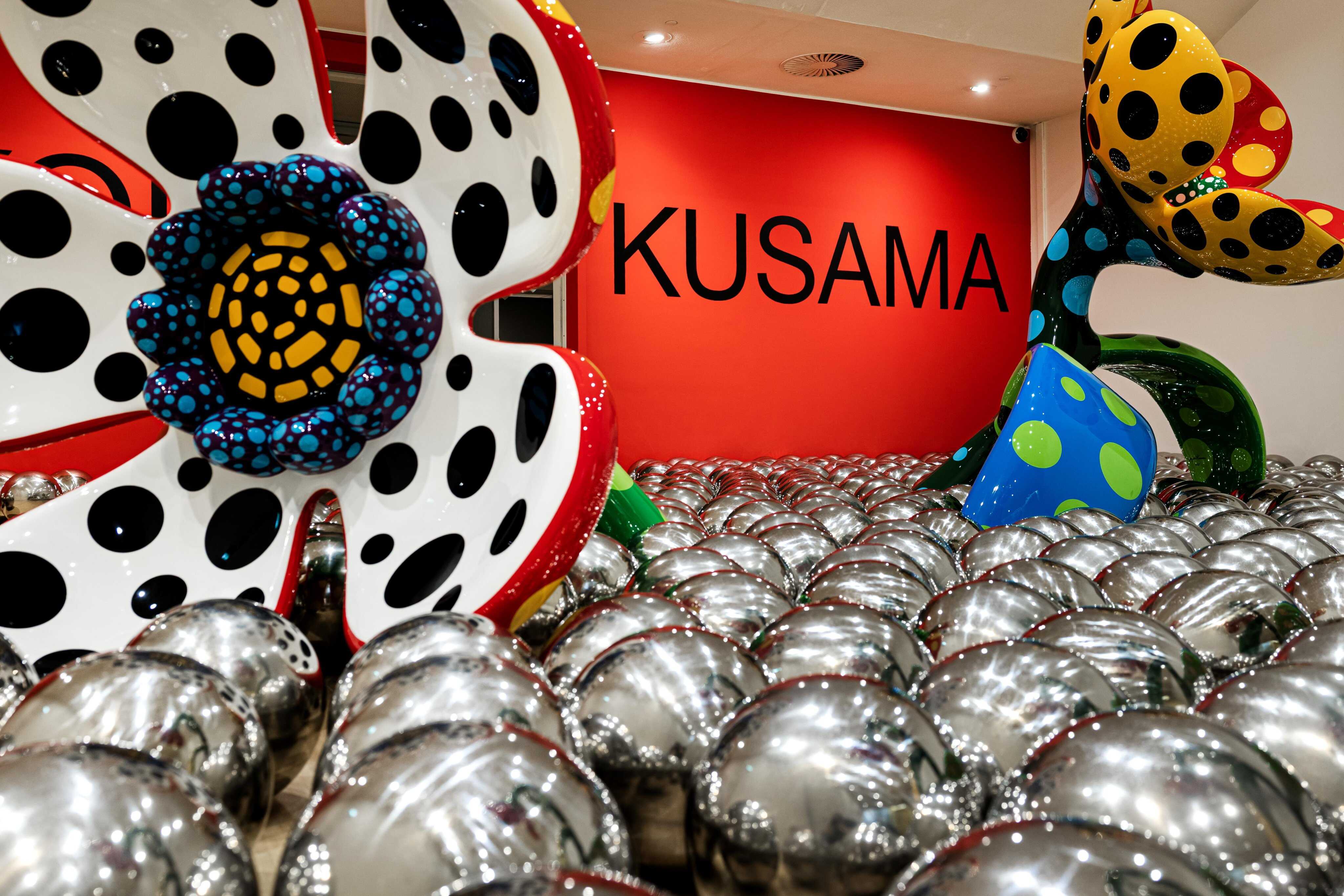
[1] More than 300 works by Japanese contemporary artist Yayoi Kusama went on display in Amsterdam earlier this month. The exhibit has become a tribute to the “polka dot queen,” who died in August. The exhibition at Amsterdam’s Stedelijk Museum features dozens of ceramics, etchings, and drawings from Kusama, one of the world’s best-known artists, as well as her trademark polka dot pumpkins.
[2] Around 50 of the pieces have never been displayed before, said curator Leontine Coelewij. She pulled together works from several museums in Japan, including in Tokyo and Kusama’s birthplace, Matsumoto. “I think the show will be a highlight for people who do not know the work of Kusama, but also [for] people who’ve seen her work on several occasions,” Coelewij told Agence France-Presse. “I think there will be many surprises,” the 62-year-old curator added.
[3] The centrepiece of the exhibition is a huge “infinity room” with black walls covered with yellow polka dots, featuring mirrors that give visitors the disorienting impression that the dots are never-ending. Kusama died aged 97, after a career spanning 70 years, during which her work was exhibited around the world.
[4] She channelled hallucinations and well-documented battles with mental illness into vibrant art that inevitably featured polka dots – how she saw the world. “What I think is very characteristic of Kusama is that for her, making art and drawing what went on in her mind was a way to deal with the difficult issues she had,” Coelewij said. “Art can be like a healing power.”
[5] After studying art in Japan, Kusama moved to the United States in the late 1950s, becoming a leading figure in New York’s avant-garde scene. On her return to Japan in the 1970s, she checked herself into a Tokyo psychiatric hospital, where she lived and worked right up to her death.
[6] News of her death came as the Amsterdam exhibition was being installed. “We were very sad when we heard the news ... On the other hand, we could say that this exhibition is a great celebration of her work, a tribute to a wonderful life and a wonderful body of work,” Coelewij said. Curators decided not to make any changes to the exhibition, as they had worked with Kusama on the composition. “This is how she wanted the show to be,” Coelewij explained.
[7] But Coelewij said she felt a weighty responsibility to put on an exhibit that has come to mark what she called a “full stop” on Kusama’s career. “So we can take a step back and look at her work and see this as a marvellous tribute to what she has done through the years, more than 70 years of making art,” she said.
Source: Agence France-Presse, September 9