Content provided by British Council
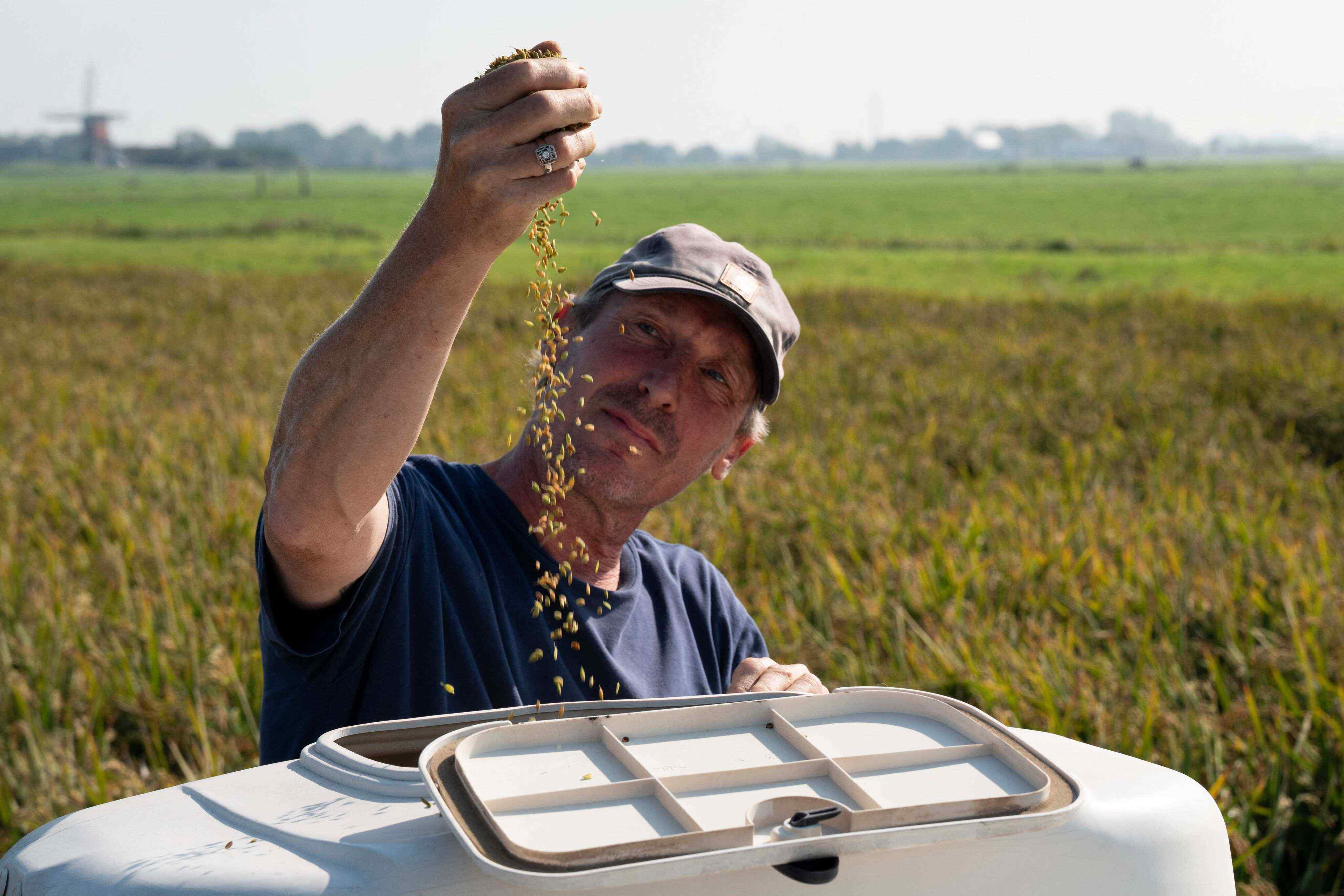
[1] In a soggy field between Amsterdam and The Hague, farmer Sander Roeleveld ploughs a small white combine harvester into his crops, gathering a grain never before harvested in the Netherlands: rice. The surroundings could scarcely be more Dutch. Canals criss-cross land lying two metres below sea level. Windmills grace the horizon as cows – for centuries the country’s agricultural staple – graze in the nearby grassland.
[2] But the warming climate is allowing Dutch farmers to produce wine and even experiment with rice, previously unthinkable in such a wet, temperate country. Researchers behind the scheme hope rice cultivation could help address one of the country’s most pressing environmental challenges: peat soils – made from decomposed organic materials – that are sinking as they dry out, pushing parts of the low-lying Netherlands ever lower.
[3] “It’s extraordinary,” said Philippe Terheggen, chairman of the Land van Ons association that has provided the fields for the rice harvest. “We would never have thought ... that we would be able to grow rice in the Netherlands,” the 68-year-old told Agence France-Presse. “But it’s also scary because it tells you what is possible ... now [that] the climate has changed.”
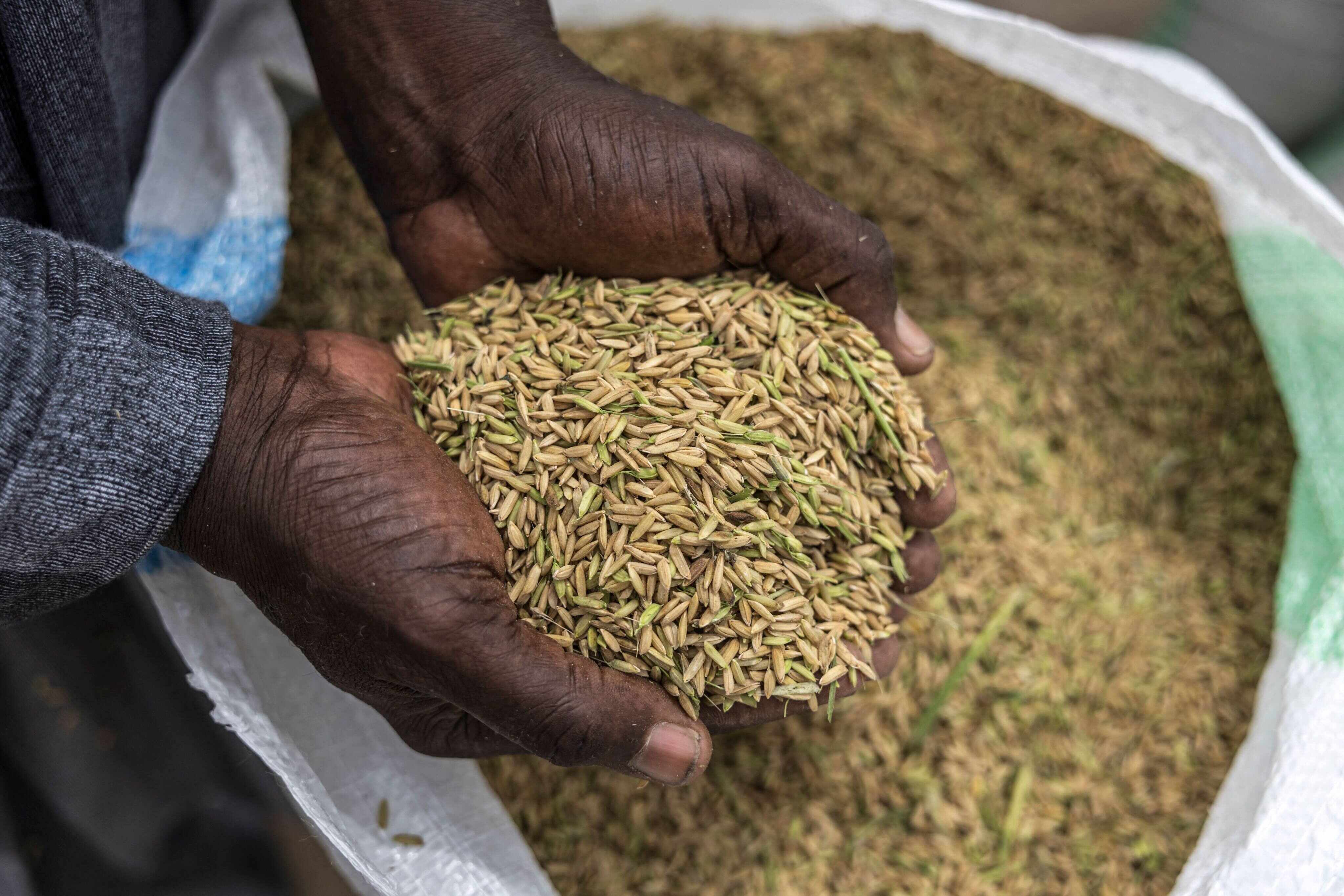
[4] For now, the project is a pilot scheme, consisting of just 1.5 acres, with organisers hoping to produce around three tonnes of short-grain rice suitable for sushi or risotto. The team is working with 30 different rice cultivars from as far as Russia and Japan to see which grows best in the Dutch climate.
[5] The project is about more than crop diversification. Researchers believe it could help tackle one of the Netherlands’ most persistent environmental problems. Roughly one-tenth of the country is peatland, which farmers drain for grass to feed their cattle. As the peat dries out, it releases millions of tonnes of carbon dioxide while causing the land to subside by up to several centimetres a year in the worst-affected areas.
[6] According to Wageningen University, greenhouse gas emissions from Dutch peat soils account for around two to three per cent of the country’s total emissions. The only way to resolve this vicious cycle is to keep the fields wet, but then farmers would have nothing to grow there – until now.
[7] “Rice is an opportunity for this part of the world to adapt to climate change, to grow something that previously wasn’t possible,” said Julian Helfenstein, a researcher from Wageningen University and Research, who is piloting the project along with colleagues from nearby Leiden University. “But also to mitigate climate change because it stops this peat from degrading and emitting all the CO2 because you can keep it wet.”
[8] The peat issue affects not just the Netherlands, but much of northern Europe, including Germany, Belgium, even the Baltic states, he said. Helfenstein and his team are closely monitoring CO2 and methane emissions from rice cultivation compared with maintaining grassland to ensure the cure is not worse than the illness.
Source: Agence France-Presse, October 1