Read the following text and answer the quiz below.
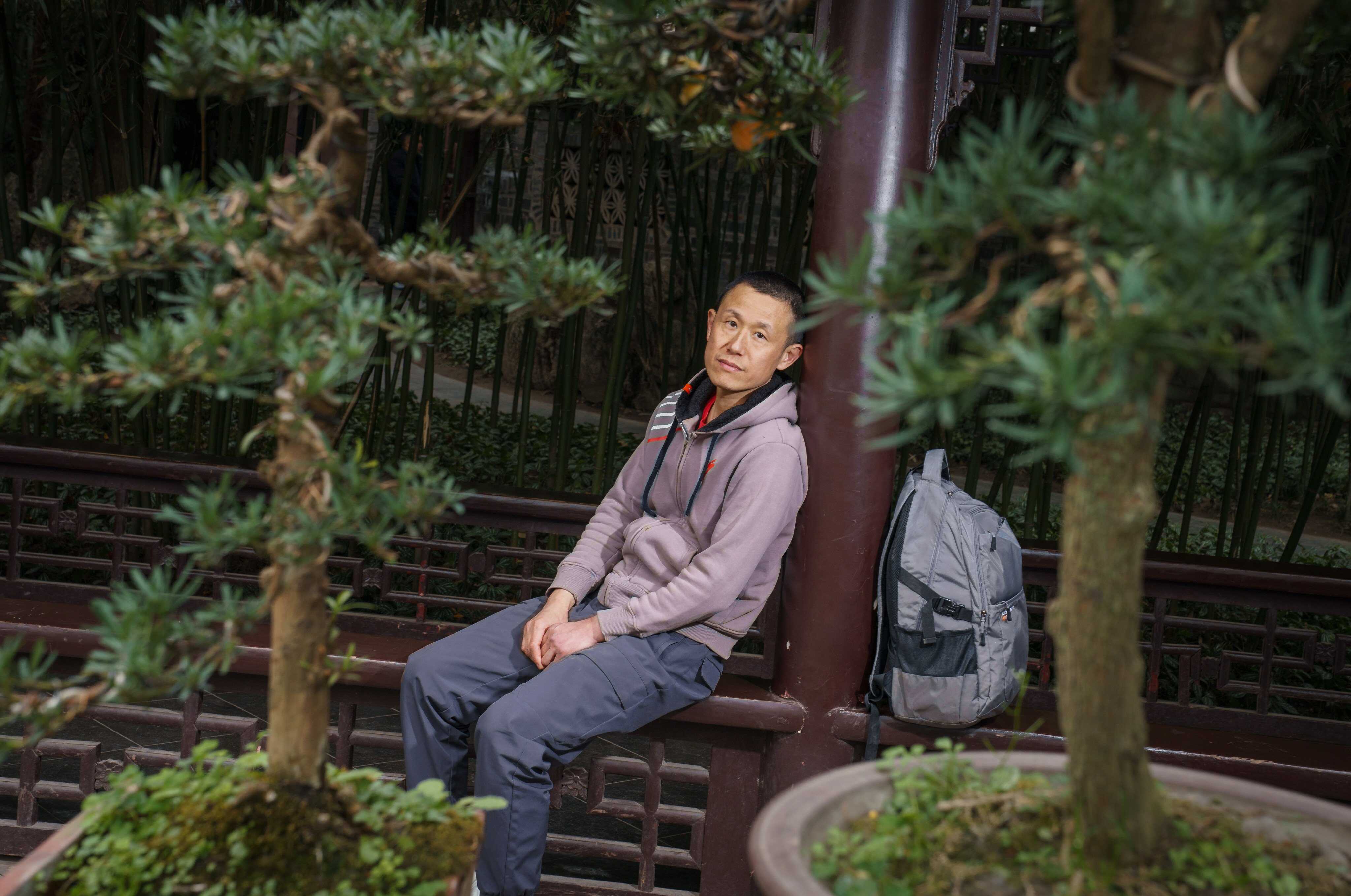
[1] In a quiet corner of a public library in Chengdu, in China’s Sichuan province, a 47-year-old man writes in his notebook. Few would guess he is Hu Anyan, the award-winning author of I Deliver Parcels in Beijing, a memoir that has sold more than two million copies. Hu will make a rare public appearance at the Hong Kong International Literary Festival from March 1 to 8, as his work expands globally with an English translation and a French version forthcoming.
[2] The memoir introduces Hu as an unlikely hero: a man who has held 19 jobs since leaving school – from appliance repairman to courier – but insists he is not a social critic, just an “honest recorder”. “Contrary to what many believe, truthful narratives are rare,” he said. “Many readers have said I articulated their feelings. Some even called me their ‘voice’. But I never intended that.”
[3] In December 2019, Hu was laid off from a courier company after years of low-wage jobs. During China’s pandemic lockdowns, he began writing journals on the social media site Douban. One post about his experience as a night-shift sorter in Shunde went viral in April 2020. This resulted in I Deliver Parcels in Beijing, a visceral tour of China’s service economy – cramped deliveries, managerial scorn and the toll of freelance work.
[4] His narrative resonates in an era of job insecurity. While Gen Z is often criticised as lazy, Hu offered a different view. “Laziness and not working hard are not moral flaws. Actually, I’m lazy too. As long as a person doesn’t break the law or hinder others, how they live is their freedom.” Though he seems diligent, Hu admitted to periods when he didn’t work, lived on savings, and read and wrote. In 2014, he set up a street stall in Yunnan. “That period was relaxed and free for me. Other people could think otherwise, but there’s no one-size-fits-all answer for balancing work and life.”
[5] Hu contrasted this personal freedom with a broader, harsher economic reality shaped by China’s vast population. “The country has a population of over 1.4 billion. The abundant labour force has led to a general devaluation of labour,” he said, citing constant threats from managers that replaceable workers could be easily fired. “At a company I worked for, the supervisor berated us daily with words like, ‘Anyone who doesn’t want to work can get lost, there are plenty of people who want to.’”
[6] Today, Hu lives simply in Chengdu, freed from financial pressure by his book’s success and frugal lifestyle. With no children and his parents gone, he treats writing as a pursuit without pressure. “I don’t have any specific work plans. I will continue reading and writing, but I won’t force myself. The world doesn’t lack mediocre writing, and I have received enough affirmation already. From now on, there’s no need to write solely for money or publication.”
Source: South China Morning Post, January 28
Content provided by British Council