A Japanese water plant is harnessing the natural process of osmosis to generate renewable energy that could one day become a common power source.
The possibility of generating power from osmosis – when water molecules pass from a less salty solution to a more salty one – has long been known.
But actually generating energy from the process has proved more complicated, in part because of how difficult it is to design the membrane the molecules pass through.
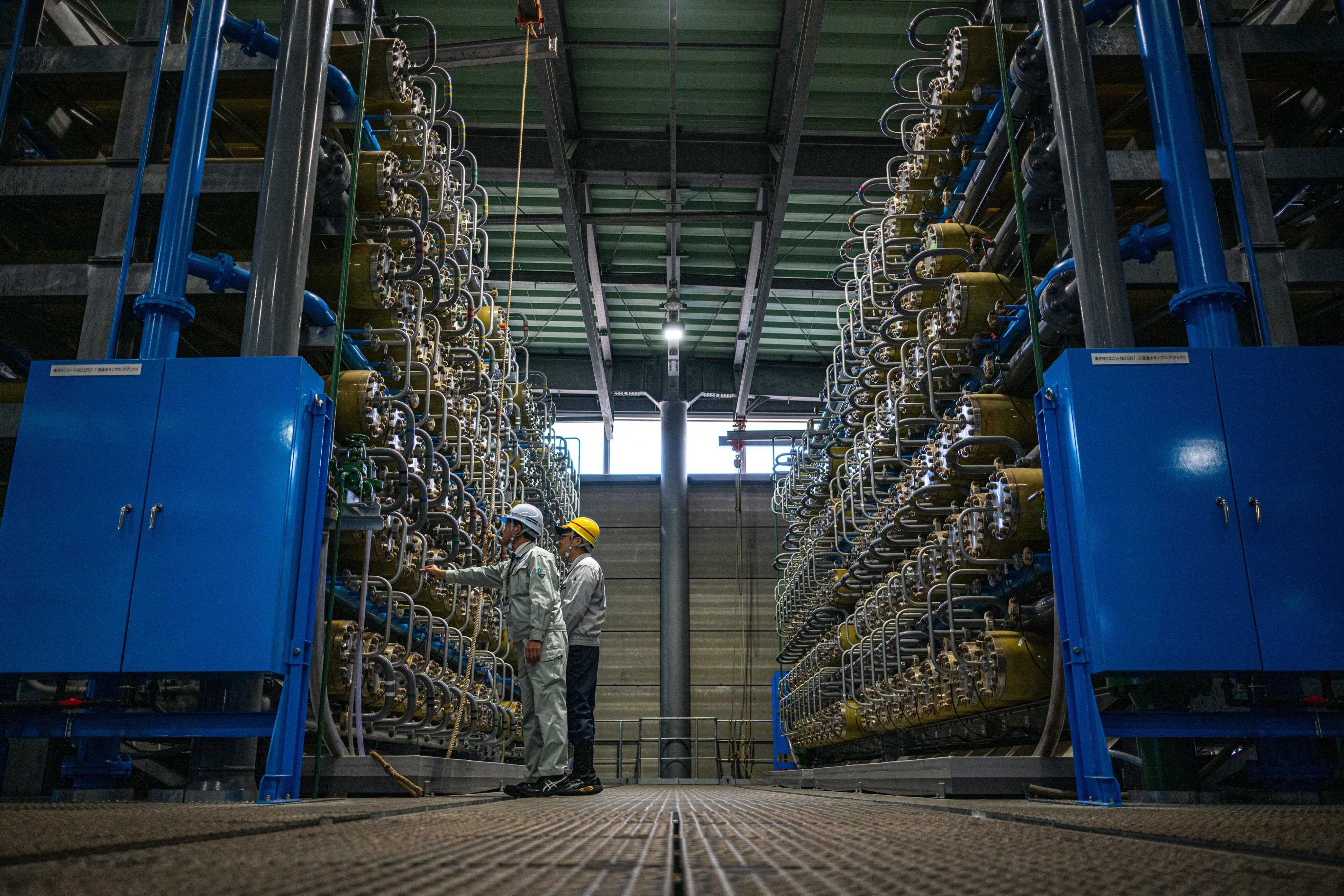
Engineers in the city of Fukuoka and their private partners think they might have cracked it, opening what is only the world’s second osmotic power plant.
It generates power by transferring molecules between treated sewage water and concentrated seawater, a waste product from the city’s desalination plant.
“If osmotic power generation technology advances to the point where it can be practically used with ordinary seawater … this, in turn, would represent a major contribution to efforts against global warming,” said Kenji Hirokawa, manager at Sea Water Desalination Plant.
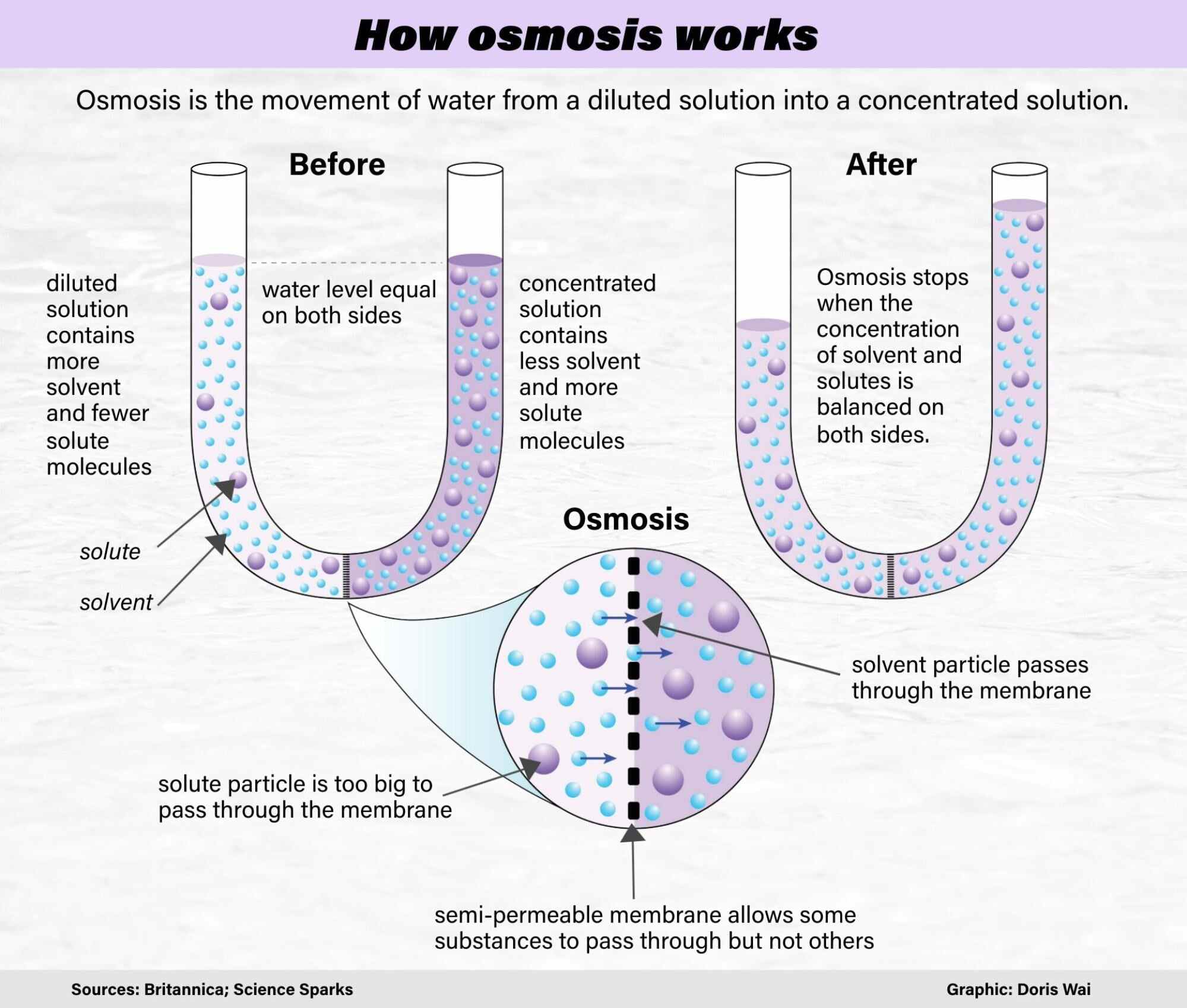
Osmosis is familiar to most people. It is the process by which water molecules move across membranes from an area of low solution concentration to an area of higher solution concentration (see graphic). At scale, that movement can be significant enough to turn a turbine and generate electricity.
Desalination solution
Fukuoka is well-placed to benefit from the technology because it has a readily available source of extremely salty water – the brine leftover from desalination.
With no major rivers to adequately supply its water, the city and the wider Fukuoka region of 2.6 million people have relied on a major desalination plant to produce drinking water since 2005.
That left the city with large quantities of concentrated saline waste water to deal with. Ordinarily, it is diluted and released back to the sea. Previous attempts to find alternatives, including salt making, have failed.
Then, engineering firm Kyowakiden Industry approached the city about harnessing the salty waste water for osmotic power.
“When our company rolls this out as a business, we aim to build plants roughly five to 10 times the scale of this current facility,” said Tetsuro Ueyama, research and development manager at the Nagasaki-based company.
The 700-million-yen (HK$34 million) power generation system came online in August. Once running at full capacity, it should generate up to 880,000 kilowatts annually, equivalent to the electricity consumption of 300 households.
Still, it will remain devoted to supplying the power-thirsty facility, although it covers just a tiny fraction of its energy needs.
Not ‘a pipe dream’
The engineers involved are dreaming big. The system will undergo a five-year test to monitor its performance, including costs and maintenance, particularly for the membrane and other parts exposed to salt.
Engineers admitted that, for now, the system’s power costs “a lot more” than either fossil fuels or renewable energy. Pumping water into the system also uses energy, and scaling up osmotic power for grid-level energy production has not yet been done anywhere in the world.
And the current high costs are partly due to the company having to build a one-of-a-kind power plant.
Still, officials and experts believe the power source has a future, noting that, unlike solar and wind, it is not dependent on weather or light.
How does the Fukuoka water plant use saline waste water and treated sewage to generate electricity?
A generator is attached to a local desalination plant located near a sewage treatment facility. It draws in highly saline waste water from the desalination plant and receives treated sewage.
The two streams of liquid flow through a series of chambers, where water molecules travel from the treated sewage towards the salty water.
That process increases the volume, pressure and speed of the saline water flow, spinning a turbine that generates electricity before the now-diluted mixture is discharged into the sea.