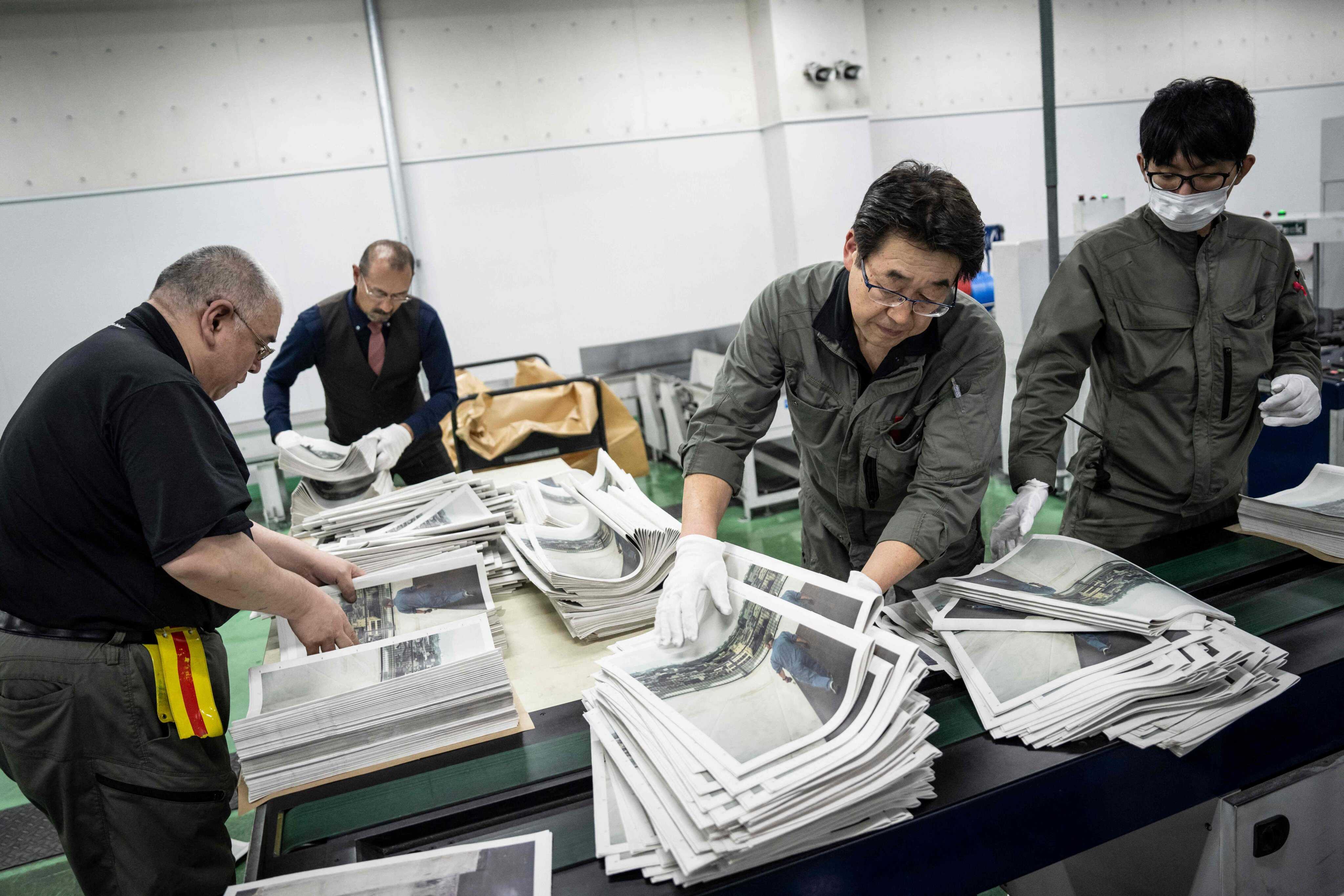
There’s a sound of rushing papers and whirring belts. Here, at a print factory in Kyoto, Japan, two creators watch their photo essay come to life on the page.
It’s part of an effort to win new audiences in the age of artificial intelligence (AI).
Despite the decline of the publishing industry, self-publication and handmade “zine” magazines are growing in popularity in Japan – reflecting the country’s enduring love of paper despite the digital era.
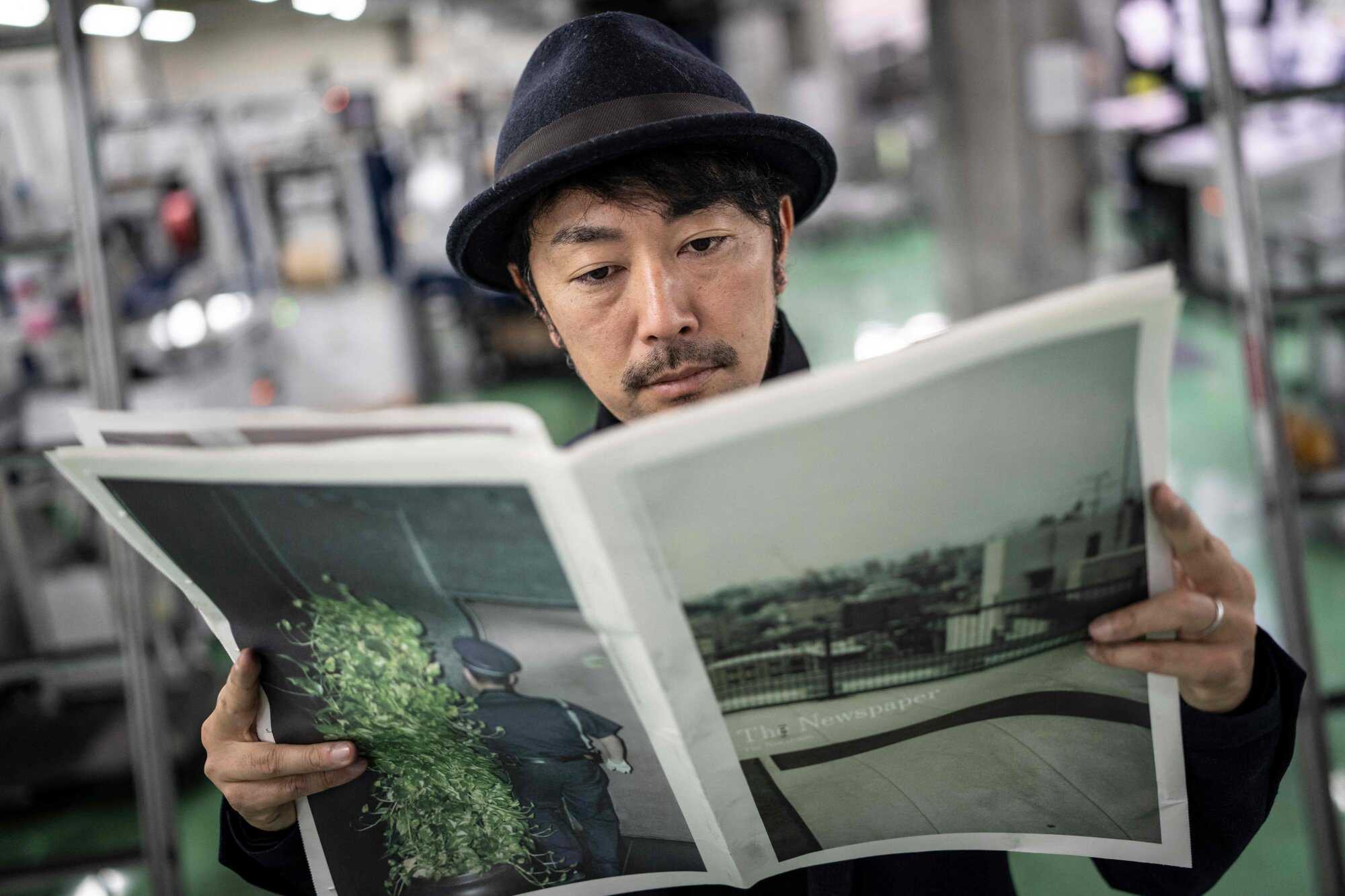
Kazuma Obara is one of these creators. His hands blackened by ink, Obara said paper “is a medium that engages all five senses” – unlike social media.
Obara, 40, and his creative partner Akihico Mori, 44, are among the artists who use a printing press offered by The Kyoto Shimbun newspaper, which has been seeking alternative uses for its machines as subscriptions fall.
As the machine printed their work on newsprint paper, five technicians in uniform quickly flipped through the pages to check the quality.
“I think print media is incredibly open,” Obara, a photographer, said. “You can hand it to someone, you can read it together.”
Mori, a writer, added that people can “feel the creator’s passion when they hold the work in their hands”.
“I think that’s what makes it so appealing, and AI simply can’t replicate it,” she said.
The pair’s work was showcased at the popular international photography festival Kyotographie, which ended in May.
Yoshihiko Okazaki of Kyoto Shimbun Printing said the company’s services have been used by artists ranging from teenagers to those in their 70s.
“Surprisingly, it resonates with younger people ... I even hear comments like, ‘it’s interesting precisely because it’s old’.”
Japan has seen a rapid decline in print media, with book and magazine sales falling to just 40 per cent of their 1996 pinnacle of 2.6 trillion yen (US$16.3 billion or HK$127 billion). Newspaper circulation peaked in 1997 at 53.76 million, but it dropped to more than half that in 2025, according to the Japan Newspaper Publishers and Editors Association.
Authors and publishers around the world fear that the decline will be accelerated by artificial intelligence and social media. In Britain, a 2025 study showed that 50 per cent of novelists believe AI is likely to replace their work.
However, as in other countries worldwide, do-it-yourself publication – including zines, a miniature magazine form that can be traced back to the Harlem Renaissance in the 1920s and was popularised by sci-fi fans in the US from the 1930s onwards – is growing in Japan, especially among younger people.
Japanese public broadcaster NHK reported, citing a private research firm, that the self-publishing market was estimated at 150 billion yen in the financial year ending March 2026, nearly double the figure four years ago.
On one weekend in Tokyo, visitors flocked to a zine fair showcasing handmade magazines in different sizes and formats. Some incorporated abstract designs, while others included photography or personal monologues.
“AI and social media are driven by algorithms that feed us nothing but what we want to see or what suits us best,” said 22-year-old visitor Harumi Kikuchi. “But the fact that many zine makers are here suggests there are many different world views.”