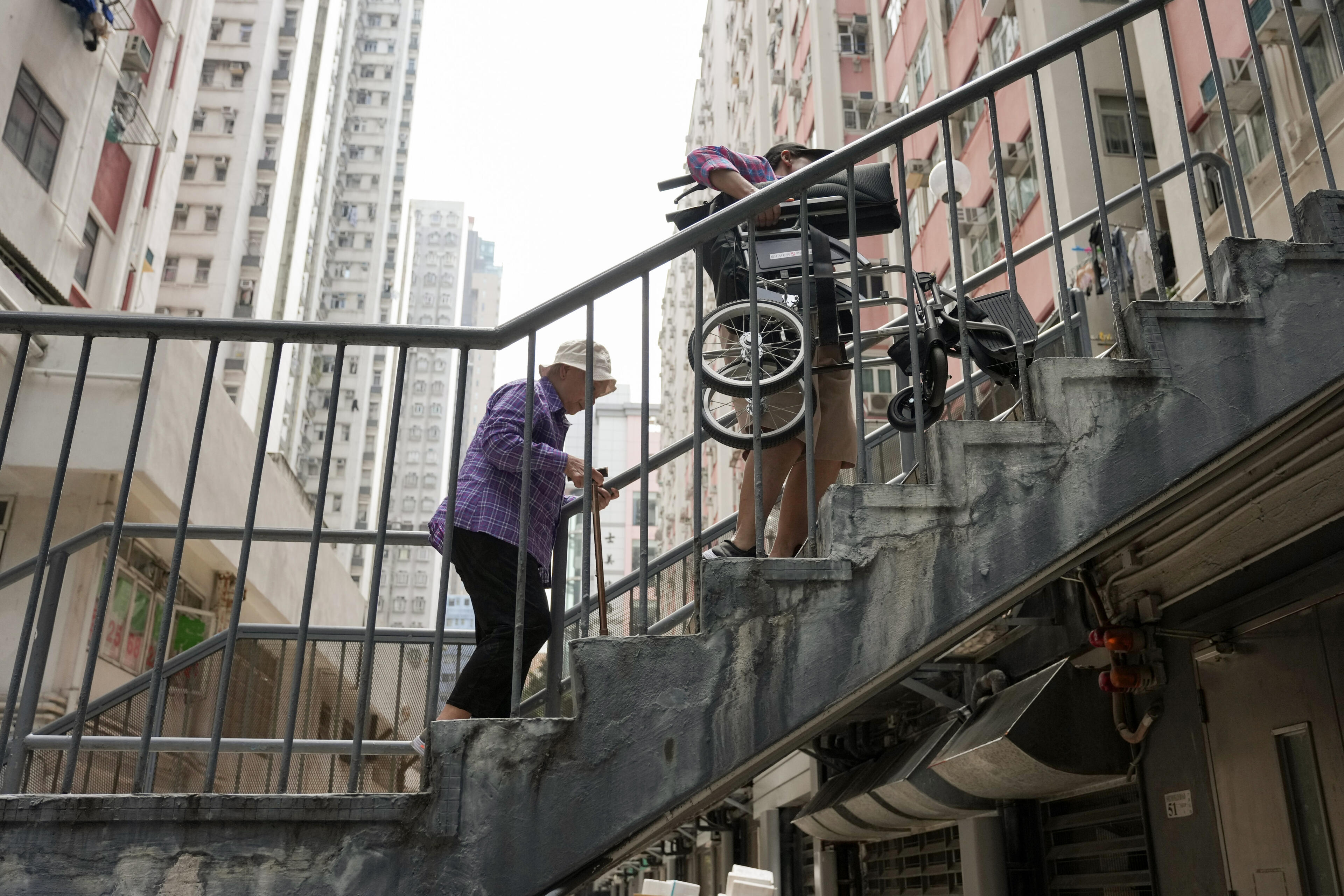
On Sunday, families sought shelter in snow parks and shopping malls as Hong Kong experienced its hottest day in 142 years. Meanwhile, many domestic workers felt they had no option but to remain outdoors in the scorching heat.
The city recorded its highest temperature since record-keeping began in 1884, a result of the impact of Severe Typhoon Dolphin.
The Hong Kong Observatory said subsiding air on the outer edge of Dolphin brought generally fine and extremely hot weather to Guangdong province.
In the afternoon, the Observatory recorded a maximum temperature of 36.9 degrees Celsius (98.4 Fahrenheit), the highest since records began in 1884. Sheung Shui reached 39.8 degrees, the highest temperature recorded there since the forecaster installed automatic weather stations in the 1980s.
A hiker in his sixties was also found collapsed from heat on the Plover Cove Reservoir Country Trail in Tai Po and was later confirmed dead in the afternoon. His cause of death is under investigation.
The Observatory said the hot weather would continue until midweek.
At 8pm, Dolphin was centred about 480km (299 miles) east of Nanchang. It is forecast to move west at about 18km/h (11mph) across Zhejiang and move inland.
At Discovery Park in Tsuen Wan, the centre’s spacious ground-floor atrium provided a refuge from the blistering heat outside. Groups of friends crouched over Beyblade battles, playing with the spinning tops popularised by the anime series in the 2000s.

At Magic Ice, an indoor snow park in the mall, families brought their children to cool off. Children wielded toy shovels, made snowballs and busily piled up mounds of snow.
Roy Wong, 37, who has a seven-year-old son, said his family usually spent summer days at the pool.
“We like sports, but the heat over the past two days has been unbearable. I worry about heatstroke at the beach and the water doesn’t seem to cool them down enough,” he said.
“Playing with snow here is like stepping into a fridge, but you don’t need to wear thick jackets.”
Candy Cheung, who is in her 30s, brought her three children to escape the heat.
“On scorching days like these, I usually take the kids to a shopping centre,” she said. “I spotted this place and thought it would be a good idea to let them spend some time on the ice.”
Tony Leung, a father in his 30s, brought his five-year-old daughter, Jelly Leung, to Magic Ice after they had spent time at another playground in the same mall.
“We avoid outdoor activities and stick to indoor playgrounds,” he said. “But we probably won’t stay too long – it gets a bit too cold for the children.”
Magic Ice operations manager KK Yeung said attendance had risen by about 40 per cent over the previous two days.
Tickets were available online in advance and at the entrance. A family package cost HK$160 for 30 minutes and covered one adult and one child.
The bus terminus beneath Nan Fung Centre – a regular gathering spot for domestic helpers – remained crowded despite the heat.
Helpers said they avoided shopping centres because food was not allowed inside.
Kimberly Delacruz, a 35-year-old Filipino worker, said she woke up at 7am, unable to sleep through the stifling heat in her Kowloon Bay room, which has no air conditioning.
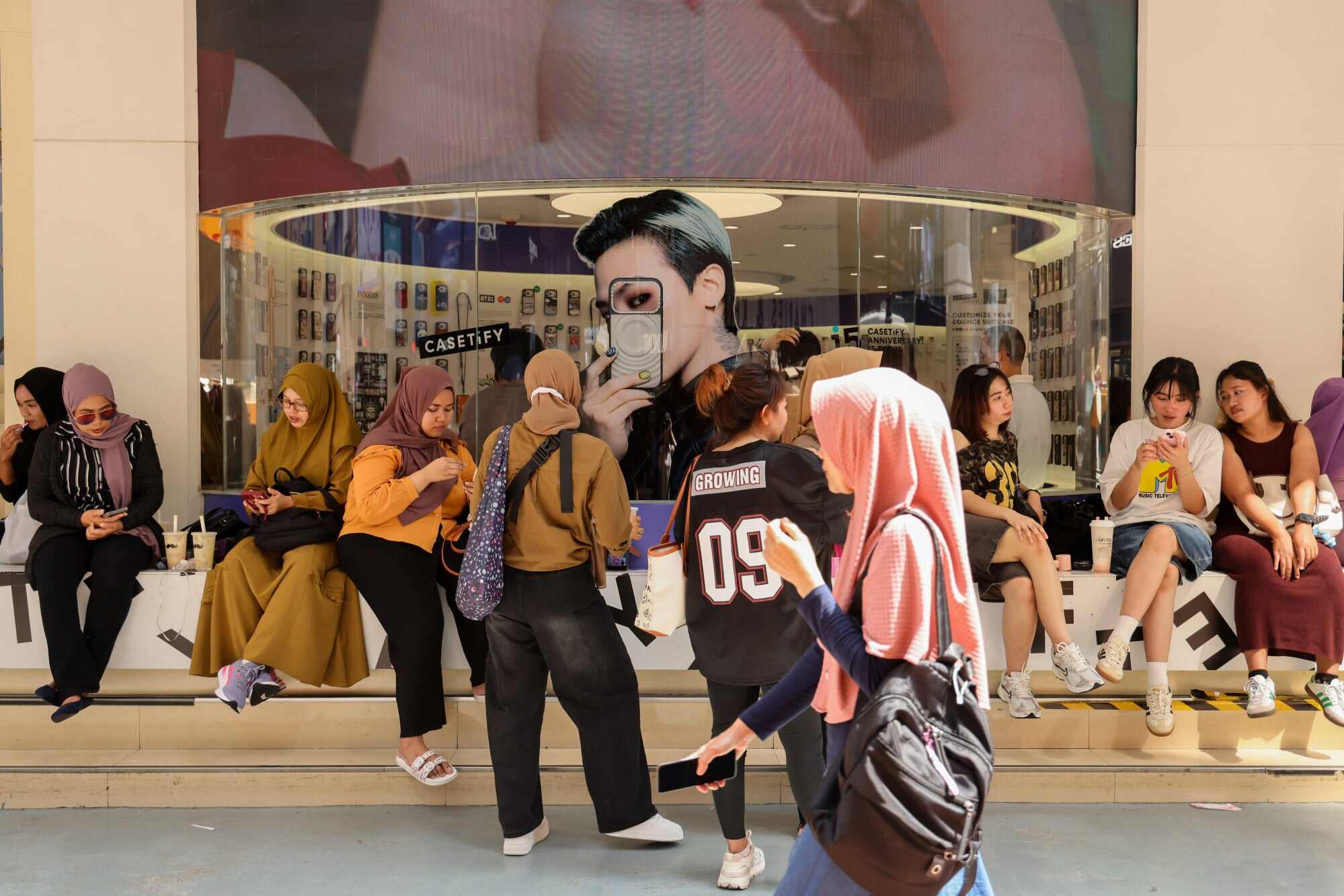
“I cannot endure sleeping through the hot night, so I go out early,” she said, sitting on the stairs and holding an umbrella to shield herself from the sun.
“It is hot here, but at least I can bear it with friends, chatting and sharing food.”
Ratih, who leads the Union of United Domestic Workers and asked to be identified by her first name, told the South China Morning Post that more helpers had moved into shopping centres to escape the heat. But because seating was limited, most still had little choice but to sit in public parks and cool themselves with portable fans.
Some helpers who sought refuge under pavilions or in other covered areas in parks had also been asked to leave by security guards when the areas became “too crowded”, Ratih said.
Dozens of domestic helpers managed to move inside Discovery Park mall, where they sat shoulder to shoulder on strips of artificial turf while chatting and dancing.
Some were seen resting behind a bench at Tsuen Wan Promenade as they sought shelter from the intense heat.
Fish Ip, founding organiser of the Hong Kong Federation of Asian Domestic Workers Unions (FADWU), said most helpers would cooperate with security guards, adding that local residents such as herself were not subjected to the same treatment.
“We hope security guards can be more accommodating to helpers on their days off,” she said.
More public spaces, such as heat shelters, should be set up for helpers during periods of extreme heat, Ip said. She added that the government should consider providing reading materials in different languages to encourage helpers to use public libraries to cool down.
And while some helpers stay in temples and churches on Sundays to escape the heat, many endure sweltering working days in flats where air conditioning is not allowed, said Sarah Pun, chairperson of the Union of Nepalese Domestic Workers in Hong Kong and an FADWU executive committee member.
“With no air-conditioning, no fans and no ventilation, they suffer a lot as they have to work indoors,” Pun said.
Ip, from FADWU, urged the government to revise employment contracts to ensure proper air ventilation is provided for helpers amid increasingly extreme weather.